Every Dark Cosmic Insights explainer, grouped by where it takes you. Each one separates what has been measured from what is still open, and shows you the evidence behind the answer.
Jump to: Planets & Moons · Stars & Galaxies · Earth & Living Systems · Ancient Worlds
Planets & Moons
Worlds of our solar system: their moons, storms, surfaces and the missions exploring them. See the full section.
- Why Is Neptune Blue? The Voyager Color Twist, Explained
 Neptune’s famous deep blue came partly from image processing. A 2024 Oxford-led study found the planet is a pale greenish blue, close to Uranus. Here’s what’s measured, what’s modelled, and why methane and haze set the color.
- What Is Tidal Locking? Why the Moon Shows One Face, Explained
 The Moon turns exactly once per orbit, so the same face always points at Earth. Here’s how tides lock a spin, why we still glimpse 59% of the Moon, what lasers on the Moon measure, and which locked worlds are measured and which are only modelled.
- What Is the Biggest Planet? Jupiter, Tiny Mercury and the Limits of Size, Explained
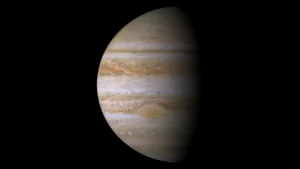 Jupiter is the biggest planet in our solar system by every measure, yet in 2026 Juno found it is a few kilometres slimmer than the long-used reference values. Here are all eight planets ranked, why gas giants hit a size limit, and why two moons are wider than Mercury.
- How Many Moons Does Uranus Have? Shakespeare’s Moons on a Sideways Planet, Explained
 Uranus has 29 known moons, and they all ride around a planet tipped on its side. Here’s what Voyager 2 saw on jumbled Miranda, why the moons carry Shakespeare’s names, and which ocean claims are still only models.
- Why Don’t Mercury and Venus Have Moons? The Sun, the Tides and the Moons That Weren’t, Explained
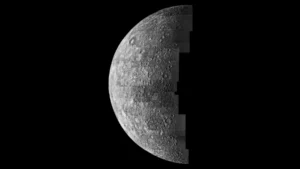 Mercury and Venus are the only planets with no moons. The Sun’s gravity, slow spins and solar tides all play a part, and one idea says Venus once had a moon and lost it. Here’s what is measured, what is modelled, and the reported moons that never held up.
- How Many Moons Does Neptune Have? Triton, a Backwards Giant, and Its Strange Family, Explained
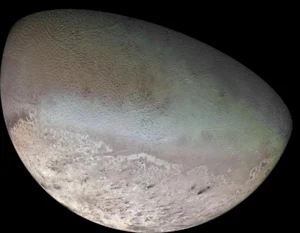 Neptune has 16 known moons, and one of them orbits the wrong way. Here’s what Voyager 2 actually saw on Triton, what is still only a model, and why tiny Hippocamp may be a chip off a bigger moon.
- How Many Moons Does Saturn Have? Ocean Moons, a Two-Faced World and a Captured Swarm, Explained
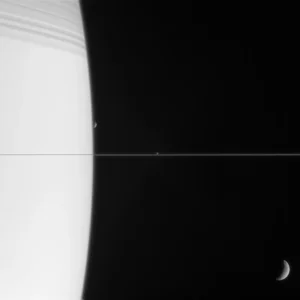 Saturn has 293 known moons, but a handful of them are worlds in their own right: a moon that sprays its ocean into space, a cratered moon hiding a young sea, a moon with one dark face and one bright. Here’s what each one is, how we know, and what’s still open.
- How Many Moons Does Mars Have? Phobos, Deimos and a Moon Living on Borrowed Time, Explained
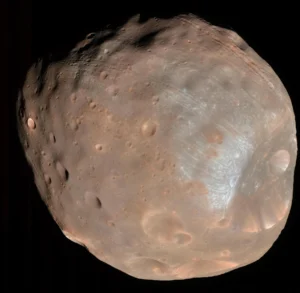 Mars has two small, dark, lumpy moons. One is slowly falling toward the planet. The other is expected to be drifting away. Nobody yet knows where either came from, and a Japanese spacecraft is now on its way to find out.
- How Many Moons Does Jupiter Have? Four Strange Worlds and a Captured Swarm, Explained
 Jupiter has 115 known moons, but four of them are worlds in their own right: a volcano moon, two likely ocean moons and a scarred relic. Here’s what each one is, how we know, and what Europa Clipper and JUICE are flying out to check.
- What Is the Hottest Planet? Venus vs. Mercury, and the Runaway Greenhouse Explained
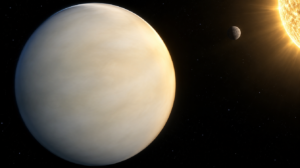 Mercury is closest to the Sun, but Venus is the hottest planet: about 464°C on average, with little difference between day and night. Here’s the runaway greenhouse behind it, and how landers that lasted minutes proved it.
- Why Is Pluto Not a Planet? The 2006 Vote, the Three Criteria and the Debate, Explained
 Pluto didn’t shrink in 2006. The definition changed. Here’s the actual vote in Prague, the three criteria, the maths behind ‘clearing the neighbourhood’, and why some planetary scientists still disagree.
- Which Planet Has the Most Moons? Saturn vs. Jupiter, Counted and Dated
 Saturn has 293 known moons. Jupiter has 115. But a moon count is a snapshot, not a fact carved in stone. Here’s the dated table, and the pipeline behind every number.
- Why Is the Moon Shrinking? Moonquakes and the Cracks That Reveal It
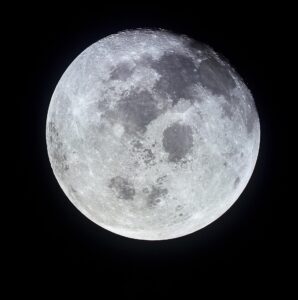 The Moon is slowly shrinking. Discover how cooling creates lunar faults, what causes moonquakes, and what new research means for future Moon bases.
- NASA’s Dragonfly Mission to Titan: Why We’re Sending a Drone to Saturn’s Moon
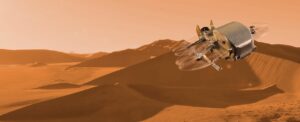 NASA’s Dragonfly rotorcraft will fly across Saturn’s moon Titan in the 2030s. Here’s why Titan is perfect for flying and what the mission is looking for.
- How Do Mars Rovers Navigate? Inside Perseverance’s Self-Driving System
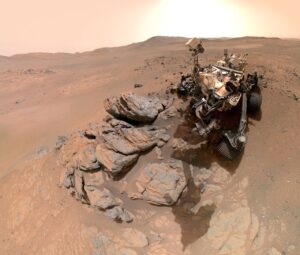 Signals take up to 22 minutes to reach Mars, so nobody drives a rover live. Here’s how Perseverance plans its own path, and how AI is now helping.
- Jupiter’s Polar Cyclones vs. Saturn’s Hexagon: Why Two Giant Planets Make Such Different Weather
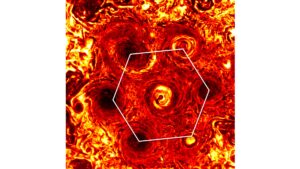 Jupiter’s poles hold clusters of cyclones. Saturn’s north pole has one giant vortex inside a six-sided jet. Here’s what Juno and Cassini found, and why.
- Are Space Photos Real? Natural Color, False Color and Artist’s Concepts
 Most space photos are real data, but their colors may not match what your eye would see. Learn to tell natural color, false color and artist’s concepts.
Stars & Galaxies
How stars live and die, how far away they are, and what the biggest telescopes reveal about deep space. See the full section.
- What Is Dark Matter? The Evidence, the Candidates and the Searches That Keep Coming Up Empty
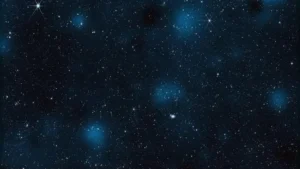 Galaxies spin too fast, clusters bend too much light, and the early universe rings with the wrong pattern for ordinary matter alone. Here’s what dark matter is, how we know it’s there, and why nobody has caught a particle of it yet.
- What Is a Black Hole? How Astronomers See Something That Gives Off No Light, Explained
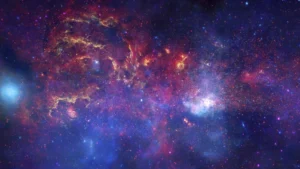 A black hole gives off no light of its own, yet astronomers have weighed one with star orbits, heard hundreds merge, and imaged the shadows of two. Here’s what a black hole is, and the five kinds of evidence that show they’re real.
- How Old Is the Universe? Three Cosmic Clocks, One Stubborn Disagreement, Explained
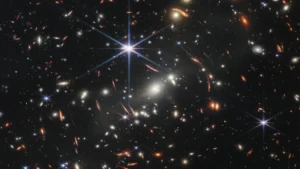 The universe is about 13.8 billion years old. That number comes from three clocks that cross-check each other: the oldest light, the expansion rate and the oldest stars. Here’s how each one works, and what happens when they disagree.
- What Is a Nebula? Star Nurseries, Stellar Ghosts and the Clouds Between the Stars, Explained
 A nebula is a cloud of gas and dust between the stars. Some glow, some reflect, some block light entirely, and some are the debris of dead stars. Here’s what each type is, how we know, and how to see one tonight.
- Types of Galaxies: Spirals, Ellipticals and the Tuning Fork, Explained
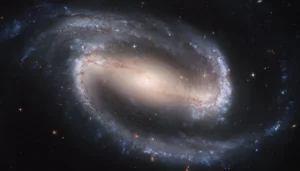 Hubble sorted galaxies into a tuning fork in 1926, and people have read it as a timeline ever since. He warned them not to. Here are the main types of galaxies, what gives each its shape, and how we know.
- Life Cycle of a Star: How Birth Mass Shapes the Way Stars Die
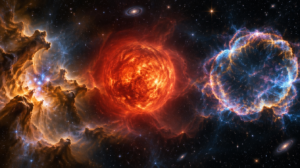 No one has ever watched a star live and die. Yet astronomers can tell you how the Sun ends, and why no red dwarf has died yet. The biggest clue is mass, and a lot of patient evidence.
- How Cold Is Space? The Three Temperatures of Space, Explained
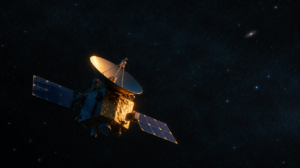 Deep space glows at 2.7 kelvin, the afterglow of the Big Bang. Yet the gas near the Sun is millions of degrees, and a spacewalker in sunlight can face 250 °F. Here’s how all three are true.
- SN Refsdal: The Star That Exploded Once and Appeared Again
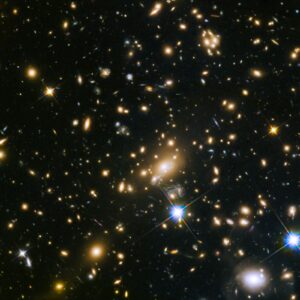 One explosion. Several light paths. A return predicted before it appeared. Explore the real Hubble evidence behind SN Refsdal, its dark-matter map and the cosmic expansion puzzle.
- Hubble vs. Webb: Why the Same Pillars of Creation Look So Different
 Hubble and Webb photographed the same Pillars of Creation, yet the images look nothing alike. The reason is the light each telescope sees.
- How Astronomers Measure Stars: Distance, Size, Mass and Age, Explained
 No one has ever visited another star. Here’s how astronomers measure a star’s distance, temperature, size, mass and age using nothing but its light.
Earth & Living Systems
Our own planet, its deep history and the living systems that shape it. See the full section.
- Radiocarbon Dating Peatlands: Why Congo Lakes Are Breathing Out Ancient Carbon
 Congo lakes are releasing carbon thousands of years old. Here’s how radiocarbon dating works and what a “carbon age” really means.
Ancient Worlds
What science can still recover from the ancient past, and how researchers find it. See the full section.
- Egyptian Blue Infrared Glow: How Scientists Find Ancient Paint You Can’t See
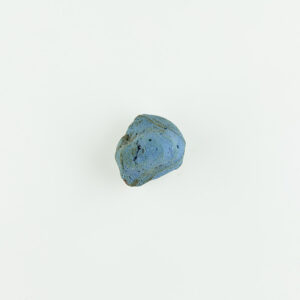 Egyptian blue gives off an invisible infrared glow. Scientists use it to find paint on statues that look bare. Here’s how it works, and its limits.