Start with Mercury and travel outward. Each stop below shows the planet in a real spacecraft or crew photo, its known moons, and the Dark Cosmic Insights guides that go deeper. Every guide separates what is observed and measured from what is modelled and what is still open, the approach we explain in How We Know.
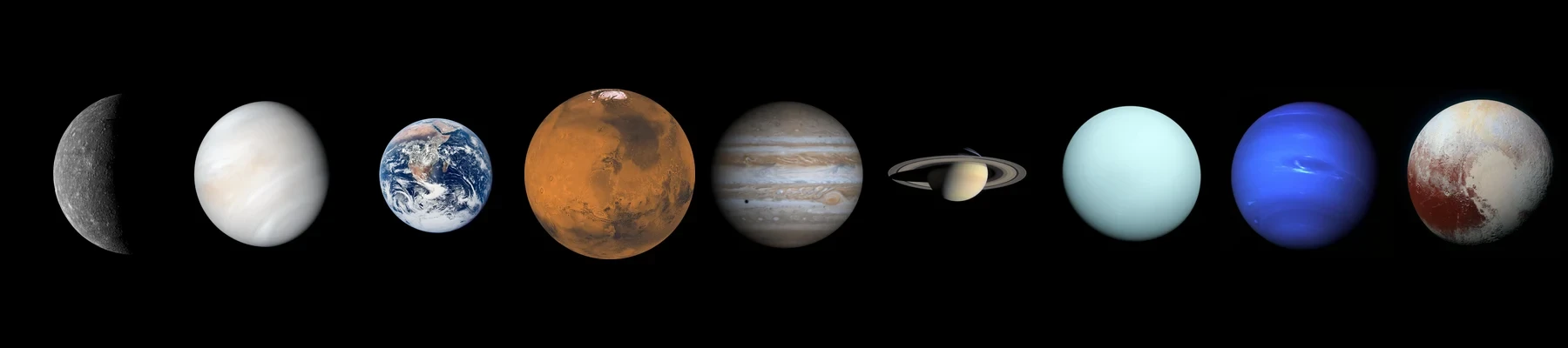
Jump to: At a glance · Mercury · Venus · Earth · Mars · Jupiter · Saturn · Uranus · Neptune · Beyond Neptune
Moon counts are as of November 2026, from NASA JPL, and change as new moons are confirmed. See our dated moon table for the full dated comparison.
The Planets at a Glance
Tap a planet to jump to its section. Diameter is twice the mean radius; year length is the time for one orbit of the Sun (sidereal period). Moons are known moons.
| Planet | Diameter | Year length | Moons |
|---|---|---|---|
| Mercury | 4,879 km 3,032 mi | 88 days | 0 |
| Venus | 12,104 km 7,521 mi | 225 days | 0 |
| Earth | 12,742 km 7,918 mi | 1 year | 1 |
| Mars | 6,779 km 4,212 mi | 1.9 years | 2 |
| Jupiter | 139,822 km 86,881 mi | 11.9 years | 115 |
| Saturn | 116,464 km 72,367 mi | 29.4 years | 293 |
| Uranus | 50,724 km 31,518 mi | 84.0 years | 29 |
| Neptune | 49,244 km 30,599 mi | 164.8 years | 16 |
| Pluto* | 2,377 km 1,477 mi | 247.9 years | 5 |
*Pluto is a dwarf planet, included for comparison. Diameters and orbital periods: DCI arithmetic from NASA JPL planetary physical parameters (km to miles at 1.609344). Moon counts as of November 2026, from NASA JPL.
Mercury

The closest planet to the Sun and the smallest of the eight.
Known moons: 0
Venus

Wrapped in a thick carbon-dioxide atmosphere, Venus is the hottest planet, even though Mercury is closer to the Sun.
Known moons: 0
Earth

Our home planet, and the only world known to host life.
Known moons: 1, the Moon
Mars

A cold desert world explored by orbiters and rovers.
Known moons: 2, Phobos and Deimos
Jupiter
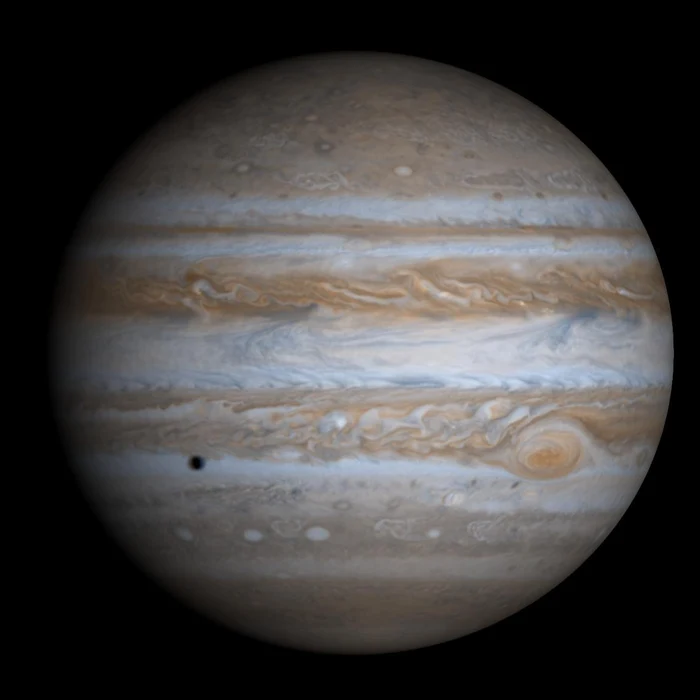
The largest planet, a gas giant with storms bigger than Earth.
Known moons: 115
Saturn

The ringed giant, with the largest known family of moons.
Known moons: 293
Uranus

An ice giant that spins tipped on its side.
Known moons: 29
Neptune

The farthest planet from the Sun, a blue-green ice giant only slightly bluer than Uranus.
Known moons: 16, led by Triton
Beyond Neptune: Pluto and the Dwarf Planets
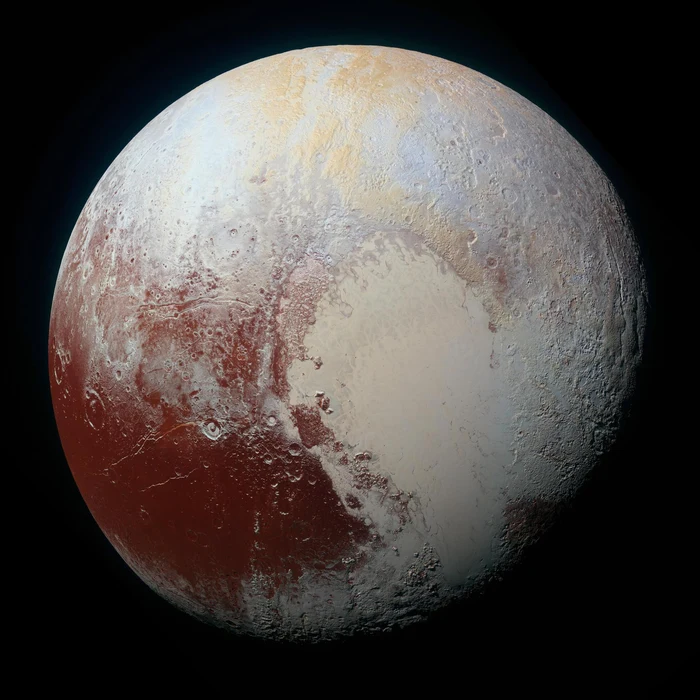
Past Neptune lies the Kuiper Belt, home to Pluto, which was reclassified as a dwarf planet in 2006.
Pluto’s known moons: 5
Questions That Span the Whole Solar System
- Which Planet Has the Most Moons?
- What Is the Hottest Planet?
- How Cold Is Space?
- Are Space Photos Real?
- How We Know: Follow the Evidence
- What Is a Nebula? (the kind of cloud our solar system formed from)
Want the stars and galaxies beyond? Visit Stars & Galaxies, or browse every Dark Cosmic Insights article.