Saturn is the ringed giant: a world of hydrogen and helium so light for its size that it’s less dense than water, wrapped in rings made mostly of ice. Pick a question below for a short answer, then follow the link to the full guide.

Jump to: Quick Facts · Your Questions · Real Images · Saturn vs. Jupiter
Quick Facts
| Fact | Saturn |
|---|---|
| Average distance from the Sun | About 1,432 million km (about 9.6 AU) |
| Equatorial diameter (cloud tops) | 120,536 km, about 9.4 times Earth’s |
| Mass | About 95 Earths |
| Density | 687 kg/m³, less than water (1,000 kg/m³) |
| Effective gravity at the equator (1-bar level, includes spin) | 9.0 m/s² (Earth: 9.8) |
| Length of day | About 10.7 hours |
| Length of year | About 29.4 Earth years |
| Mean temperature (cloud tops) | About −140 °C |
| Known moons | 293 (JPL discovery table, as of November 2026) |
| Rings | Yes, made mostly of water ice |
What Do You Want to Know?
How big is Saturn?
About 9.4 Earths across at the equator and about 95 times Earth’s mass, yet light enough for its size to be less dense than water. How Big Is Saturn?
How far away is Saturn?
About 1.43 billion km from the Sun on average, roughly 9.6 times Earth’s distance. Sunlight takes about 80 minutes to get there (DCI calculation). How Far Is Saturn?
What is Saturn made of?
Mostly hydrogen and helium, with no solid surface to land on. Deep inside, the hydrogen is squeezed into a liquid metal around a fuzzy core. What Is Saturn Made Of?
What color is Saturn?
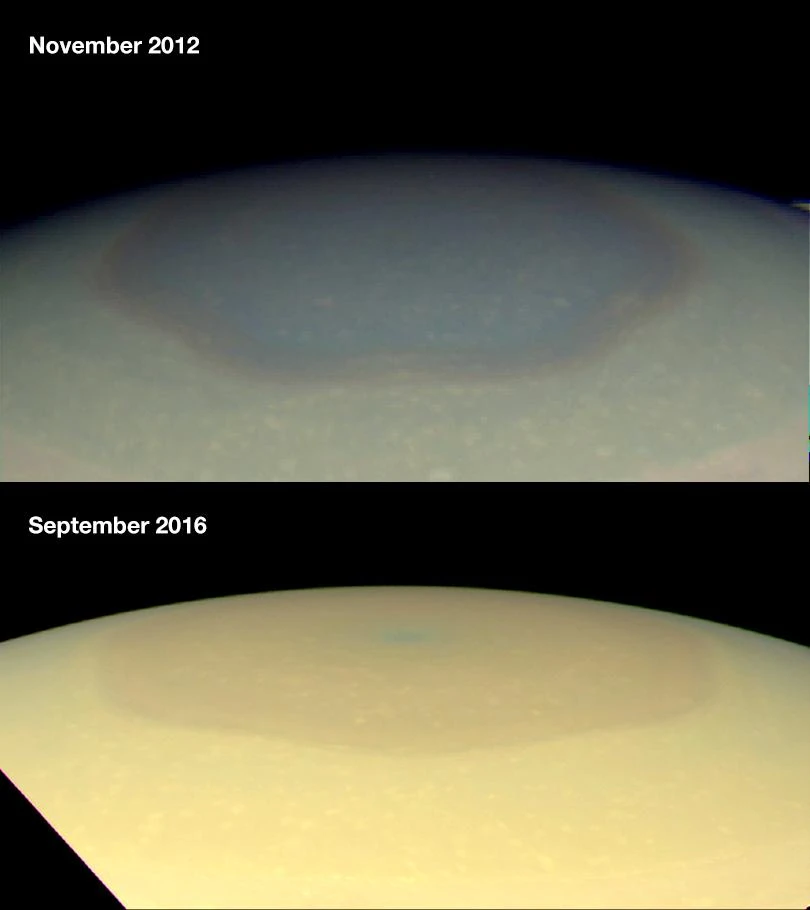
Pale gold. Cassini saw its north pole looking blue in 2012 and golden in 2016, as northern summer approached. What Color Is Saturn?
How cold is Saturn?
About −139 °C at its cloud tops, but models put its core near 11,700 °C, and it gives off more than twice the energy it absorbs from the Sun. How Cold Is Saturn?
How many rings does Saturn have?
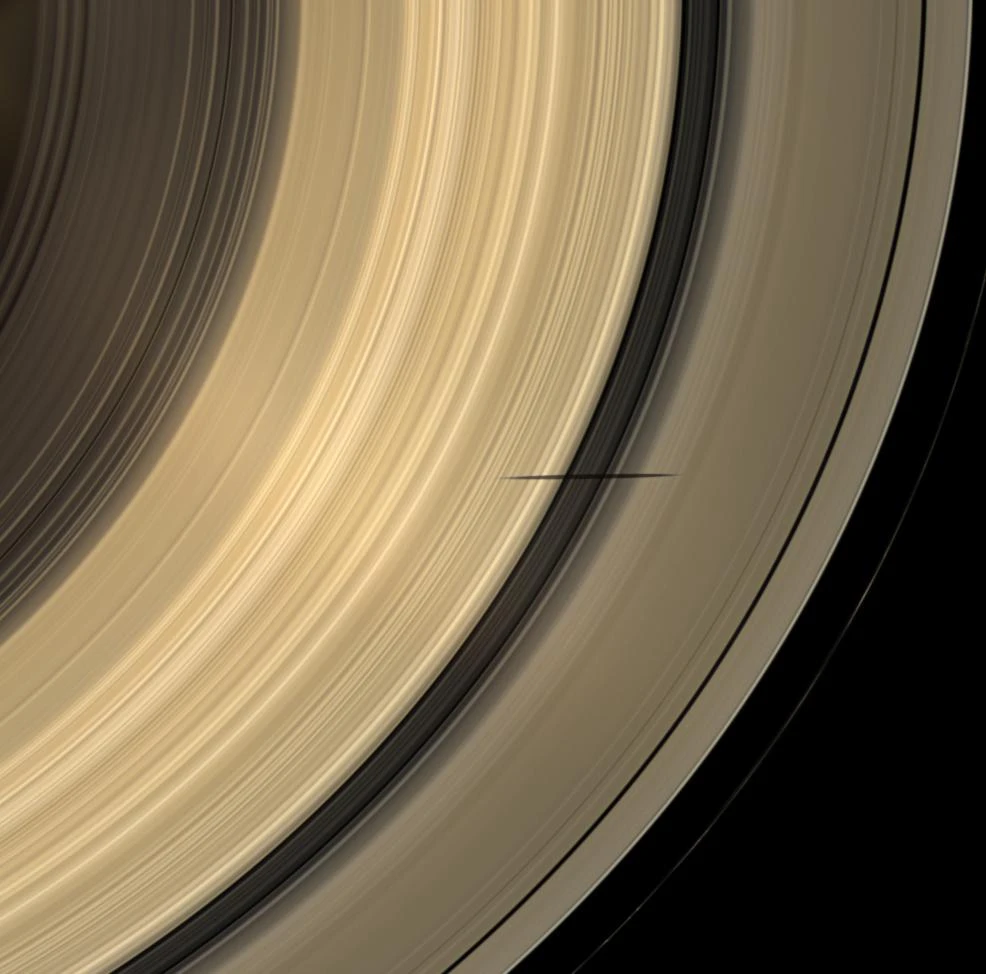
It depends how you count. The main rings are named with letters, and each one breaks up into many narrower ringlets. How Many Rings Does Saturn Have?
Are Saturn’s rings disappearing?
Not soon. They seemed to vanish in 2025 because we saw them edge-on, but ring material is slowly falling into Saturn; at the estimated ring-rain rate, the rings could last about 300 million years. Are Saturn’s Rings Disappearing?
How many moons does Saturn have?
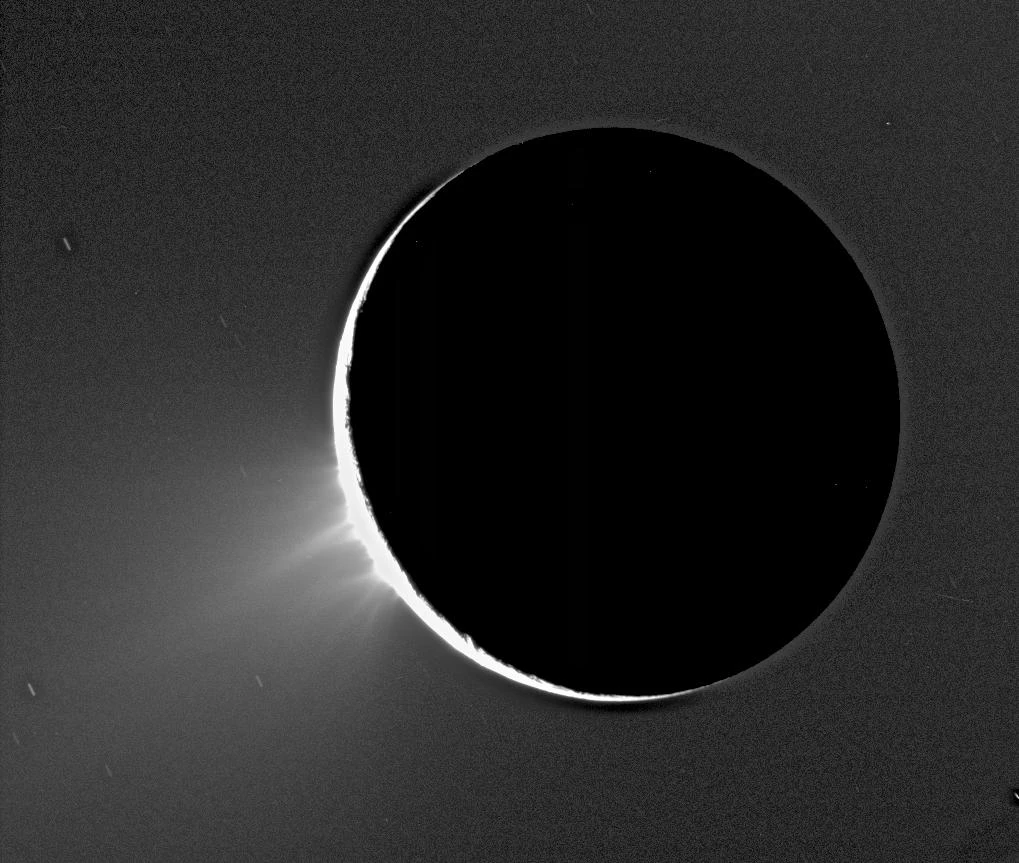
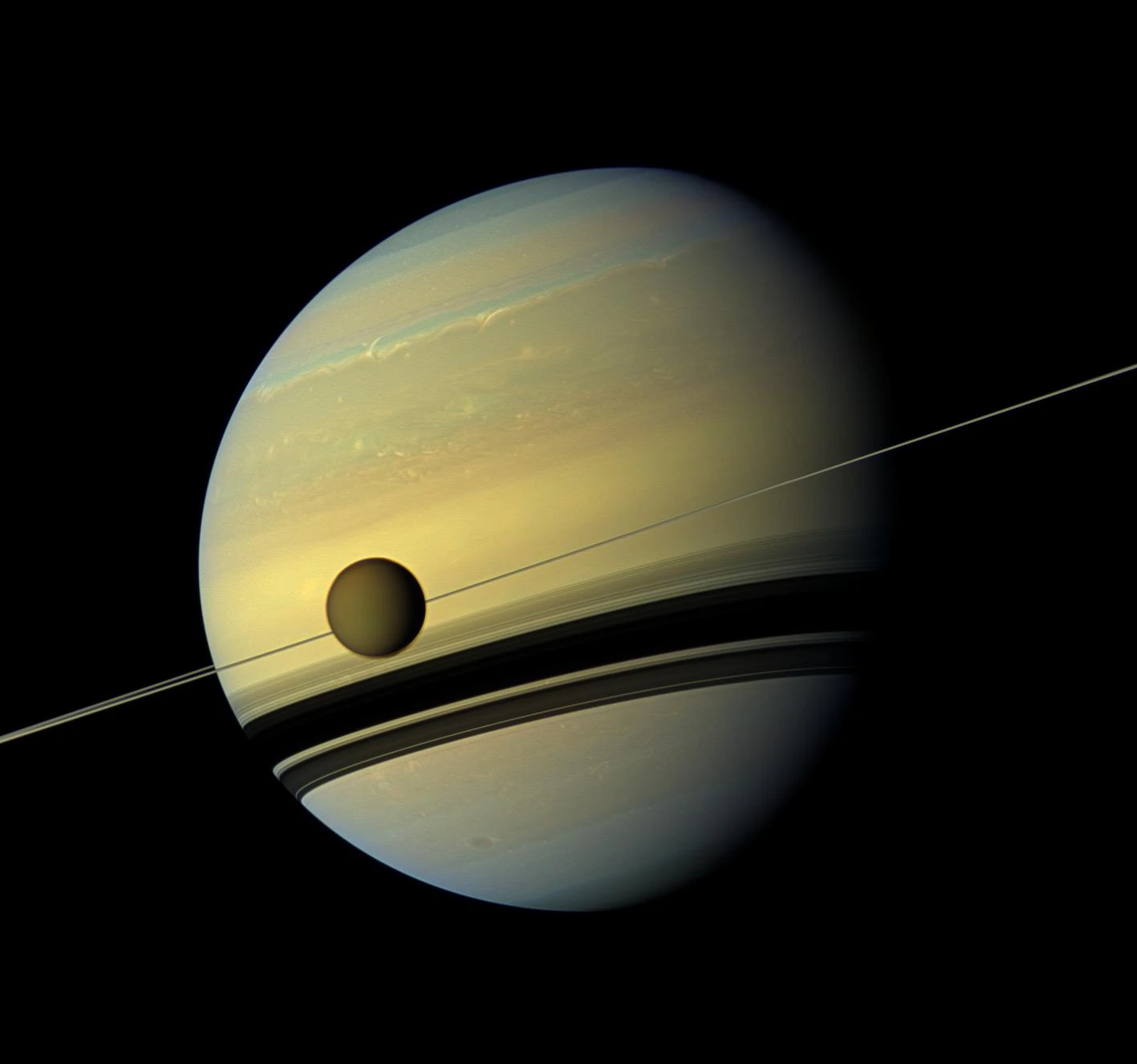
293 known moons as of November 2026, more than any other planet. They include Titan, bigger than Mercury, and Enceladus, whose icy jets scientists trace to an ocean under its crust. How Many Moons Does Saturn Have? · Enceladus’s Geysers · Which Planet Has the Most Moons?
What is the hexagon at Saturn’s pole?
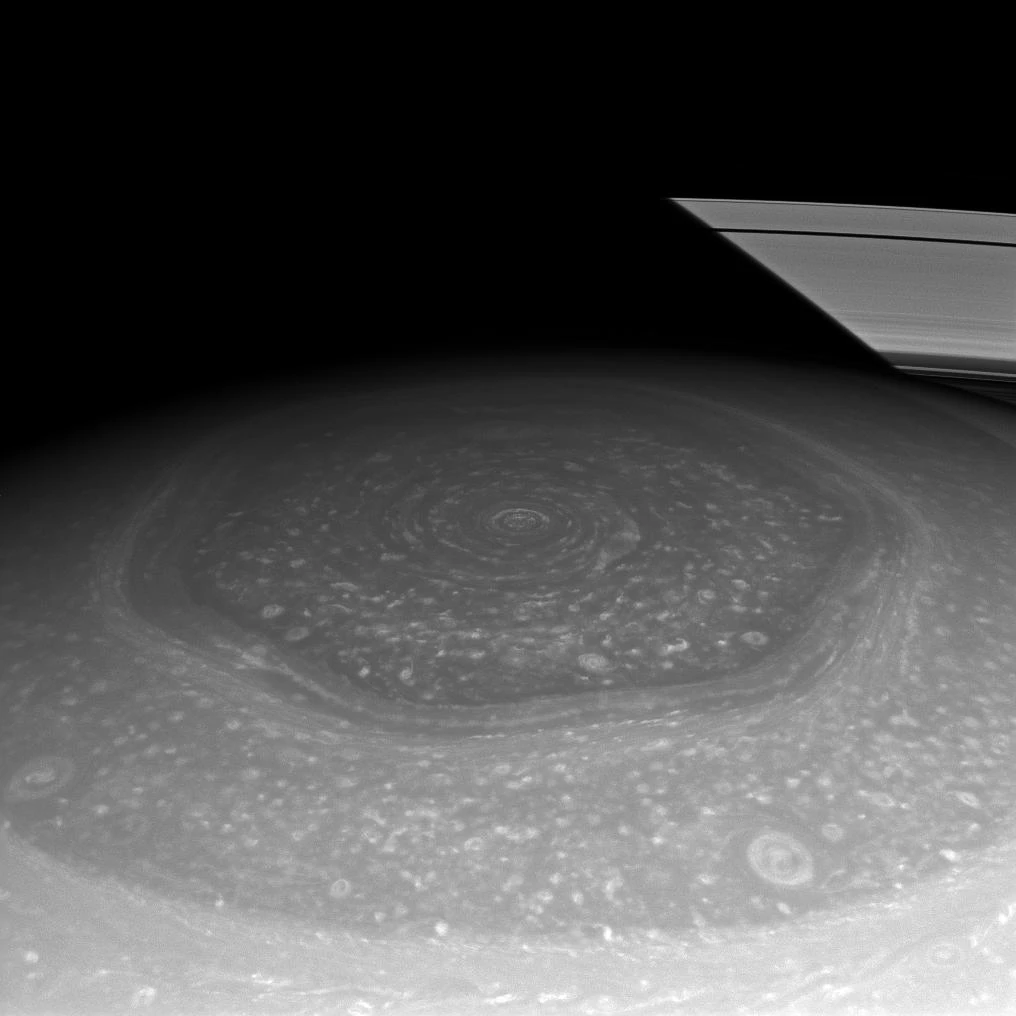
A six-sided jet stream circling Saturn’s north pole. A ten-sided wave at the south pole has been traced in Hubble images back to October 2023. Jupiter’s Polar Cyclones vs. Saturn’s Hexagon · Saturn’s Decagon
Are we going back to Saturn?
Yes: NASA’s Dragonfly, a nuclear-powered rotorcraft, is being built to fly through the thick air of Saturn’s biggest moon, Titan. NASA’s Dragonfly Mission to Titan
Saturn in Real Images
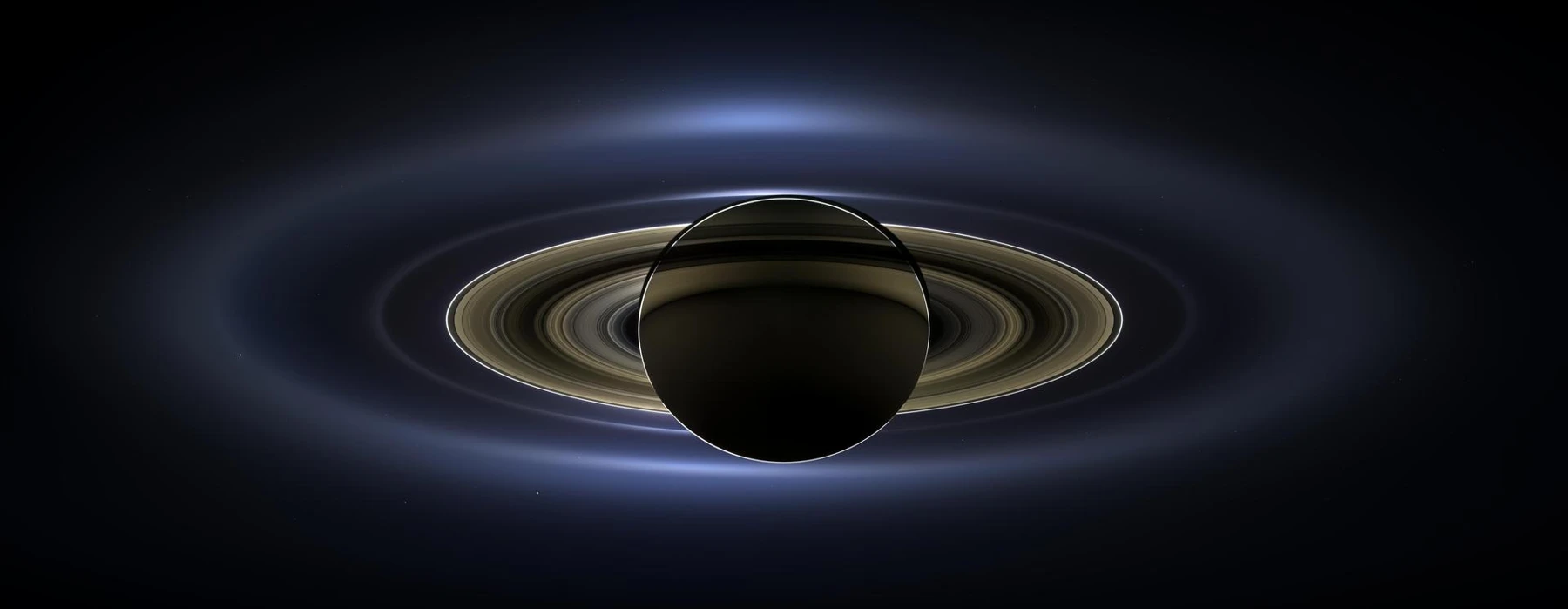
Every picture here is a real spacecraft image, not an illustration.
Saturn vs. Jupiter
| Fact | Saturn | Jupiter |
|---|---|---|
| Avg. distance from Sun | 9.6 AU | 5.2 AU |
| Equatorial diameter | 120,536 km | 142,984 km |
| Mass | About 95 Earths | About 318 Earths |
| Density | 687 kg/m³ | 1,326 kg/m³ |
| Day | About 10.7 h | About 9.9 h |
| Year | About 29.4 years | About 11.9 years |
| Mean temp. (cloud tops) | About −140 °C | About −110 °C |
| Known moons (Nov 2026) | 293 | 115 |
For the full Jupiter story, visit our Jupiter hub.
Keep Exploring
- Every planet, one stop at a time, with a side-by-side comparison: Solar System Explorer and Compare the Planets
- Terms like AU, albedo and opposition, in plain English: Space Glossary
- How a claim earns its label: How We Know
How This Page Was Checked
The Quick Facts come from the NASA Planetary Fact Sheet (last updated March 18, 2025); Earth comparisons and light-travel times are DCI calculations from it. Giant-planet sizes and temperatures are cloud-top values, because Saturn has no solid surface. Moon counts are from the JPL discovery table as of November 2026, matching our moon guides, and will be updated as new moons are confirmed. Each short answer summarizes a full DCI guide that carries its own primary sources. Every image here is a real spacecraft or telescope image, credited as its source requires. Checked November 2026.