In 1933, the Swiss astronomer Fritz Zwicky measured the speeds of galaxies in the Coma Cluster and found them racing at an average of “1000 km/s or more.” At those speeds, the visible matter could not hold the cluster together. He concluded that its density would have to be “at least 400 times greater” than that of the matter he could see (Straumann, Swiss Physical Society, 2013).
Nearly a century later, that missing mass has a name, a budget and a list of suspects, but no confirmed identity. So what is dark matter, how do we know it’s there, and why have the detectors come up mostly empty? This guide covers the five main lines of evidence, the leading candidates, the latest dated searches, and the idea that gravity itself might be wrong.
Observed, modelled, open. Galaxies in clusters moving too fast, the flat rotation curves of spiral galaxies, the bending of light by unseen mass, and the offset between gas and mass in the Bullet Cluster are observed or measured. That one invisible substance makes up about 27% of the universe, and that it explains the pattern in the cosmic microwave background, is modelled within the standard model of cosmology, called ΛCDM (Lambda cold dark matter). What dark matter is made of, whether a modified law of gravity could replace it, what a single 2026 event in the LZ detector means, and whether dark energy changes over time are all still open.
Quick Answer: What Is Dark Matter?
Dark matter is the name for unseen mass that reveals itself only through gravity. It does not absorb, reflect or emit light, but its pull shapes galaxies and galaxy clusters and bends the light passing near them (NASA Science, updated August 12, 2026). NASA puts the universe at about 5% ordinary matter, 27% dark matter and 68% dark energy. Nobody knows what dark matter is made of. The leading candidates, such as WIMPs and axions, have not been detected, and as of November 2026 no dark-matter particle detection has been independently confirmed.
What this article can and cannot establish. It can show the evidence that something unseen is adding gravity, separate what is measured from what is inferred through the standard model, and give the latest dated results from the searches. It cannot tell you what dark matter is, because nobody knows. It also cannot rule out every alternative: a modified law of gravity is still being tested against the data, so we label it Open.
Table of Contents
The DCI Evidence Map: Dark Matter
| Question | What we know | Status | Key source |
|---|---|---|---|
| Do cluster galaxies move too fast? | Zwicky’s 1933 Coma velocities implied at least 400 times the visible density (a rough estimate) | Measured | Straumann, SPS, 2013 |
| Do spiral galaxies spin too fast at their edges? | All 21 spirals in Rubin’s 1980 study had flat rotation curves | Measured | Rubin et al. 1980 |
| Does unseen mass bend light? | Webb’s 2026 lensing map used about 250,000 galaxy shapes | Measured | Scognamiglio et al. 2026 |
| Can mass be separated from gas? | In the Bullet Cluster, mass is offset from the hot gas at 8 sigma | Observed | Clowe et al. 2006 |
| Does the early universe need dark matter? | Planck’s CMB fit: Ω_c h² = 0.120 ± 0.001, over five times ordinary matter | Modelled | Planck 2018 |
| How much of the universe is dark matter? | About 27% (ordinary matter 5%, dark energy 68%) | Modelled | NASA Science |
| What is dark matter made of? | WIMPs, axions, primordial black holes: none confirmed | Open | NASA Science |
| Has a particle been detected in a lab? | No detection independently confirmed; DAMA/LIBRA’s claimed signal is disputed, and LZ’s 2026 event is 2.6 sigma (global) | Not supported | Martinez et al. 2026 · LZ, arXiv:2609.02823 |
| Could modified gravity (MOND) replace it? | Gaia wide-binary studies disagree: one rejects MOND at 16 sigma, one reports an anomaly | Open | Banik et al. 2024 · Chae 2023 |
| Is dark energy changing? | DESI 2025 prefers evolving dark energy at 2.8 to 4.2 sigma | Open | DESI 2025 |
Status key: Observed = seen directly in images or spectra. Measured = a number or detection with stated uncertainty. Modelled = inferred from measurements through a physical model, dependent on its assumptions. Open = unresolved; the evidence is incomplete or points different ways. Not supported = no evidence for the claim.
Cite this framework: “DCI Evidence Map: Dark Matter,” Dark Cosmic Insights, November 2026, darkcosmicinsights.com/what-is-dark-matter/.
How Do We Know Dark Matter Exists?
Strictly, we know that something is adding gravity that we can’t see; “dark matter” is the standard explanation. Independent measurements point the same way:
- Galaxy clusters move too fast for their visible matter (Zwicky, 1933).
- Spiral galaxies spin too fast at their edges (Rubin, 1970s).
- Background light is bent by more mass than we see (lensing).
- Colliding clusters show mass apart from the gas (Bullet Cluster, 2006).
- The oldest light carries a pattern that, in the standard model, needs dark matter (the CMB).

Each clue has weaknesses alone; the strength is that one ingredient, extra unseen mass, explains all five. The clues are measured, but “one substance explains everything” is a model. Our How We Know hub explains how DCI sorts claims into observed, measured, modelled and open.
Who Discovered Dark Matter?
The short answer is Fritz Zwicky, in 1933, though the idea took four decades to catch on.
Zwicky studied the Coma Cluster, a group of about 1,000 galaxies (APS News, May 11, 2023). Using the virial theorem, which links the speeds of objects in a bound system to the mass holding them, he estimated the cluster’s mass. The galaxies were moving at an average of “1000 km/s or more” (about 2.2 million mph), so the cluster’s density would have to be at least 400 times that of its visible matter (Straumann, Swiss Physical Society, March 2013). NASA notes that he called the hypothetical material “dunkle Materie,” German for dark matter (NASA Science).
Zwicky’s number was rough
Zwicky’s 400 is not a modern value. Straumann points out that the analysis relied on limited statistics and an uncertain cluster radius, and used a Hubble constant about seven times too large, though the estimates have held up as reasonable (Straumann, 2013).
Why Do Galaxies Spin Too Fast?
NASA credits Vera Rubin‘s work in the 1970s with making dark matter widely accepted (NASA Science).
What a rotation curve is
A rotation curve plots how fast stars and gas orbit a galaxy’s centre against their distance from it. In our solar system, distant planets move more slowly, because most of the mass is in the middle. Astronomers expected the same of galaxies, whose visible stars crowd toward the centre.
What Rubin and Ford found
In 1970, Rubin and W. Kent Ford Jr. published a spectroscopic survey of glowing gas clouds in the Andromeda Galaxy (M31) (Rubin and Ford, 1970). The speeds didn’t fall away with distance: the rotation curve levelled off into a “nearly flat line” (APS News, 2023).
In June 1980, Rubin, Norbert Thonnard and Ford published rotation curves for 21 spiral galaxies, from NGC 4605, with a radius of 4 kiloparsecs (about 13,000 light-years), to UGC 2885, with a radius of 122 kiloparsecs (about 398,000 light-years) (Rubin, Thonnard and Ford, 1980). A kiloparsec is about 3,260 light-years. All 21 had flat rotation curves far from their centres, and Rubin wrote: “The conclusion is inescapable that non-luminous matter exists beyond the optical galaxy” (APS News).
A flat curve means the enclosed mass keeps growing with distance, even where the starlight fades. The standard reading is that each spiral sits inside a much larger, unseen halo of dark matter. That’s an interpretation, which is why the alternative (different gravity) gets a hearing below. For the galaxy shapes involved, see our guide to types of galaxies.
How Does Gravitational Lensing Map Dark Matter?
Gravitational lensing is the bending of light by mass. Light from a distant galaxy that passes a massive foreground object, such as a cluster, is curved, so the background galaxy can look stretched, distorted or even multiplied. Dark matter bends light this way even though it gives off none (NASA Science).
- Strong lensing makes arcs and multiple images. See SN Refsdal, the supernova that replayed, where a cluster split one exploding star into several images.
- Weak lensing distorts each background galaxy slightly, so astronomers look for a shared pattern across huge numbers of shapes.
Webb’s 2026 dark matter map
In January 2026, a team led by Diana Scognamiglio used Webb to map mass in the COSMOS field in Sextans. NASA says the 0.54-square-degree field was observed for about 255 hours and holds about twice as many galaxies as the 2007 Hubble map (NASA Image and Video Library, PIA26702). The paper reports 129 galaxies per square arcminute with measured shapes and a resolution of 1.00 ± 0.01 arcminutes, more than twice as sharp as earlier Hubble maps (Scognamiglio et al., Nature Astronomy, 2026). Caltech’s COSMOS team says about 250,000 of nearly 800,000 detected galaxies were used for the lensing shapes (COSMOS, Caltech, February 10, 2026).
A caution: the blue glow in that image is not a photograph of dark matter but a mass map inferred from galaxy shapes, overlaid on a real Webb image. Our explainer Are Space Photos Real? covers how to read images like this.
What Does the Bullet Cluster Show?
The Bullet Cluster (1E 0657-56) is a pair of galaxy clusters that have smashed through each other, about 3.8 billion light-years away in Carina (Chandra X-ray Center, August 21, 2006). NASA’s Chandra X-ray Observatory saw the hot gas, which holds most of the cluster’s ordinary matter. Magellan and Hubble images showed the galaxies. Gravitational lensing mapped the total mass.
During the collision, the hot gas was slowed by a drag force, much like air resistance. The Chandra team explains that dark matter was not slowed, because it interacts with itself and the gas only through gravity, so the dark matter clumps moved ahead of the gas (Chandra). Douglas Clowe’s team reported “an 8-sigma significance spatial offset” between the centres of the total mass and the ordinary (baryonic) mass (Clowe et al., 2006).
Their paper was titled “A Direct Empirical Proof of the Existence of Dark Matter.” NASA’s wording is more measured: some of the best direct evidence for dark matter (NASA Science). The Chandra team adds that if the hot gas were the most massive component, as some alternative gravity theories propose, this separation would not appear.
What Does the Early Universe Say About Dark Matter?
A precise dark matter budget comes from the cosmic microwave background (CMB), the afterglow of the hot early universe. Its temperature varies by about “1 part in 100,000” (ESA, 2013), and ESA calls those fluctuations “the seeds of all future structure” (ESA, March 21, 2013).
The sound of the early universe
In the early universe, ordinary matter and light formed a hot photon-baryon plasma. Wayne Hu of the University of Chicago uses the picture of a weight on a spring: gravity pulls the plasma into denser regions and it rebounds, so it oscillates like a sound wave. That pattern shows up in the CMB as a series of acoustic peaks, and their heights depend on what the universe contained:
- Ordinary matter (baryons) loads down the plasma, boosting the odd-numbered peaks, which is why the first peak is much larger than the second (Hu, Baryon Loading).
- Dark matter shapes the higher peaks, which are sensitive to the ratio of dark matter to radiation; since the radiation is known from the CMB’s temperature, they reveal the dark matter density (Hu, Radiation Driving).
What Planck measured
ESA’s Planck satellite mapped the whole sky. Its 2018 analysis, fitted with ΛCDM, gives a dark matter density of Ω_c h² = 0.120 ± 0.001 and an ordinary matter density of Ω_b h² = 0.0224 ± 0.0001 (Planck Collaboration, Astronomy & Astrophysics, 2020). Dividing one by the other (DCI’s arithmetic), there is about 5.4 times as much dark matter as ordinary matter, so ordinary matter is about one sixth of all matter, as the Webb lensing team also summarises it (Scognamiglio et al. 2026).
That’s labelled Modelled, not Measured. The peak pattern itself is measured very precisely (Planck pins its angular scale to 0.03%, per Planck 2018); the amount of dark matter is what the standard model needs to reproduce it.
How Much of the Universe Is Dark Matter?
| Source | Ordinary matter | Dark matter | Dark energy | Basis |
|---|---|---|---|---|
| NASA Science (updated Aug 12, 2026) | About 5% | About 27% | About 68% | Rounded agency summary |
| ESA, Planck (March 21, 2013) | 4.9% | 26.8% | Not stated on the page | Planck’s first results |
| Planck 2018 (DCI arithmetic) | About 4.9% | About 26.4% | About 68.5% | Derived from published parameters |
| NASA WMAP overview (updated Apr 16, 2026) | About 5% | About 25.0% | About 70% | WMAP results |
For the Planck 2018 row, we divided 0.120 and 0.0224 by h², using Planck’s H₀ = 67.4 ± 0.5 km/s/Mpc, and took dark energy as the remainder after the total matter density Ω_m = 0.315 ± 0.007, as in the flat ΛCDM model (Planck 2018). These are DCI’s calculations.

The sources differ in mission, analysis and rounding, so we show them side by side. Two things hold across all of them: dark matter outweighs ordinary matter more than five to one, and all matter together is only about a third of the universe. The rest is dark energy.
What Is Dark Matter Made Of?
Nobody knows; NASA says no candidate has been confirmed (NASA Science).
It’s probably “cold”
NASA says scientists currently favour cold dark matter, made of slow-moving particles, because simulations with warm or hot dark matter did not reproduce the structures seen in the universe (NASA Science). That’s the “CDM” in ΛCDM. NASA’s WMAP page describes dark matter as “matter not made up of atoms” (NASA, WMAP overview).
WIMPs
WIMPs (weakly interacting massive particles) are hypothetical heavy particles. NASA notes that WIMPs might annihilate and produce gamma rays, “the most energetic form of light,” and that its Fermi Gamma-ray Space Telescope has searched for such signatures (NASA Science).
Axions
Axions are hypothetical, extremely light particles. NASA says they were first theorised in 1977 to solve a particle-physics puzzle called the strong CP problem, and that Fermi, Chandra and NuSTAR have looked for axion-related signals (NASA Science). In 2020, Science News reported expected masses between about a millionth and a thousandth of an electron volt (eV), a tiny unit of energy that physicists also use for mass (Science News, March 6, 2020).
Primordial black holes
Primordial black holes (PBHs) are hypothetical black holes that might have formed in the very early universe. NASA says their masses could range from far below a paperclip’s to about 100,000 times the Sun’s (NASA Science).
Why Haven’t Detectors Found Dark Matter Yet?
If dark matter is made of particles, the hard part is catching even one.

LZ: a liquid xenon WIMP trap
LZ (LUX-ZEPLIN) holds 10 tonnes of ultrapure liquid xenon about one mile (about 1.6 km) underground at the Sanford Underground Research Facility in South Dakota (US DOE Office of Science, August 31, 2026). (A GeV/c² is a mass unit; Brown University calls 3 to 9 GeV/c² roughly three to nine times the proton’s mass.) Results so far:
- July 1, 2025 (peer-reviewed). From 280 live days, an exposure of 4.2 ± 0.1 tonne-years, LZ found no excess over expected backgrounds. Its strongest limit on the simplest (spin-independent) WIMP interaction is 2.2 × 10⁻⁴⁸ cm² at 40 GeV/c², at 90% confidence, with world-leading constraints for masses of 9 GeV/c² and above (LZ Collaboration, Physical Review Letters, 2025).
- December 8, 2025. With 417 live days of data (March 2023 to April 2025), LZ found no sign of lighter WIMPs from 3 to 9 GeV/c². It also saw neutrinos from the Sun’s core at 4.5 sigma, below the 5-sigma discovery threshold (Brown University, December 8, 2025; Brookhaven National Laboratory).
- September 1, 2026. At the TeV Particle Astrophysics conference in Japan, LZ reported a single event in its 220 live days of data from March 2023 to April 2024 that is hard to explain with known backgrounds. The team calls it its most compelling hint of dark matter yet, at 2.6 sigma. The press releases translate that as roughly a 0.5% chance; strictly, that is the chance of seeing a result at least this discrepant if only known backgrounds were present, not the probability that the event is background. If it were dark matter, the WIMP would likely be at least 200 GeV/c² and interact in a way beyond the simplest model (US DOE; Brown University, September 1, 2026).
On that last result, spokesperson Rick Gaitskell is explicit: “We are not claiming to have seen dark matter.” The paper, “Search for dark matter particle interactions in an extended nuclear recoil energy window,” was posted to arXiv on September 2, 2026 and submitted to Physical Review Letters. Its abstract gives a maximum local significance of 3.4 sigma across the models tested and a global significance of 2.6 sigma, which accounts for searching many possibilities (LZ Collaboration, arXiv:2609.02823; LZ experiment). As of November 2026, we label the event Open, and a lab detection of a dark matter particle Not supported.
ADMX: listening for axions
In a strong magnetic field, an axion could convert into a faint microwave photon, so detectors are tuned to frequencies that each match a particular axion mass (Science News, 2020). The Axion Dark Matter eXperiment (ADMX) reported on March 21, 2025 that it excluded axions between 3.27 and 3.34 µeV (millionths of an electron volt) for one benchmark model, called DFSZ, at 90% confidence (ADMX Collaboration, Physical Review Letters, 2025).
A non-detection is not a disproof
Each result rules out specific masses and interaction strengths, under stated assumptions, not dark matter, WIMPs or axions as a whole.
The one disputed claim
One experiment does claim a signal. A 2026 review notes that DAMA/NaI and DAMA/LIBRA, sodium iodide detectors at Italy’s Gran Sasso laboratory, “reported annual modulation signals consistent with dark matter interactions,” but that no other experiment has replicated it; newer sodium iodide experiments were built partly to test it (Martinez, Maruyama and Sarsa, arXiv:2607.24448, 2026). We label the DAMA claim disputed: it is why the honest summary is that no dark-matter particle detection has been independently confirmed.
Is Dark Matter Real, or Is Gravity Wrong?
The evidence for extra gravity is solid. Whether it comes from unseen matter can be challenged. The main challenger is MOND (Modified Newtonian Dynamics).
What MOND says
In 1983, Mordehai Milgrom proposed “a modification of the Newtonian dynamics as a possible alternative to the hidden mass hypothesis” (Milgrom, 1983). MOND suggests that at the very low accelerations found in galaxies’ outskirts, gravity is stronger than Newton’s law predicts, which would flatten rotation curves without dark matter.
The case against
The Bullet Cluster is the classic challenge, as the Chandra team argues above; the CMB, whose peaks in the standard model need non-baryonic matter, is another (Hu; Planck 2018).
The wide-binary fight
A newer test uses wide binary stars, pairs so far apart that their mutual pull is in MOND’s low-acceleration regime. Two studies of the same Gaia DR3 catalogue reached opposite conclusions:
- Chae (2023) analysed 26,615 wide binaries within 200 parsecs and reported a gravitational anomaly at accelerations below 10⁻⁹ m/s², at 10 sigma, calling it direct evidence for the breakdown of standard gravity at weak acceleration (Chae, The Astrophysical Journal, 2023).
- Banik and colleagues (published online 2023; journal volume 2024) found Newtonian gravity preferred over the best MOND model at 19 sigma, with their main analysis excluding MOND at 16 sigma, and concluded that MOND “must be substantially modified on small scales” (Banik et al., Monthly Notices of the Royal Astronomical Society, 2024).
We show both as published, without taking sides.
So, is dark matter real?
The effects attributed to dark matter are measured; the substance is inferred. ΛCDM treats dark matter as a real but unidentified ingredient, and so do NASA’s pages. Modified gravity is still under active test, with published studies on both sides, so we label it Open, not Not supported. Detecting a particle would settle it; so would a modified-gravity theory that fits the Bullet Cluster and the CMB as well as ΛCDM. Neither has happened yet.
Dark Matter vs Dark Energy: What’s the Difference?
| Dark matter | Dark energy | |
|---|---|---|
| What it does | Adds gravity that holds galaxies and clusters together | Linked to the accelerating expansion of the universe |
| Where it is | Around galaxies and clusters, where its pull is measured | Spread throughout space, not concentrated in galaxies |
| Share of the universe | About 27% | About 68% |
The dark energy column and the shares come from NASA Science; the dark matter column summarises the evidence above. In one line: dark matter is extra pull, dark energy is linked to extra push.
Is dark energy changing?
In ΛCDM, dark energy is a constant, the cosmological constant (the Λ). Results from the Dark Energy Spectroscopic Instrument (DESI), dated and debated, suggest it might not be:
- April 2024. DESI’s first-year analysis gave 2.5 to 3.9 sigma, depending on the data combined (DESI Collaboration, JCAP, 2025).
- March 2025. DESI’s second data release, from more than 14 million galaxies and quasars, gave 3.1 sigma with CMB data, and 2.8 to 4.2 sigma with supernovae, again depending on the sample (DESI Collaboration, Physical Review D, 2025). AURA notes this is below 5 sigma, “the gold standard in physics” (AURA, March 19, 2025).
- April 15, 2026. DESI finished its full five-year survey area, with more than 47 million galaxies and quasars; the first dark energy results from it are expected in 2027 (Ohio State University, April 15, 2026).
None has reached 5 sigma, so we label evolving dark energy Open.
Myth vs. Fact: Dark Matter
| Myth | Fact |
|---|---|
| “Dark matter has been proven to exist.” | Its gravitational effects are measured. The substance is inferred, and no dark-matter particle detection has been independently confirmed. |
| “Dark matter and dark energy are the same thing.” | Dark matter adds pull; dark energy is linked to accelerating expansion. |
| “That blue glow is a photo of dark matter.” | It’s a mass map inferred from lensing, overlaid on a real image. |
| “LZ found dark matter in 2026.” | It saw one hard-to-explain event at 2.6 sigma. The team says it is not a discovery. |
| “Empty searches prove dark matter isn’t there.” | Each search rules out certain masses and interaction strengths, not dark matter itself. |
| “MOND has been ruled out.” | Open. One wide-binary study (Banik et al.) rejects it at 16 sigma; another (Chae 2023) reports an anomaly in the same Gaia data. |
How Can You Explore Dark Matter Yourself?
Look at Andromeda, where flat rotation curves were measured
The Andromeda Galaxy (M31), which Rubin and Ford studied in 1970, is about 2.5 million light-years away and shines at magnitude 3.1. NASA says it is easily visible with the unaided eye from a dark site, even with moderate light pollution, and is best observed in November (NASA Science, Messier 31, updated September 4, 2026). Check a local sky chart for your latitude.
Browse the real images and data
- Webb’s 2026 dark matter map, PIA26702, in the NASA Image and Video Library, with a description of how the mass map was inferred.
- The Bullet Cluster composite at the Chandra X-ray Center, with gas and lensing mass shown separately.
- DESI Data Release 1, public since March 19, 2025, with 18.7 million new spectra (DESI data releases).
- Why the two telescopes see different detail: Hubble vs. Webb, same nebula.
What Comes Next for Dark Matter Research?
Real missions and experiments, with dates as their teams report them, as of November 2026:
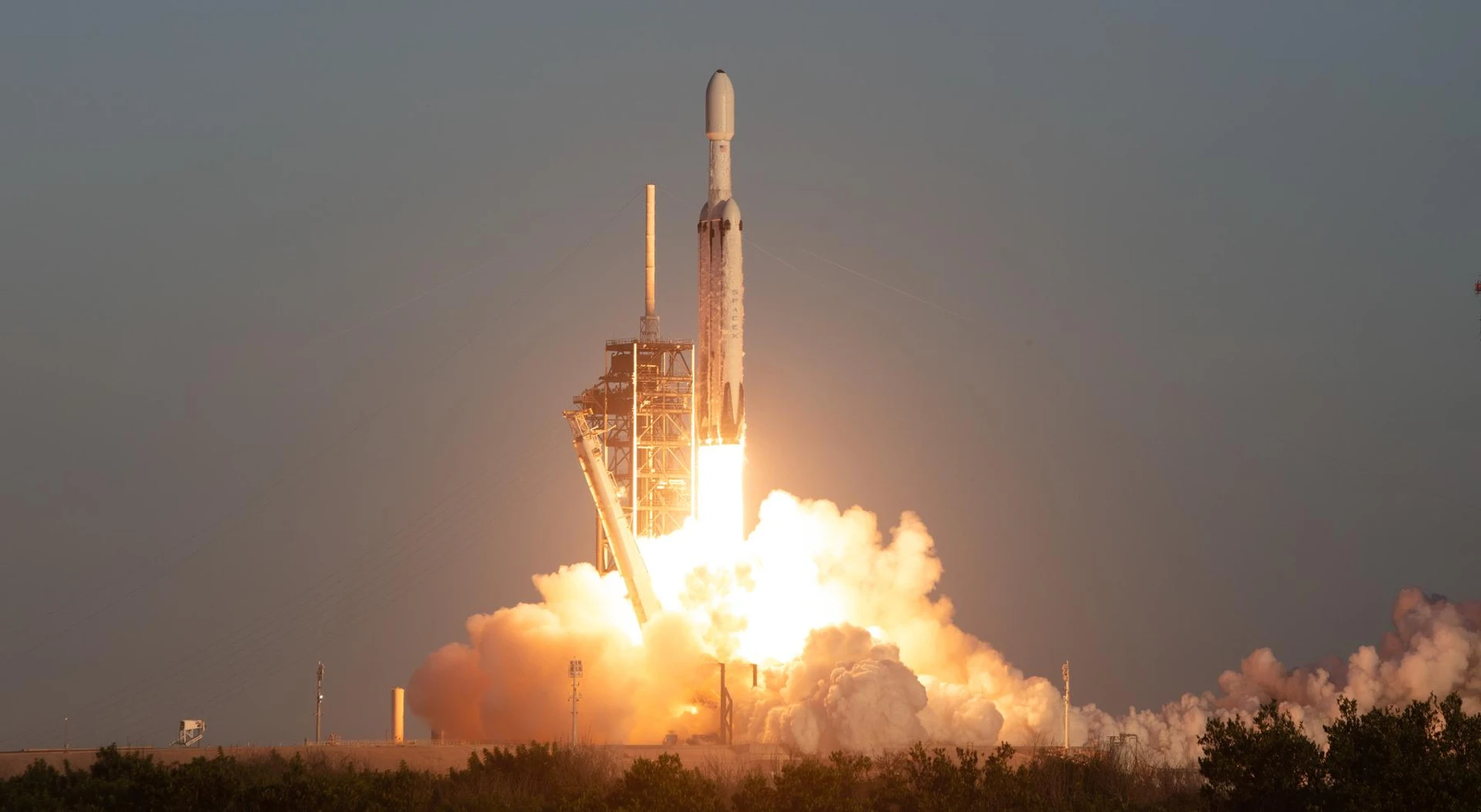
- Nancy Grace Roman Space Telescope (NASA). Launched on a SpaceX Falcon Heavy from Kennedy Space Center at 7:26 a.m. EDT on August 30, 2026, to study dark energy and dark matter among other goals (NASA Image and Video Library). NASA’s Roman page, updated November 7, 2026, describes it entering its final commissioning phase (NASA Science, Roman).
- Euclid (ESA). Launched July 1, 2023, mapping about a third of the sky to study dark energy and dark matter; first survey data released March 19, 2025 (ESA, Euclid).
- NSF–DOE Vera C. Rubin Observatory. Its ten-year Legacy Survey of Space and Time had officially started as of a June 30, 2026 announcement, with dark energy and dark matter among its goals (Brookhaven National Laboratory, June 30, 2026).
- LZ and XLZD. LZ plans more than 1,000 live days by 2028, with higher-mass sensitivity planned for 100 GeV/c² to 100 TeV/c²; the US DOE says more data will show whether the September 2026 event’s significance grows or fades. XLZD, combining technology from LZ, XENONnT and DARWIN, is described as planned (Brookhaven National Laboratory).
Dark Matter by the Numbers
- 1,000 km/s or more (about 621 miles per second): the average Coma Cluster galaxy speeds Zwicky cited in 1933, implying a density at least 400 times the visible matter (Straumann, 2013)
- 21: spiral galaxies with flat rotation curves in Rubin’s 1980 paper, with radii from 4 to 122 kiloparsecs (about 13,000 to 398,000 light-years; about 1.2 × 10¹⁷ to 3.8 × 10¹⁸ km, or 7.7 × 10¹⁶ to 2.3 × 10¹⁸ miles) (Rubin et al. 1980)
- About 3.8 billion light-years (about 3.6 × 10²² km, or 2.2 × 10²² miles): distance to the Bullet Cluster (Chandra)
- 8 sigma: significance of the Bullet Cluster’s offset between mass and ordinary gas (Clowe et al. 2006)
- About 27%, 5% and 68%: NASA’s rounded shares of dark matter, ordinary matter and dark energy (NASA Science)
- About 5.4 to 1: the ratio of dark matter to ordinary matter from Planck 2018 (DCI arithmetic from 0.120 and 0.0224)
- About 1 mile (about 1.6 km) underground and 10 tonnes of liquid xenon: the LZ detector (US DOE)
- 2.6 sigma: LZ’s single hard-to-explain event, September 2026, short of the 5-sigma discovery threshold

Dark Matter: FAQ
Has anyone ever detected a dark matter particle?
No dark-matter particle detection has been independently confirmed as of November 2026. DAMA/LIBRA claims an annual modulation signal, but it is disputed because no other experiment has replicated it. LZ’s single September 2026 event, at 2.6 sigma, is not claimed as a discovery by its team.
Why is it called “dark” matter?
Because it doesn’t absorb, reflect or emit light, so telescopes can’t see it directly. Fritz Zwicky used the German phrase “dunkle Materie,” dark matter, for the unseen mass in the Coma Cluster in 1933.
Does dark matter interact with light at all?
Not directly, as far as anyone has measured. It affects light only through gravity, by bending the paths of light rays passing near it, which is how gravitational lensing maps it.
Could dark matter be made of black holes?
Primordial black holes, formed in the very early universe, are one candidate on NASA’s list. None has been confirmed, and they remain one of several possibilities alongside WIMPs and axions.
What did the LZ experiment see in 2026?
LZ reported one particle interaction in data from March 2023 to April 2024 that known backgrounds struggle to explain. Its global significance is 2.6 sigma: about a 0.5% chance of a result at least this discrepant if only known backgrounds were present, which is not the same as the chance the event is background. That is well short of the 5-sigma discovery standard, and more data will test it.
Does modified gravity explain the Bullet Cluster?
The Chandra team argues that the separation of mass from hot gas would not appear if the gas were the most massive component, as some alternative gravity theories propose. Tests of modified gravity continue, such as the conflicting wide-binary studies, so we treat the wider question as open.
Is dark energy a kind of dark matter?
No. Dark matter adds gravitational pull and clumps around galaxies, while dark energy is linked to the accelerating expansion of the universe and is spread throughout space. NASA estimates dark energy at about 68% of the universe and dark matter at about 27%.
How will new telescopes help with dark matter?
Roman, which launched on August 30, 2026 and is in final commissioning, is set to map dark matter, Euclid is mapping large-scale structure across about a third of the sky, and Rubin’s ten-year survey lists dark matter among its goals. Maps like these won’t identify the particle on their own, but they test how dark matter is distributed.
Your next step: next time you read that “dark matter has been found,” check three things: the significance (5 sigma is the discovery standard), whether the team itself claims a discovery, and the date. Then compare it with the dated results in this guide’s searches section. We’ll update it as new results land.

Sources and Further Reading
- NASA Science (published March 7, 2025; updated August 12, 2026), Dark Matter; also Dark Matter & Dark Energy. Author: Chelsea Gohd, NASA JPL.
- Straumann, N. (March 2013), Fritz Zwicky: An Extraordinary Astrophysicist, Swiss Physical Society.
- Zwicky, F. (1933), in Helvetica Physica Acta. English republication: “The redshift of extragalactic nebulae,” General Relativity and Gravitation 41(1), 207–224 (2009). doi:10.1007/s10714-008-0707-4
- van den Bergh, S. (1999). “The Early History of Dark Matter.” arXiv:astro-ph/9904251; doi:10.1086/316369.
- Joosse, T. (May 11, 2023), June 1980: Vera Rubin Publishes Paper Hinting at Dark Matter, APS News.
- Rubin, V. C., and Ford, W. K., Jr. (1970). “Rotation of the Andromeda Nebula from a Spectroscopic Survey of Emission Regions.” The Astrophysical Journal 159, 379. doi:10.1086/150317
- Rubin, V. C., Thonnard, N., and Ford, W. K., Jr. (1980). “Rotational properties of 21 SC galaxies with a large range of luminosities and radii, from NGC 4605 (R = 4 kpc) to UGC 2885 (R = 122 kpc).” The Astrophysical Journal 238, 471. doi:10.1086/158003
- Clowe, D., Bradač, M., Gonzalez, A. H., Markevitch, M., Randall, S. W., Jones, C., and Zaritsky, D. (2006). “A Direct Empirical Proof of the Existence of Dark Matter.” The Astrophysical Journal 648, L109–L113. doi:10.1086/508162 (arXiv:astro-ph/0608407).
- Chandra X-ray Center (August 21, 2006), 1E 0657-56, the Bullet Cluster, image release.
- Scognamiglio, D., Leroy, G., Harvey, D., Massey, R., Rhodes, J., et al. (2026). “An ultra-high-resolution map of (dark) matter.” Nature Astronomy 10, 573–582. doi:10.1038/s41550-025-02763-9 (arXiv:2601.17239). Summary: COSMOS, Caltech (February 10, 2026), Illuminating the Invisible.
- Planck Collaboration, Aghanim, N., et al. (2020). “Planck 2018 results. VI. Cosmological parameters.” Astronomy & Astrophysics 641, A6. doi:10.1051/0004-6361/201833910 (arXiv:1807.06209).
- ESA (March 21, 2013), Planck reveals an almost perfect Universe and Planck and the cosmic microwave background.
- NASA Science (updated April 16, 2026), WMAP Overview.
- Hu, W., University of Chicago, CMB Intermediate pages: Baryon Loading; Radiation Driving.
- LZ Collaboration (2025). “Dark Matter Search Results from 4.2 Tonne-Years of Exposure of the LUX-ZEPLIN (LZ) Experiment.” Physical Review Letters 135, 011802. doi:10.1103/4dyc-z8zf (arXiv:2410.17036).
- LZ Collaboration (2026). “Search for dark matter particle interactions in an extended nuclear recoil energy window with the LUX-ZEPLIN (LZ) experiment.” arXiv:2609.02823 (submitted to Physical Review Letters).
- Martinez, M., Maruyama, R. H., and Sarsa, M. L. (2026). “Dark Matter Searches with Sodium Iodide Detectors.” arXiv:2607.24448. Review covering the disputed DAMA/LIBRA annual modulation claim.
- Brookhaven National Laboratory, LZ Experiment Sets New Record in Search for Dark Matter (results presented August 26, 2024) and LZ Sets a World’s Best in the Hunt for Galactic Dark Matter and Gets a New Look at Neutrinos from the Sun’s Core (December 2025).
- Brown University (December 8, 2025), LZ experiment sets new record in the hunt for dark matter, glimpses neutrinos from the sun’s core; (September 1, 2026), LZ experiment sees surprising result in search for dark matter.
- US Department of Energy, Office of Science (August 31, 2026), LZ Sees Surprising Result in Search for Dark Matter; University College London, Possible hint of dark matter recorded (September 2026).
- ADMX Collaboration (2025). “Axion Dark Matter eXperiment around 3.3 µeV with Dine-Fischler-Srednicki-Zhitnitsky Discovery Ability.” Physical Review Letters 134, 111002. doi:10.1103/PhysRevLett.134.111002 (arXiv:2408.15227).
- Conover, E. (March 6, 2020), Physicists have narrowed the mass range for hypothetical dark matter axions, Science News.
- Milgrom, M. (1983). “A modification of the Newtonian dynamics as a possible alternative to the hidden mass hypothesis.” The Astrophysical Journal 270, 365. doi:10.1086/161130
- Chae, K.-H. (2023). “Breakdown of the Newton-Einstein Standard Gravity at Low Acceleration in Internal Dynamics of Wide Binary Stars.” The Astrophysical Journal 952(2), 128. doi:10.3847/1538-4357/ace101 (arXiv:2305.04613).
- Banik, I., Pittordis, C., Sutherland, W., Famaey, B., Ibata, R., Mieske, S., and Zhao, H. (2024; published online November 2023). “Strong constraints on the gravitational law from Gaia DR3 wide binaries.” Monthly Notices of the Royal Astronomical Society 527(3), 4573–4615. doi:10.1093/mnras/stad3393 (arXiv:2311.03436).
- DESI Collaboration (2025). “DESI 2024 VI: Cosmological Constraints from the Measurements of Baryon Acoustic Oscillations.” Journal of Cosmology and Astroparticle Physics 2025(02), 021. doi:10.1088/1475-7516/2025/02/021 (arXiv:2404.03002).
- DESI Collaboration (2025). “DESI DR2 Results II: Measurements of Baryon Acoustic Oscillations and Cosmological Constraints.” Physical Review D 112, 083515. doi:10.1103/tr6y-kpc6 (arXiv:2503.14738).
- AURA (March 19, 2025), Tantalizing hints that dark energy is evolving; Ohio State University (April 15, 2026), DESI finishes observations for largest 3D map of universe; DESI, Data releases.
- NASA Science (updated November 7, 2026), Nancy Grace Roman Space Telescope; ESA, Euclid; Brookhaven National Laboratory (June 30, 2026), Action! NSF–DOE Vera C. Rubin Observatory Begins Capturing the Greatest Cosmic Movie Ever Made.
- NASA Science (updated September 4, 2026), Messier 31.
- NASA Image and Video Library: Webb Data Reveals Dark Matter (PIA26702), credit NASA/STScI/J. DePasquale/A. Pagan (featured image); Nancy Grace Roman Space Telescope Launch (NHQ202608300015-2).
Explore Next
- How DCI labels every claim: How We Know
- The galaxies dark matter holds together: Types of Galaxies
- Gravitational lensing in action: SN Refsdal: The Supernova That Replayed
- How to read images that mix data and maps: Are Space Photos Real?
- Two telescopes, one target: Hubble vs. Webb: Same Nebula, Different View
- More from deep space: Stars & Galaxies
- Read next: How Old Is the Universe?
- Read next: What Is a Black Hole?
- Read next: What Is Tidal Locking?
- Read next: Why Is Neptune Blue?
How This Explainer Was Checked
Every number in this article was checked in November 2026 against the source linked beside it: NASA Science, the NASA Image and Video Library, ESA, the Chandra X-ray Center, the US Department of Energy, Brookhaven National Laboratory, university news offices, the University of Chicago’s CMB pages, and peer-reviewed papers, with DOIs given where they exist (paper details confirmed through Crossref and arXiv records). Where sources give different cosmic shares (NASA, ESA’s 2013 Planck release, Planck 2018 and WMAP), we show them side by side. The Planck 2018 percentages, the dark-to-ordinary matter ratio, and all light-year, kilometre and mile conversions are DCI’s arithmetic. Status labels are the same throughout: the cluster, rotation-curve and lensing evidence is Measured, the Bullet Cluster offset is Observed, the CMB-based dark matter budget is Modelled, the identity of dark matter, MOND, LZ’s 2026 event and evolving dark energy are Open, and a lab detection of a dark matter particle is Not supported (DAMA/LIBRA’s claimed signal is noted as disputed). LZ, ADMX and DESI results are dated, and sigma values are quoted as each team gives them. Images are labelled: real spacecraft or telescope images as OBSERVATION, illustrations as ILLUSTRATION, and our charts as DATA GRAPHIC. Nothing AI-generated is presented as a real image.

Final Thought: The Shadow We Can Weigh
Dark matter is one of the strangest facts in science: we can weigh it, map it and measure how much of it there is, but we can’t say what it is. Every galaxy that spins too fast and every cluster that bends too much light points to the same missing mass. Every empty detector run narrows where it can hide. One day a detector may catch a particle, or a theory of gravity may make the whole idea unnecessary. Until then, the honest answer is the one that has held for nearly a century: something is there, and it isn’t anything we’ve seen.
About the Author
Author: King | Founder of Dark Cosmic Insights
King is the founder of Dark Cosmic Insights, a science storytelling platform exploring the strangest true stories hiding in space, science and AI. He digs into NASA, ESA and peer-reviewed research, separates what has been measured from what is still a mystery, and turns it into articles, data graphics and Shorts.
Follow the anomaly. Trace the source.