On December 24, 2024, NASA’s Parker Solar Probe flew just 3.8 million miles (about 6.1 million km) from the Sun’s surface, closer than any spacecraft before it. It was moving at about 692,000 km per hour, and its heat shield was expected to face temperatures around 980 °C (1,800 °F) (Johns Hopkins APL, 2025).
Here’s the strange part. The probe was flying through the Sun’s outer atmosphere, the corona, where the gas can reach up to about 2 million °C. That’s hundreds of times hotter than the Sun’s visible surface below it. Why the Sun’s atmosphere is so much hotter than its surface is one of the biggest unsolved puzzles in solar science.
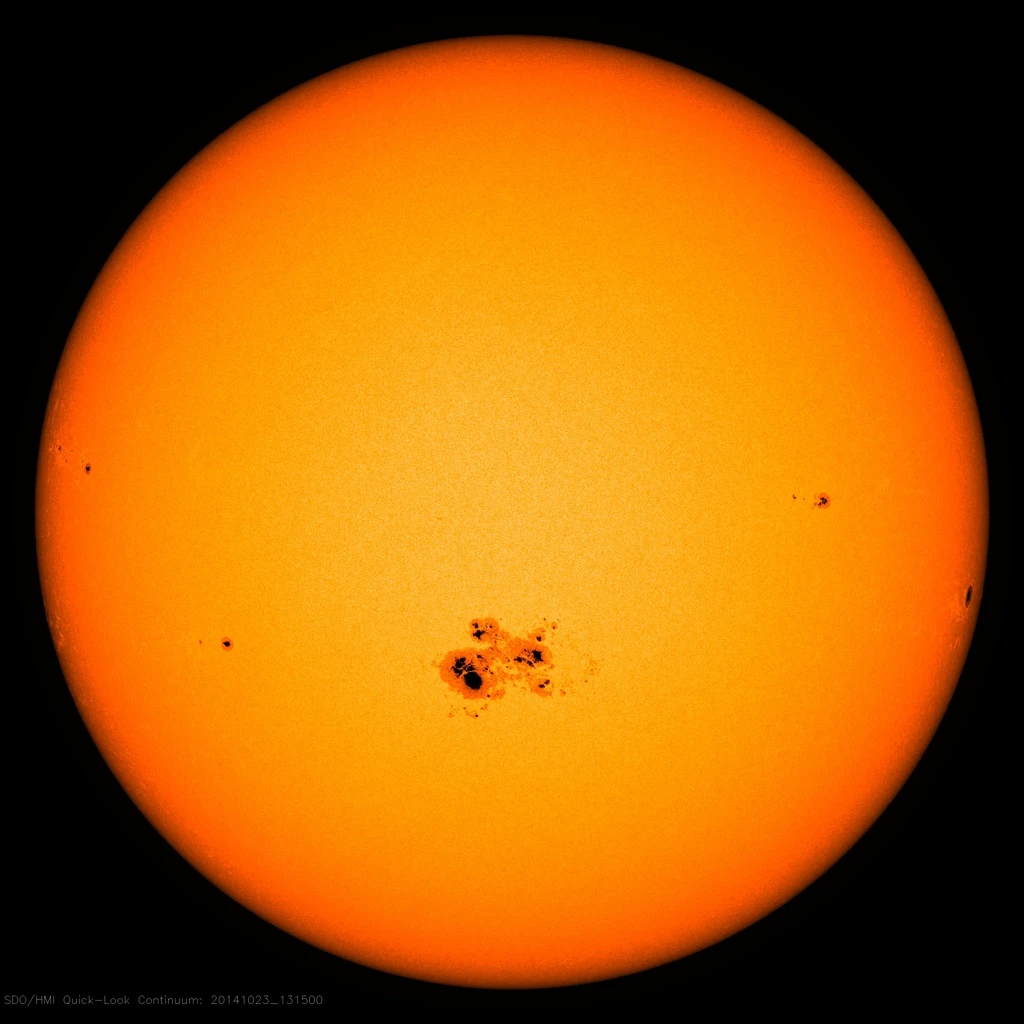
Observed, measured, modelled, open. The temperatures of the Sun’s surface and outer layers are measured from the light they give off. The core temperature is modelled: no instrument can reach it, so it’s calculated from physics that matches what we observe. Why the corona is so hot is still open.
Quick Answer: How Hot Is the Sun?
It depends which part of the Sun you mean. NASA says the visible surface, the photosphere, is “a relatively cool 10,000 °F (5,500 °C),” while the core is “about 27 million degrees Fahrenheit (15 million degrees Celsius).” Above the surface, the temperature rises again: the outer atmosphere, the corona, “reaches up to 3.5 million °F (2 million °C)” (NASA). Sunspots are cooler patches on the surface, about 4,200 °C (UCAR). Why the corona is so much hotter than the surface is still unsolved.
What this article can and cannot establish. It can give you NASA’s figures for each layer of the Sun, explain how those temperatures are measured or modelled, and lay out the leading ideas about the corona. It can’t give one temperature for “the Sun,” because each layer is different, and it can’t tell you exactly why the corona is so hot, because scientists haven’t settled that yet.
Table of Contents
The DCI Evidence Map: The Sun’s Temperature
| Question | What we know | Status | Key source |
|---|---|---|---|
| How hot is the visible surface? | About 5,500 °C (10,000 °F) | Measured | NASA |
| What’s its effective temperature? | 5,772 K, about 5,500 °C | Measured | NASA NSSDC |
| How hot is the core? | About 15 million °C | Modelled | NASA |
| How hot are sunspots? | About 4,200 °C | Measured | UCAR |
| How hot is the chromosphere? | About 6,000 °C rising to 20,000 °C | Measured | NASA, 2023 |
| How hot is the corona? | Up to about 2 million °C | Measured | NASA |
| Why is the corona so hot? | “A major unsolved puzzle,” NASA says | Open | NASA |
| How close has a spacecraft flown? | 6.1 million km from the surface, December 24, 2024 | Observed | JHU APL |
Status key: Observed = seen directly. Measured = a number with a stated uncertainty or a direct measurement. Modelled = inferred from measurements through a physical model, dependent on assumptions. Calculated = worked out from measured values rather than measured directly. Open = unresolved; the evidence is incomplete or points different ways. Estimated = an expected or predicted value, not yet confirmed by a published measurement. Not supported = the evidence goes against the claim, or there is none for it.
Cite this framework: “DCI Evidence Map: The Sun’s Temperature,” Dark Cosmic Insights, November 2026, darkcosmicinsights.com/how-hot-is-the-sun/.
How Hot Is the Sun’s Core?
About 15 million °C
The Sun’s core is its power plant. NASA says “the temperature in the Sun’s core is about 27 million degrees Fahrenheit (15 million degrees Celsius)” (NASA). NASA’s solar fact sheet gives a central temperature of 15.71 million kelvin (NASA NSSDC). These are approximate figures from different summaries; the kelvin-to-Celsius conversion is negligible at this scale.
Fusion keeps it hot
The core stays hot because of nuclear fusion. NASA explains: “Nuclear reactions here – where hydrogen is fused to form helium – power the Sun’s heat and light” (NASA). The Sun isn’t burning like a fire. It’s squeezing atoms together under enormous pressure.
Crushing density
The core is packed tight. NASA’s fact sheet lists a central density of 162,200 kg per cubic meter, about 162 times the density of water (NASA NSSDC; DCI comparison with water’s 1,000 kg per cubic meter).
How we know without going there
No probe can reach the core. Its temperature is modelled: scientists build computer models of the Sun that must match its measured mass, size, brightness and the way its surface vibrates, and those models give the core temperature. That’s why we label it Modelled, not Measured.
How Long Does the Heat Take to Escape?
170,000 years to the surface
Energy made in the core doesn’t shoot straight out. In the layer above the core, the radiative zone, light is absorbed and re-emitted over and over in random directions. NASA says energy ends up “taking about 170,000 years to get from the core to the top of the convection zone” (NASA).
Then it boils up
In the outer layer below the surface, the convection zone, hot gas rises, cools and sinks again, like a pot of boiling soup. NASA notes that in this zone “the temperature drops below 3.5 million °F (2 million °C)” (NASA).
Eight minutes to Earth
Once light finally leaves the surface, the last leg is quick. At the average Earth–Sun distance of 149.6 million km (NASA NSSDC), sunlight reaches us in about 8 minutes and 19 seconds (DCI calculation).
How Hot Is the Sun’s Surface?
About 5,500 °C
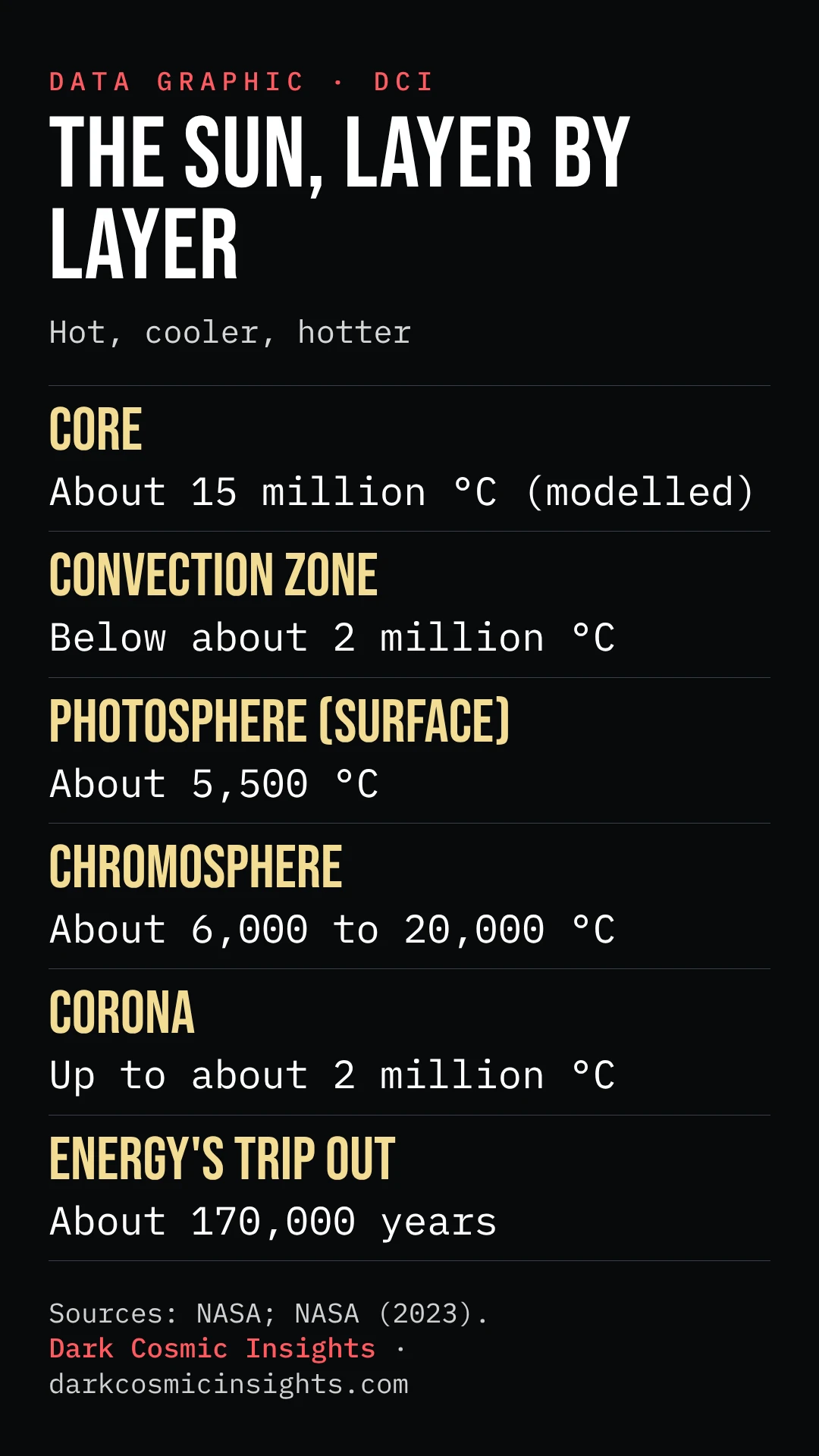
The Sun doesn’t have a solid surface. What we call its surface is the photosphere, the layer that gives off the light we see. NASA describes it as “about 250 miles thick, with temperatures reaching about 10,000 degrees Fahrenheit” and calls it “a relatively cool 10,000 °F (5,500 °C)” (NASA).
Hotter at the bottom, cooler at the top
The photosphere isn’t one temperature. NASA’s fact sheet lists about 4,400 K at the top and 6,600 K at the bottom (NASA NSSDC), which is about 4,100 °C to 6,300 °C (DCI conversion).
The effective temperature: 5,772 K
Astronomers often give the Sun’s effective temperature, the temperature a perfect glowing body would need to give off the same total energy. NASA’s fact sheet lists 5,772 K (NASA NSSDC), about 5,500 °C (DCI conversion). That matches NASA’s surface figure.
How Hot Are Sunspots?
Cooler, not cold
Sunspots look black, but only by comparison. UCAR’s Center for Science Education says “large sunspots are thousands of degrees cooler than the areas that surround them (about 4,200 °C for a sunspot compared to 6,000 °C for the photosphere surrounding it)” (UCAR). On their own, sunspots would still glow brightly.
Magnetic traffic jams
Sunspots form where strong magnetic fields poke through the surface and slow the flow of heat from below. NASA’s description of the record 2014 sunspot group notes that “sunspots point to relatively cooler areas on the sun with intense and complex magnetic fields poking out through the sun’s surface” (NASA).
Some are huge
That 2014 group, called AR 12192, grew to be “almost 80,000 miles across,” NASA said, wide enough to fit ten Earths (NASA). Regions like that can launch solar flares.
Why Does It Get Hotter Above the Surface?
The chromosphere: a warm-up
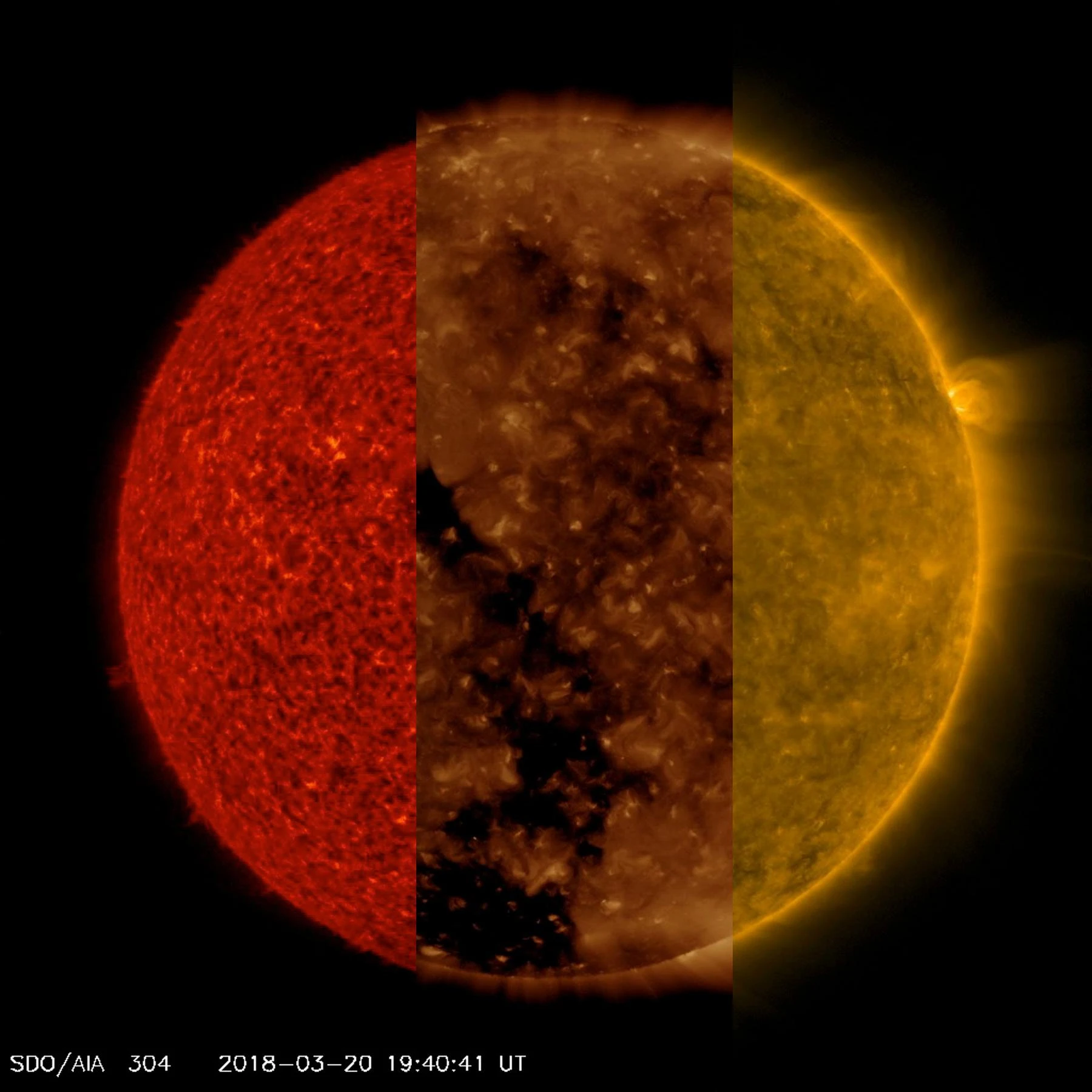
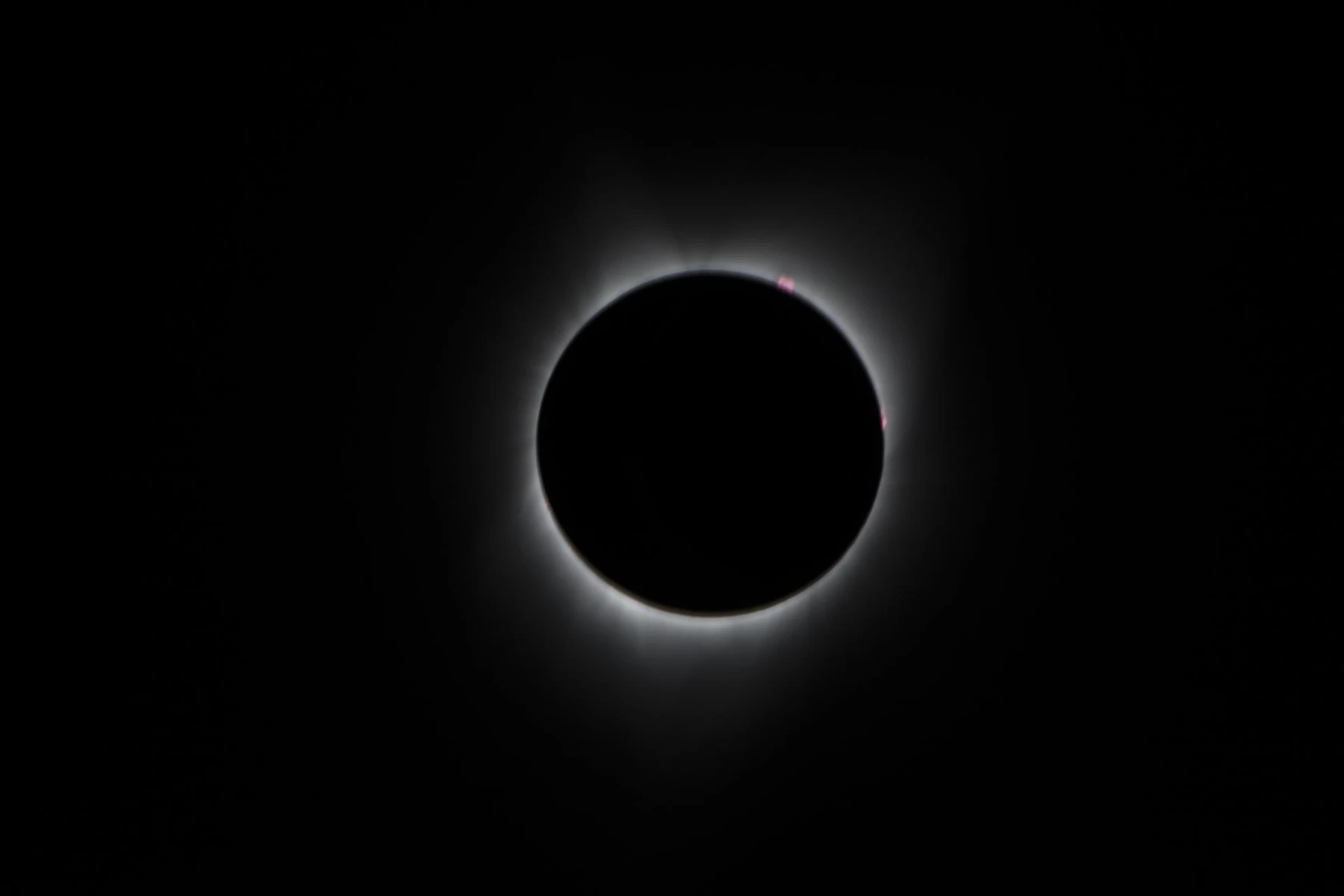
Above the photosphere is a thin layer called the chromosphere. NASA says that in this layer “the temperature rises from 6000°C to about 20,000°C” (NASA, 2023). During a total solar eclipse, the chromosphere shows up as “a fine, red rim around the Sun” (NASA).
The transition region: a sudden jump
Next comes the transition region, which NASA calls “the thin layer where the chromosphere rapidly heats and becomes the corona” (NASA). Over a short distance, the temperature leaps from tens of thousands of degrees to around a million.
The corona: millions of degrees
The corona is the Sun’s outer atmosphere. It’s extremely thin, but very hot. NASA says it “reaches up to 3.5 million °F (2 million °C)” (NASA). That’s far hotter than the photosphere below it, about 5,500 °C.
Hot but not dense
A thin gas can be very hot without carrying much heat. That’s part of why Parker Solar Probe can fly through the corona. Its shield, heated by the Sun’s intense light as well as the surrounding gas, was expected to face about 980 °C at closest approach, not millions of degrees (JHU APL, 2025).
Why Is the Corona Hotter Than the Surface?
An open question
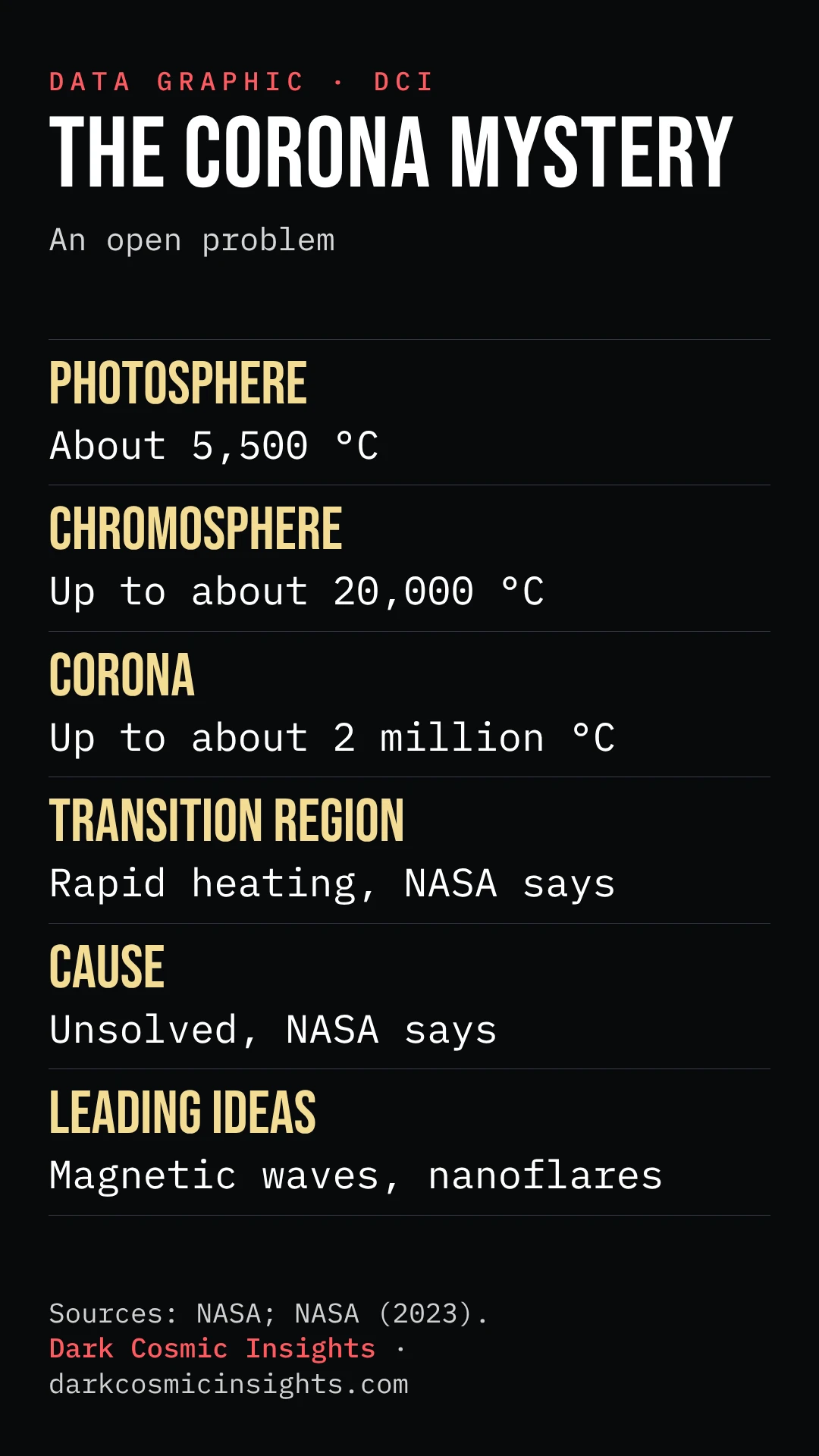
NASA is direct about it: “In one of the Sun’s biggest mysteries, the corona is much hotter than the layers immediately below it,” and “the source of coronal heating is a major unsolved puzzle in the study of the Sun” (NASA). We label this Open.
The leading ideas
Most explanations involve the Sun’s magnetic field, which carries energy up from the churning layers below. A 2023 review in Physics Today describes two main families of ideas (Sigalotti & Cruz, Physics Today, 2023):
- Wave heating: “mechanical energy is transported by magnetic waves into the corona.”
- Magnetic reconnection and nanoflares: magnetic field lines “break and reconnect,” and “discrete, small explosive events such as smaller nanoflares may contribute to the coronal heating budget.”
Both may play a part. The evidence isn’t settled yet.
Parker Solar Probe is looking
Parker Solar Probe was built to fly through the corona and sample it directly. Its measurements help scientists understand how the region “gets so hot,” Johns Hopkins APL says (JHU APL, 2025). Its heat shield is designed to withstand up to about 1,430 °C (2,600 °F).
How Do Scientists Measure the Sun’s Temperature?
Color and brightness
The simplest method uses the Sun’s light. Hotter objects glow brighter and bluer; cooler ones glow dimmer and redder. Measuring how much energy the Sun gives off at each color gives the photosphere’s temperature, and its total energy output gives the effective temperature of 5,772 K.
Fingerprints of hot atoms
For the corona, scientists look for light from specific atoms. In extremely hot gas, atoms lose many of their electrons, and each stripped-down atom gives off light at particular wavelengths. NASA explains that “each ion can emit light at specific wavelengths when it reaches a particular temperature” (NASA, 2013, archived).
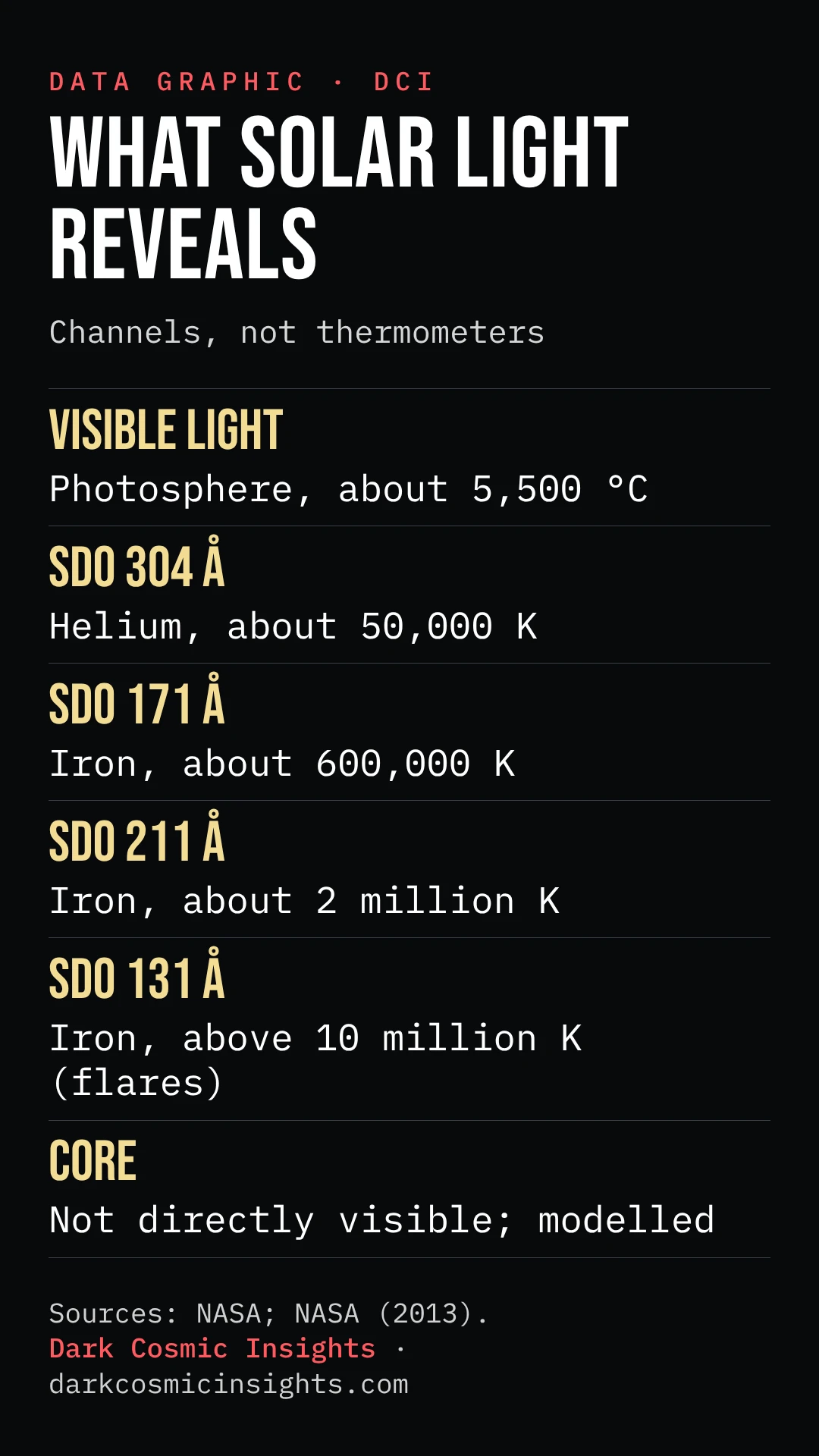
SDO’s temperature filters
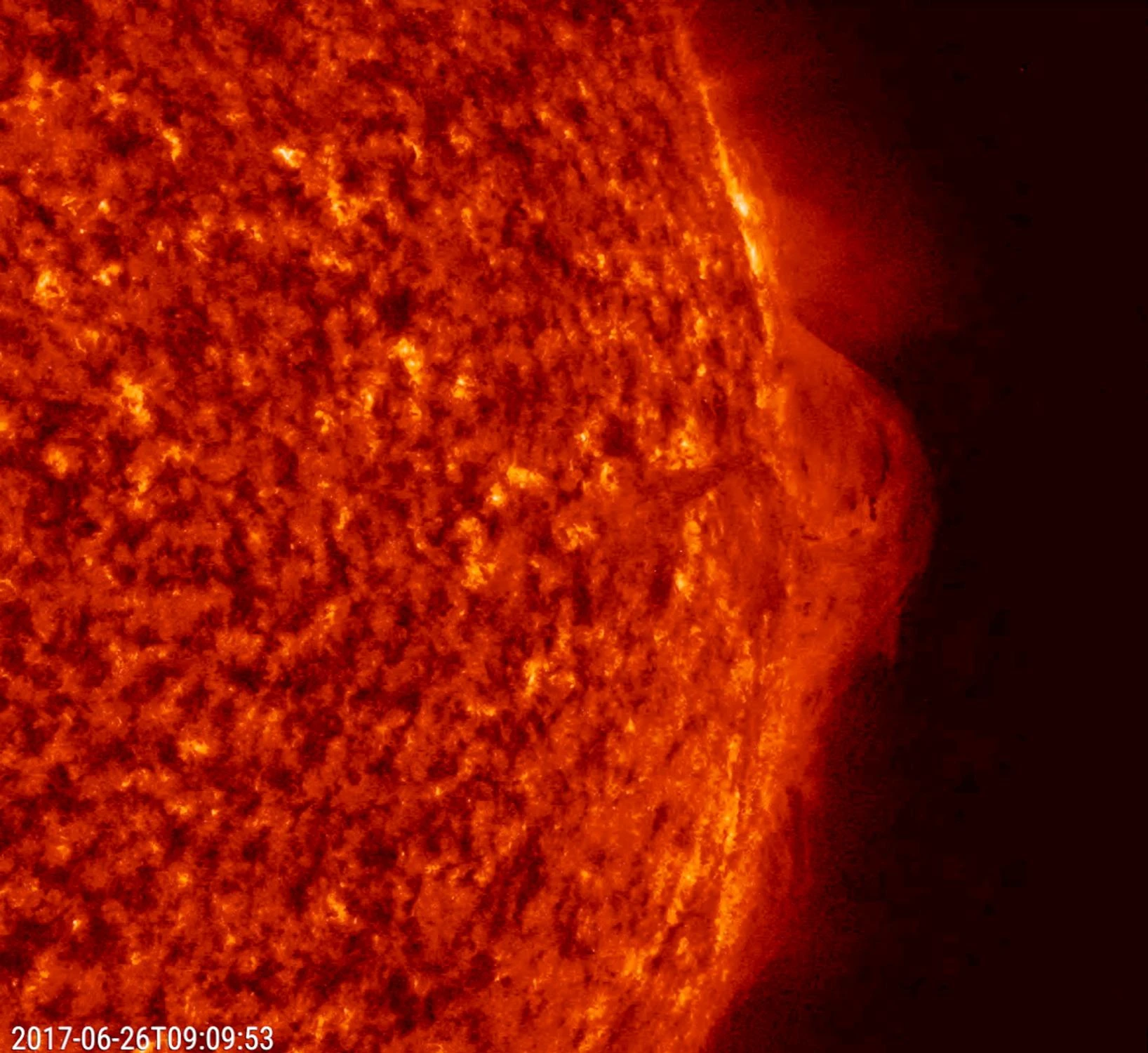
NASA’s Solar Dynamics Observatory uses that trick. Its extreme ultraviolet channels each highlight plasma at characteristic temperatures. For example, NASA says the 171-angstrom channel shows iron atoms “at around 600,000 Kelvin,” the 211-angstrom channel shows them “at temperatures of 2,000,000 Kelvin,” and the 131-angstrom channel catches material “at temperatures greater than 10,000,000 Kelvin,” which appears in flares (NASA, 2013, archived). The colors in SDO images are assigned to those wavelength channels, so they’re a guide to temperature, not a one-to-one temperature map (NASA SDO Guide).
Models for the core
The core can’t be seen at all. Its temperature comes from models that must reproduce the Sun’s measured size, mass, brightness and surface vibrations. We cover how those same models help date the Sun in How Old Is the Sun?
How Does the Sun Compare With Other Hot Things?
Side by side, using NASA’s figures:
- The core vs. the surface: about 15 million °C at the center, about 5,500 °C at the visible surface.
- The surface vs. the hottest planet: Venus’s mean temperature is 737 K, about 464 °C (NASA NSSDC), thousands of degrees cooler than the Sun’s surface. We cover Venus in What Is the Hottest Planet?
- The corona vs. the surface: up to about 2 million °C in the corona, against about 5,500 °C at the photosphere.
Myth vs. Fact: The Sun’s Temperature
| Myth | Fact | Status |
|---|---|---|
| “The Sun is a giant fire.” | It’s powered by nuclear fusion, not burning. | Measured |
| “The Sun’s surface is its hottest part.” | The core and the corona are both far hotter. | Measured |
| “Sunspots are cold.” | They’re about 4,200 °C, only cooler than their surroundings. | Measured |
| “Scientists know why the corona is so hot.” | It’s still an open problem, NASA says. | Open |
| “A probe touching the corona would melt instantly.” | Parker’s shield, heated by sunlight and the thin corona, was expected to face about 980 °C. | Estimated |
How Can You See the Sun’s Layers Safely?
Never look directly
Never look straight at the Sun, and never through binoculars or a telescope without a proper solar filter. NASA says safe solar viewers “ought to comply with the ISO 12312-2 international standard” (NASA). A simple pinhole projector, with the Sun at your back, is another safe option.
Watch a total eclipse
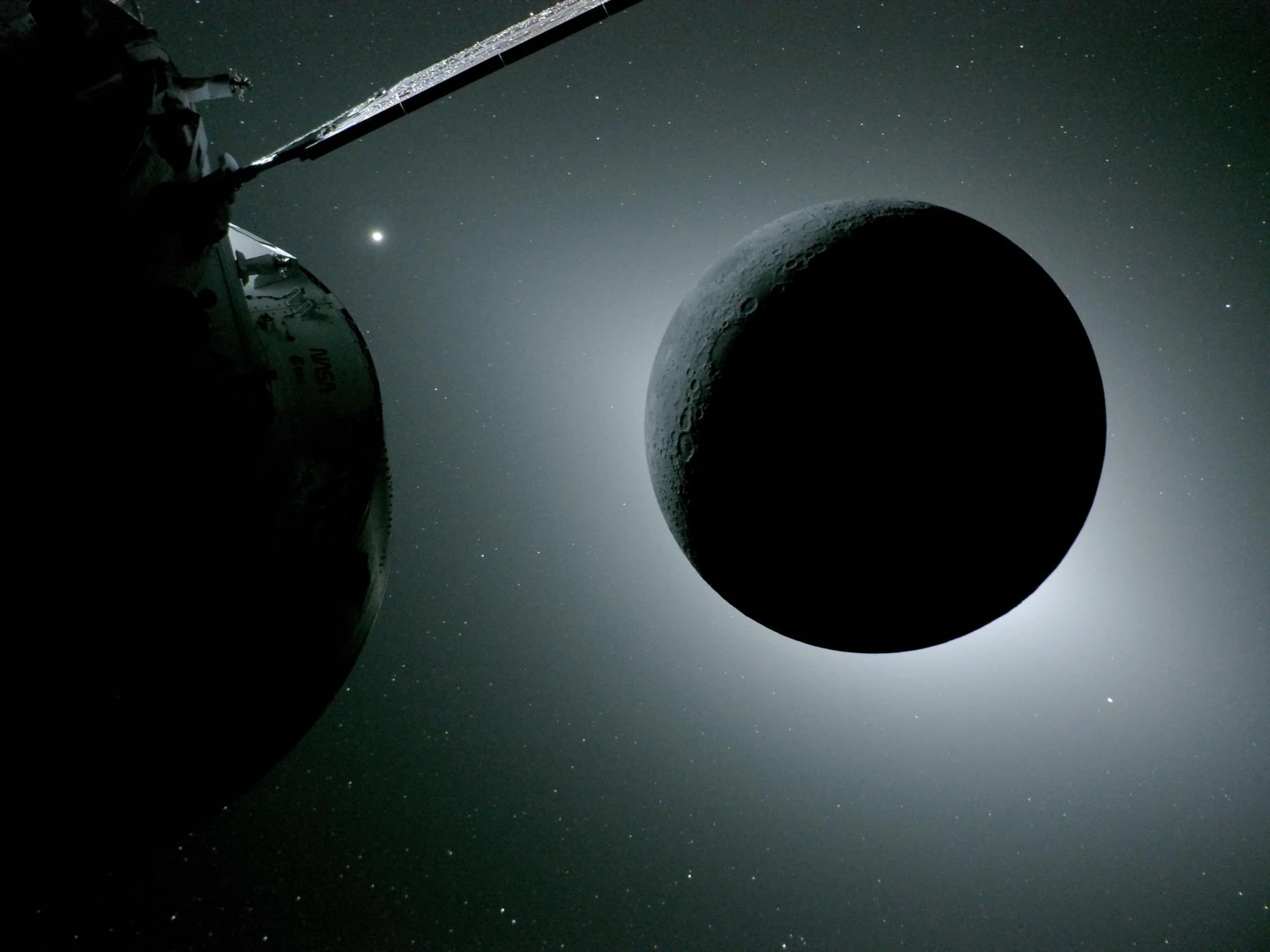
The corona is visible to the naked eye only during the few minutes of a total solar eclipse, when the Moon covers the bright photosphere. NASA says it’s safe to look directly “only when the Moon completely obscures the Sun’s bright face” (NASA), and you need eye protection again as soon as totality ends.
Use NASA’s live images
NASA’s Solar Dynamics Observatory posts new images of the Sun throughout the day in many wavelengths. Each wavelength channel highlights gas at characteristic temperatures, from the roughly 5,500 °C surface in visible light to coronal loops of more than a million degrees in extreme ultraviolet.
The Sun’s Temperature by the Numbers
| Measure | Value | Source |
|---|---|---|
| Core | about 15 million °C (27 million °F) | NASA |
| Central temperature (fact sheet) | 15.71 million K | NASA NSSDC |
| Visible surface | about 5,500 °C (10,000 °F) | NASA |
| Effective temperature | 5,772 K | NASA NSSDC |
| Photosphere range | about 4,400 K (top) to 6,600 K (bottom) | NASA NSSDC |
| Sunspots | about 4,200 °C | UCAR |
| Chromosphere | about 6,000 to 20,000 °C | NASA, 2023 |
| Corona | up to about 2 million °C (3.5 million °F) | NASA |
| Energy’s trip from core | about 170,000 years | NASA |
| Parker’s closest pass | 6.1 million km, December 24, 2024 | JHU APL |
Sources checked November 2026.
Sun Temperature FAQ
How hot is the Sun?
It depends on the layer. NASA says the visible surface is about 5,500 °C (10,000 °F), the core about 15 million °C, and the outer atmosphere, the corona, up to about 2 million °C.
How hot is the surface of the Sun?
About 5,500 °C, or 10,000 °F, NASA says. NASA’s fact sheet gives an effective temperature of 5,772 K, which matches. The photosphere ranges from about 6,600 K at its base to 4,400 K at its top.
How hot is the Sun’s core?
About 15 million °C (27 million °F), NASA says. That figure comes from models of the Sun, because no instrument can reach the core.
Why is the corona hotter than the surface?
Nobody knows for sure. NASA calls coronal heating “a major unsolved puzzle.” Leading ideas involve magnetic waves and small explosive events called nanoflares, both driven by the Sun’s magnetic field.
How hot are sunspots?
About 4,200 °C, compared with about 6,000 °C for the surrounding surface, UCAR says. They look dark only because they’re cooler than their surroundings.
How do scientists know the Sun’s temperature?
From its light. The color and brightness of sunlight give the surface temperature. Light from specific stripped-down atoms reveals the corona’s temperature. The core is modelled from the Sun’s measured properties.
How close has a spacecraft been to the Sun?
NASA’s Parker Solar Probe flew 3.8 million miles (about 6.1 million km) from the surface on December 24, 2024, at about 692,000 km per hour. Its shield was expected to reach about 980 °C.
How long does sunlight take to reach Earth?
About 8 minutes and 19 seconds, at the average Earth–Sun distance of 149.6 million km. But the energy in that light took about 170,000 years to work its way out from the core first, NASA says.
Your next step: pull up NASA’s Solar Dynamics Observatory images and compare the 171 and 304 channels. You’ll be looking at two different temperatures of the same Sun, hundreds of thousands of degrees apart.
Sources and Further Reading
- NASA Science, Sun: Facts.
- NASA Space Science Data Coordinated Archive, Sun Fact Sheet.
- NASA Science, The Sun Spot blog (September 26, 2023), Layers of the Sun.
- UCAR Center for Science Education, Sunspots.
- Sigalotti, L. Di G. and Cruz, F. (2023), Unveiling the mystery of solar coronal heating, Physics Today 76(4).
- NASA Science, Eclipse Safety; NASA NSSDC, Venus Fact Sheet.
- Johns Hopkins University Hub (January 2, 2025), Parker Solar Probe Makes Closest Pass to Sun.
- NASA (2013, archived), What Wavelength Goes With a Color?
- NASA Goddard, SDO Guide.
- NASA images: GSFC_20171208_Archive_e000923, PIA22360, AFRC2017-0233-008, PIA21768, art002e016324.
Explore Next
- How old our star is, and how long it has left: How Old Is the Sun?
- What happens to stars like the Sun: The Life Cycle of a Star
- The hottest planet, by comparison: What Is the Hottest Planet?
- The cold on the other side: How Cold Is Space?
- Sunlight’s last stop before us: How Far Is the Moon?
- What photosphere and corona mean: Space Glossary
- How a claim earns its label: How We Know
How This Explainer Was Checked
Every number and quote in this article was checked in November 2026 against the source linked beside it: NASA’s Sun facts, NASA’s Sun fact sheet, NASA’s 2023 “Layers of the Sun” post, UCAR’s sunspot page, Johns Hopkins APL’s report on Parker Solar Probe’s December 2024 pass, Sigalotti and Cruz’s 2023 Physics Today review, NASA’s eclipse safety page, NASA’s Venus fact sheet, NASA’s archived explainer on Solar Dynamics Observatory wavelengths and NASA’s SDO guide. Surface, chromosphere, corona and sunspot temperatures are labelled Measured; the core temperature is labelled Modelled; the cause of coronal heating is labelled Open. Parker’s shield temperature is labelled Estimated, because the source gives an expected value. Celsius conversions, light travel time and the density comparison are DCI calculations. Images are labelled: real spacecraft and telescope images as OBSERVATION, our charts as DATA GRAPHIC. Nothing AI-generated is presented as a real image.
Final Thought: Hot Inside, Hotter Outside
The Sun follows the rule you’d expect for most of its depth: hottest at the center, cooler toward the surface. Then, just above the surface, it breaks that rule, heating its thin outer atmosphere to millions of degrees. Spacecraft are now flying through that atmosphere to find out how. The answer will tell us how our own star works, and how it shapes the space weather that reaches Earth.
About the Author
Author: King | Founder of Dark Cosmic Insights