Picture a planet with no sunrise. No year, no seasons, no star to circle. Just a dark world falling endlessly through the galaxy, lit only by distant starlight. It sounds like science fiction, but astronomers now think worlds like this may be the most common planets in the Milky Way. NASA says rogue planets may outnumber planets that orbit stars by about six to one, which would mean trillions of them drifting through our galaxy (NASA Science, Roman).
In 2026 that idea took two big steps. In January, a team reported the first rogue planet candidate with a directly measured mass, a world about as heavy as Saturn (Dong et al. 2026, Science). And in August, NASA launched the Nancy Grace Roman Space Telescope, built in part to find hundreds more (NASA Science, August 30, 2026).

Observed, measured, modelled, open. Individual rogue planets are observed, through microlensing and direct imaging. One rogue planet’s mass has been measured. How common they are is modelled from survey statistics. Whether most were thrown out of star systems or formed alone is still open.
Quick Answer: What Are Rogue Planets?
Rogue planets, also called free-floating planets, are planet-mass worlds that don’t orbit a star. They drift through the galaxy on their own. Most are too dark and cold to see directly, so astronomers usually find them through gravitational microlensing, when a rogue planet passes in front of a distant star and briefly brightens it (NASA Science, Roman). Many are thought to have been ejected from their home systems; some may form on their own, like tiny stars. NASA estimates rogue planets may outnumber star-bound planets by about six to one.
What this article can and cannot establish. It can show you how rogue planets are detected, what a few well-studied examples reveal, and why scientists think they’re common. It cannot give you an exact count of rogue planets in the Milky Way, because every estimate comes from extrapolating a small sample. And for most rogue planet candidates, it can’t rule out a very distant, unseen host star.
Table of Contents
The DCI Evidence Map: Rogue Planets
| Question | What we know | Status | Key source |
|---|---|---|---|
| Do rogue planets exist? | Yes: candidates from microlensing surveys and direct imaging | Observed | NASA Science, Roman · Dong et al. 2026 |
| Has any rogue planet’s mass been measured? | Yes: about 0.22 Jupiter masses, roughly Saturn’s mass, for one event reported in 2026 | Measured | Dong et al. 2026 · Coleman 2026 |
| How common are they? | NASA: about six rogue planets per star-bound planet; one survey analysis suggests even more | Modelled | NASA Science, Roman · DeRocco et al. 2026 |
| How do they form? | Some are ejected from planetary systems; some may form alone like stars | Open | ESO, 2025 · Dong et al. 2026 |
| Can rogue planets still grow? | Yes: Cha 1107-7626 was seen accreting six billion tonnes a second in 2025 | Measured | ESO, 2025 |
| Will Roman find many more? | Expected to find hundreds, down to the mass of Mars | Modelled | NASA Science, Roman |
| Is a rogue planet about to hit Earth? | No known rogue planet is on a course toward the solar system | Not supported | See “Could a Rogue Planet Hit Earth?” below |
Status key: Observed = seen directly in images or data. Measured = a number with a stated uncertainty. Modelled = inferred from measurements through a physical or statistical model, dependent on assumptions. Open = unresolved; the evidence is incomplete or points different ways. Not supported = the evidence goes against the claim, or there is none for it.
Cite this framework: “DCI Evidence Map: Rogue Planets,” Dark Cosmic Insights, November 2026, darkcosmicinsights.com/rogue-planets/.
What Makes a Planet “Rogue”?
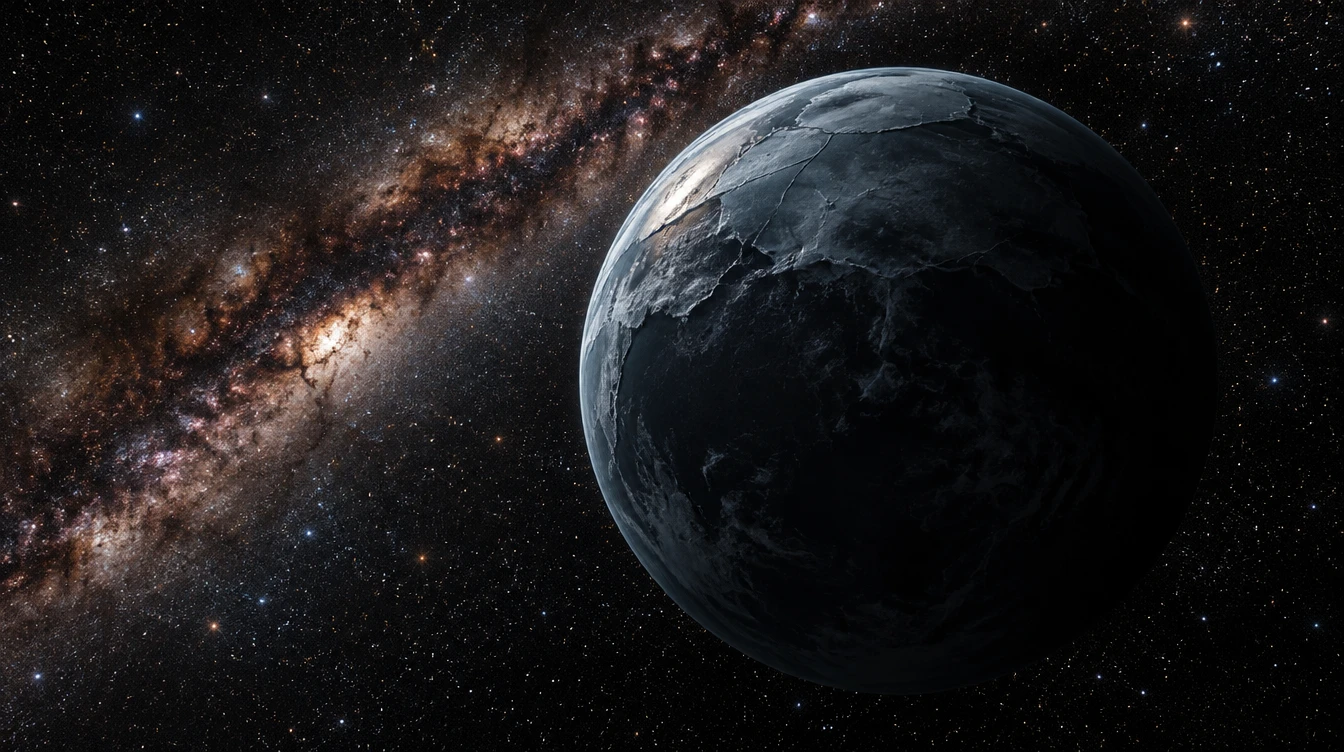
A rogue planet is simply a planet-mass object with no star of its own. Scientists usually call them free-floating planets. NASA describes them as worlds “untethered to a star” (NASA Science, Exoplanets).
Planet or failed star?
There’s a fuzzy line between the biggest rogue planets and brown dwarfs, objects too small to fuse hydrogen like stars but bigger than typical planets. A lone object several times Jupiter’s mass could have formed either way. That’s why scientists care so much about how a rogue planet formed, not just how heavy it is.
Not just “a planet far from its star”
Some planets orbit their stars at enormous distances. A world on a very wide orbit can look, in the data, a lot like a rogue planet. For many candidates, astronomers can’t fully rule that out. The 2026 Saturn-mass discovery, for example, is described as either gravitationally unbound “or on a very wide orbit” (Dong et al. 2026).
How Do Astronomers Find a Planet With No Star?
Rogue planets give off almost no light. NASA notes they’re often so cold they emit “too little heat for infrared telescopes to see” (NASA Science, Roman). So astronomers look for their gravity instead.
Microlensing: gravity as a magnifying glass
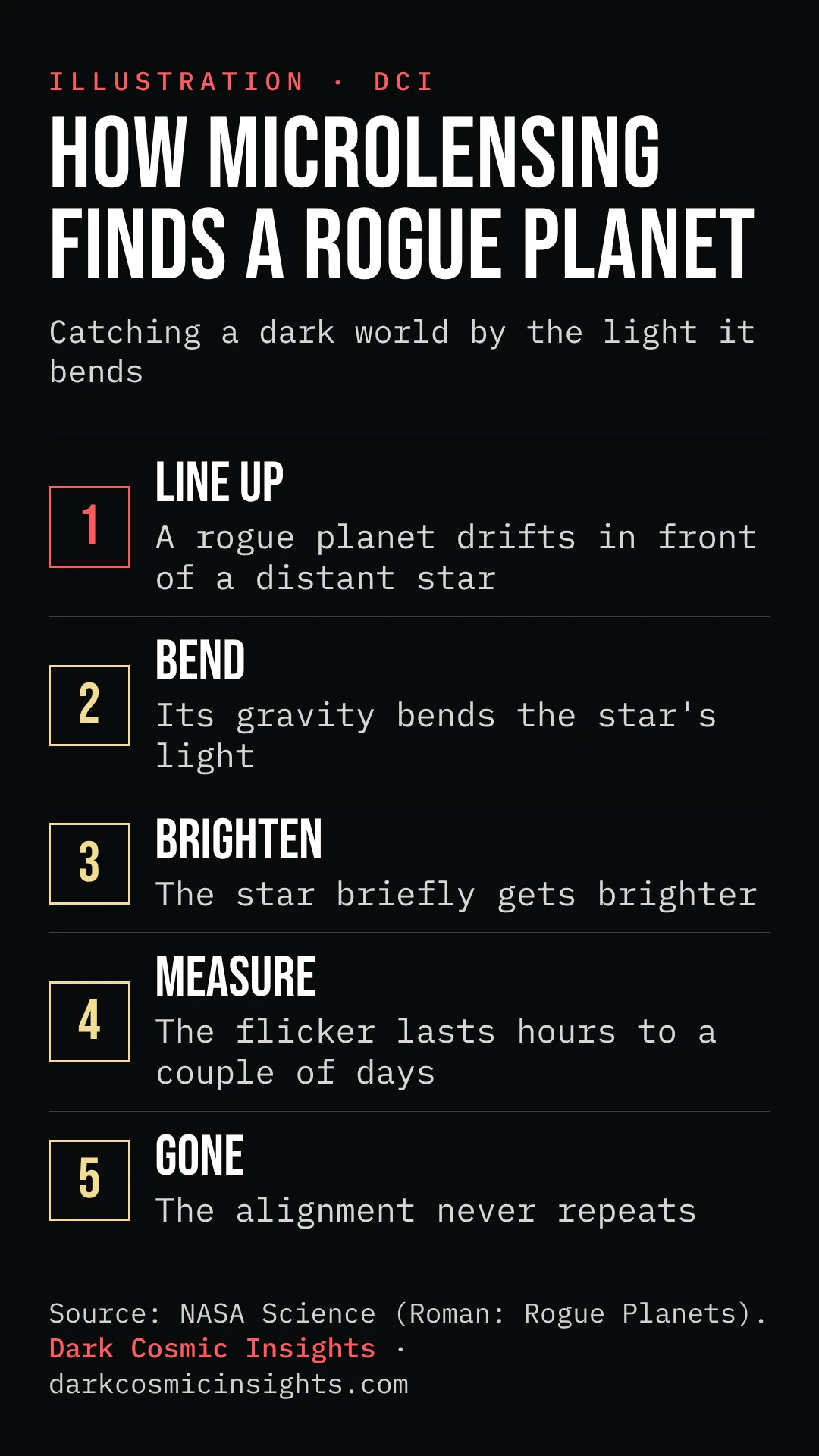
Einstein’s general relativity says mass bends space-time, and light follows that bend. When a rogue planet drifts almost exactly in front of a more distant star, its gravity acts like a lens and briefly brightens that star. Watch enough stars, and you’ll catch these brief flickers.
The catch is timing. NASA says a rogue planet’s microlensing signal lasts “between a few hours and a couple of days before it’s gone forever” (NASA Science, Roman). And it never repeats, because the alignment never happens again.
The mass problem
A single microlensing flicker has a frustrating blind spot: it can’t easily separate an object’s mass from its distance. A small nearby lens and a heavier faraway lens can produce similar signals. That’s why, until 2026, no rogue planet candidate had a directly measured mass (Dong et al. 2026).
Direct imaging, for the young and warm ones
Very young rogue planets are still warm from formation, so they glow in infrared light. That’s how astronomers can study objects like Cha 1107-7626 directly, in young star-forming regions (ESO, 2025). Older rogue planets cool down and fade from view.
2026’s Big Result: A Rogue Planet Weighed for the First Time
In January 2026, a team led by Subo Dong of Peking University reported a microlensing event called KMT-2024-BLG-0792/OGLE-2024-BLG-0516 in Science (Dong et al. 2026).
Two views of one flicker
The event was observed from the ground and from a telescope in space at the same time. Seen from two places, the brightening happened at slightly different times. That offset, called microlens parallax, breaks the mass-distance blind spot. As the accompanying Science commentary puts it, combining Earth and space measurements let the team estimate the mass at 22% that of Jupiter, similar to Saturn (Coleman 2026, Science). Astronomy magazine reported the object sits roughly 9,785 light-years away (Astronomy, January 2026).
Born in a disk, then thrown out
By comparing their result with other microlensing events and with simulations, the team inferred that this object likely formed in a disk around a star, like a planet, not on its own like a brown dwarf. “Dynamical processes then ejected it from its birthplace” (Dong et al. 2026).
That’s the strongest evidence yet that at least some rogue planets really are planets that got kicked out of home.

How Many Rogue Planets Are There?
Nobody has counted them. The numbers come from extrapolating microlensing surveys.
NASA’s estimate
NASA’s Roman mission page says recent research suggests rogue planets are “by far the most common type” of planet, outnumbering star-bound worlds by about six to one, which means likely trillions in the Milky Way (NASA Science, Roman). NASA also notes planets “likely outnumber the hundreds of billions of stars” in our galaxy.
Other estimates
A 2026 study of Roman’s prospects cites a 2023 analysis by Takahiro Sumi and colleagues suggesting free-floating planets “may outnumber their bound counterparts by more than 20:1” (DeRocco et al. 2026, AJ). Different studies count different mass ranges and compare against different populations, so these numbers aren’t directly comparable. What they agree on: rogue planets are probably very common, especially small ones.
Why small rogues may dominate
NASA explains that “less massive planets aren’t tethered as strongly to their star, so they’re more likely to be flung away into space” (NASA Science, Roman). Small, rocky worlds may be the most common rogues of all, and the hardest to catch.
How Do Planets Go Rogue?
There are two main ideas, and both probably happen.
Kicked out of home
Young planetary systems are chaotic. Planets tug on each other, and a close encounter can fling one out of its system entirely, like a slingshot. A passing star can do the same. NASA describes the planet-building process as “chaotic,” with smaller objects colliding and sometimes sticking (NASA Science, Roman). The 2026 Saturn-mass result fits this picture.
Born alone
Some rogue planets may never have had a star. NASA notes a small cloud of gas and dust “could collapse to form a central planet instead of a star,” possibly with moons around it (NASA Science, Roman). ESO’s co-author Aleks Scholz summed up the debate: are they “the lowest-mass objects formed like stars, or giant planets ejected from their birth systems?” (ESO, 2025).
Status: open. The answer likely depends on the planet’s mass.
Cha 1107-7626: A Rogue Planet Caught Growing
One of the most striking rogue planets is still forming.
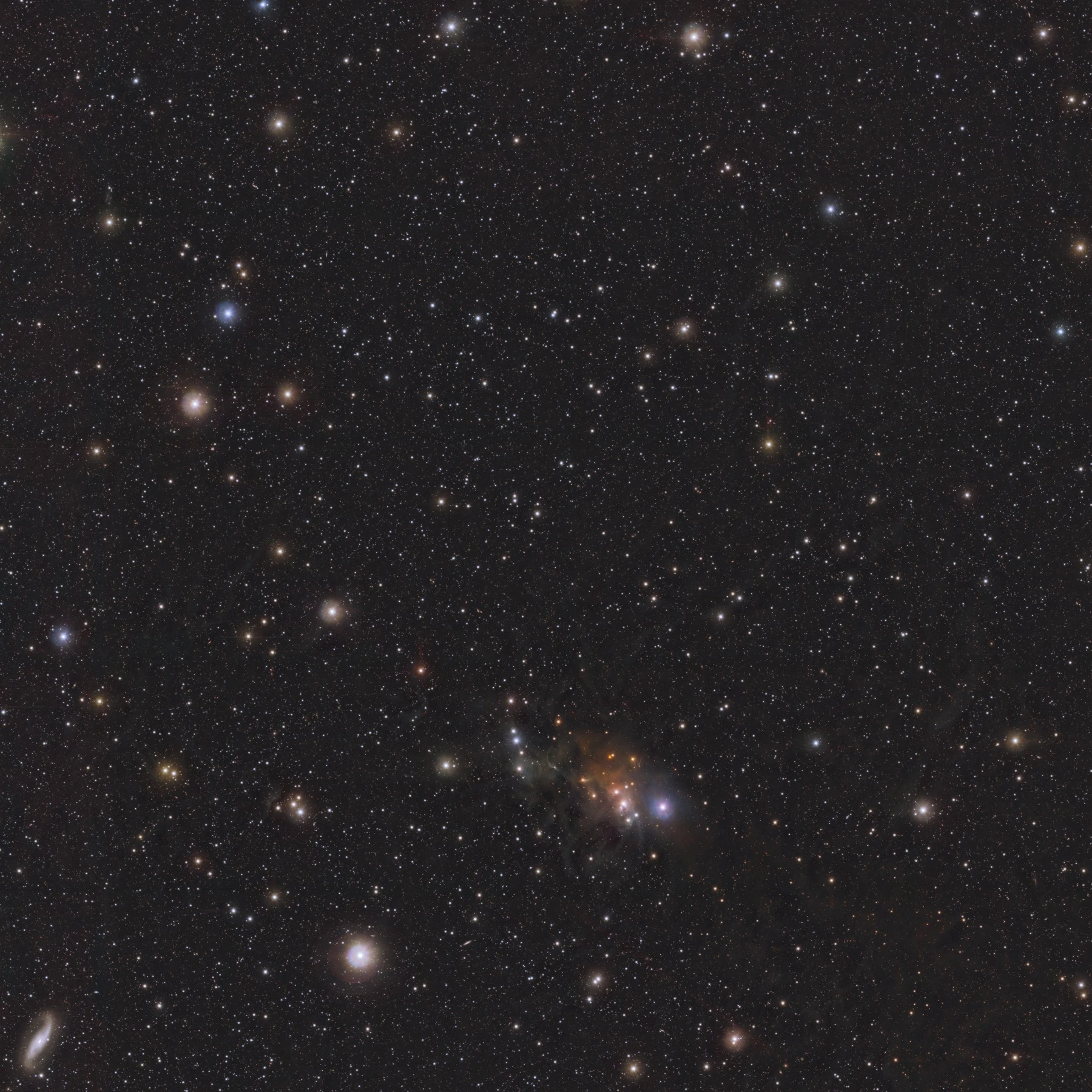
Cha 1107-7626 is a free-floating object of five to 10 Jupiter masses, about 620 light-years away in the constellation Chamaeleon (ESO, 2025). It’s surrounded by a disc of gas and dust that keeps falling onto it, a process called accretion.
A record growth spurt
In 2025, astronomers using ESO’s Very Large Telescope found that by August 2025 the object was accreting about eight times faster than a few months earlier, gobbling six billion tonnes of material every second. ESO calls it “the strongest growth rate ever recorded for a rogue planet, or a planet of any kind” (ESO, 2025).
The team also found signs that magnetic activity helped drive the burst, something previously seen only in stars, and water vapour in the disc appeared during the episode but not before. Co-author Belinda Damian said the discovery “blurs the line between stars and planets.”

Could a Rogue Planet Hit Earth?
It’s a popular fear, so let’s be direct: there’s no known rogue planet headed our way, and DCI found no scientific source predicting one.
Space is mostly empty. Even if rogue planets outnumber stars, the typical distances between objects in our part of the galaxy are measured in light-years. The microlensing events used to find rogue planets involve worlds thousands of light-years away; the 2026 Saturn-mass object is reported at nearly 10,000 light-years. Any claim that a rogue planet is about to strike Earth is not supported by evidence.
What Will the Roman Space Telescope Find?
NASA’s Nancy Grace Roman Space Telescope launched on August 30, 2026, at 7:26 a.m. EDT aboard a SpaceX Falcon Heavy from Kennedy Space Center (NASA Science, August 30, 2026).
Built for microlensing
Roman will observe from nearly a million miles from Earth, above the atmosphere’s blur, and can stare at the same patch of sky for months. Its view matches Hubble’s sharpness while capturing at least 100 times more sky per image. Its Galactic Bulge Time-Domain Survey will monitor hundreds of millions of stars and “should reveal hundreds of rogue planets” (NASA Science, Roman).
The predictions
- Roman can detect rogue planets as small as Mars.
- One study suggests Roman could find about 400 Earth-mass rogue planets.
- Observing the same events from Earth and from Roman’s distant position will help measure rogue-planet masses far more accurately than before.
All from NASA Science, Roman. These are predictions, and the survey is still ahead (as of November 2026).
Myth vs. Fact: Rogue Planets
| Myth | Fact | Status |
|---|---|---|
| “Rogue planets are rare oddities.” | NASA estimates they may outnumber star-bound planets about six to one. | Modelled |
| “We’ve seen lots of rogue planets up close.” | Most are known only from brief microlensing flickers; only young, warm ones can be imaged. | Observed |
| “Every rogue planet was thrown out of a star system.” | Some likely were; others may have formed alone, like tiny stars. | Open |
| “Scientists know exactly how heavy rogue planets are.” | The first directly measured mass of a rogue planet candidate was reported in January 2026. | Measured |
| “A rogue planet is heading for Earth.” | No known rogue planet is on a course toward us. | Not supported |
| “Rogue planets are dead, frozen worlds.” | Young ones like Cha 1107-7626 can still be growing and active. | Measured |
How Can You Follow Rogue Planet Science?
You can’t see a rogue planet in a backyard telescope. But you can watch the field change.
Follow the data
- NASA’s Roman rogue planets page tracks the mission’s microlensing science.
- ESO’s Cha 1107-7626 release includes images and an animation of the growth spurt.
- NASA says it has confirmed more than 6,000 exoplanets so far (NASA Science, Exoplanets).
Look toward the galaxy’s center
Microlensing surveys, including Roman’s, stare toward the crowded galactic bulge, the dense heart of the Milky Way in the direction of Sagittarius. On a dark summer night in the Northern Hemisphere, the brightest part of the Milky Way marks that direction. Somewhere in that glow, rogue planets are drifting past stars right now.
Rogue Planets by the Numbers
| Measure | Value | Source |
|---|---|---|
| Rogue to star-bound planets | about 6 to 1 (NASA estimate) | NASA Science, Roman |
| Rogue planets in the Milky Way | likely trillions (estimate) | NASA Science, Roman |
| Microlensing signal length | a few hours to a couple of days | NASA Science, Roman |
| First measured rogue-planet mass | about 0.22 Jupiter masses | Coleman 2026 |
| Its distance | about 9,785 light-years (as reported) | Astronomy |
| Cha 1107-7626 mass | 5 to 10 Jupiters | ESO |
| Cha 1107-7626 distance | about 620 light-years | ESO |
| Its peak growth rate | 6 billion tonnes a second | ESO |
| Roman launch | August 30, 2026 | NASA |
| Smallest rogue Roman can detect | about Mars’s mass | NASA Science, Roman |
| Earth-mass rogues Roman may find | about 400 (one study) | NASA Science, Roman |
Values are as of November 2026.
Rogue Planets FAQ
What is a rogue planet?
A rogue planet, or free-floating planet, is a planet-mass world that doesn’t orbit a star. It drifts through the galaxy on its own. Many were probably ejected from the systems where they formed; some may have formed alone from a collapsing cloud of gas and dust.
How many rogue planets are in the Milky Way?
No one knows exactly. NASA estimates rogue planets outnumber star-bound planets by about six to one, which would mean trillions in our galaxy. Another analysis suggests the ratio could be higher. All of these are extrapolations from a limited number of detections.
Can a rogue planet have moons?
Possibly. NASA notes that if a rogue planet forms on its own from a collapsing cloud, it might end up with moons around it instead of a star with planets. No moon of a rogue planet has been confirmed yet.
Why are rogue planets so hard to see?
They don’t shine like stars, and NASA notes many are so cool they emit too little heat for infrared telescopes to detect. That’s why most are found through microlensing, when their gravity briefly brightens a more distant star, rather than by seeing the planet itself.
How was a rogue planet weighed for the first time?
In a 2026 study, astronomers observed one microlensing event from the ground and from space at the same time. The slightly different timing seen from the two places let them work out both the object’s distance and its mass, about 22% of Jupiter’s.
What is Cha 1107-7626?
It’s a young rogue planet of five to 10 Jupiter masses, about 620 light-years away in Chamaeleon. In 2025 ESO astronomers caught it accreting six billion tonnes of gas and dust a second, the strongest growth rate ever recorded for a planet of any kind.
Will NASA’s Roman telescope find rogue planets?
That’s one of its goals. Roman launched in August 2026 and will monitor hundreds of millions of stars toward the galaxy’s center. NASA expects it to find hundreds of rogue planets, including some as small as Mars.
Could a rogue planet enter our solar system?
There’s no known rogue planet heading toward us. Space is enormous and mostly empty, and the rogue planets found so far are thousands of light-years away. A close pass is not something any current observation predicts.
Your next step: watch ESO’s animation of Cha 1107-7626’s growth spurt, then picture the same kind of object, older, colder and silent, drifting past a distant star. That flicker is how most rogue planets announce themselves.
Sources and Further Reading
- Dong, S., Wu, Z., Ryu, Y.-H., Udalski, A., et al. (2026). A free-floating-planet microlensing event caused by a Saturn-mass object. Science, 391, 96–99. doi:10.1126/science.adv9266
- Coleman, G. A. L. (2026). Two views of a rogue planet. Science, 391, 23–24. doi:10.1126/science.aed5209
- DeRocco, W., et al. (2026). Prospects for Reconstructing the Free-floating Planet Mass Function at the Population Level with the Nancy Grace Roman Space Telescope. The Astronomical Journal. IOPscience
- Almendros-Abad, V., et al. (2025). Discovery of an Accretion Burst in a Free-Floating Planetary-Mass Object. The Astrophysical Journal Letters, 992, L2. doi:10.3847/2041-8213/ae09a8
- ESO (October 2, 2025), Six billion tonnes a second: Rogue planet found growing at record rate (eso2516); images eso2516a and eso2516b, CC BY 4.0.
- NASA Science, Roman: Rogue Planets (updated July 29, 2026).
- NASA Science (August 30, 2026), NASA’s Roman Space Telescope Launches.
- NASA Science, Exoplanets.
- Astronomy (January 1, 2026), Astronomers measure mass and distance of free-floating planet.
Explore Next
- Our nearest stellar neighbors: What’s the Closest Star to Earth?
- What else hides in the dark between the stars: What Is Dark Matter?
- The one planet we know with a sunrise like ours: Solar System Explorer
- How stars are born, and where the line with planets blurs: Life Cycle of a Star
- How cold empty space really is: How Cold Is Space?
- The giant planets rogue worlds are often compared with: What Is the Biggest Planet?
- How a claim earns its label: How We Know
How This Explainer Was Checked
Every number in this article was checked in November 2026 against the source linked beside it: the 2026 Science paper by Dong and colleagues and its accompanying Perspective, a 2026 Astronomical Journal study of Roman’s prospects, ESO’s 2025 release on Cha 1107-7626, and NASA’s Roman and exoplanet pages. Individual detections are labelled Observed; the 2026 mass measurement and Cha 1107-7626’s growth rate are labelled Measured; population counts and Roman’s expected yields are labelled Modelled; how rogue planets form is labelled Open; a rogue planet threatening Earth is labelled Not supported. Where estimates differ (about six to one from NASA versus more than 20 to one in a cited 2023 analysis), we show both with their sources and note they aren’t directly comparable. The distance of the 2026 object is attributed to Astronomy magazine’s report. The featured image and the Chamaeleon star field are ESO images used under CC BY 4.0 with their credit lines. Images are labelled: real telescope images as OBSERVATION, illustrations as ILLUSTRATION or ARTIST’S CONCEPT, and our charts as DATA GRAPHIC. Nothing AI-generated is presented as a real image.

Final Thought: The Galaxy’s Silent Majority
For most of history, “planet” meant a world circling a star. Now it looks like the typical planet may have no star at all. We’ve only glimpsed a handful, weighed one, and caught one still growing. That’s about to change: Roman is in space, staring at the crowded heart of the galaxy, waiting for the next brief flicker. The darkest worlds may turn out to be the most common ones.
About the Author
Author: King | Founder of Dark Cosmic Insights
King is the founder of Dark Cosmic Insights, a science storytelling platform exploring the strangest true stories hiding in space, science and AI. He digs into NASA, ESA and peer-reviewed research, separates what has been measured from what is still a mystery, and turns it into articles, data graphics and Shorts.
Follow the anomaly. Trace the source.