In 2022, NASA released the sound of a black hole, and millions of people listened. It was a deep, eerie groan from the center of the Perseus galaxy cluster. Many asked the obvious question: wait, isn’t space silent?
Both things are true. NASA puts it plainly: “Sound doesn’t really travel through space because sound waves need a medium, such as air molecules” (NASA, 2025). But the Perseus black hole really does make pressure waves, the same kind of waves as sound, in the hot gas around it. The trick is knowing where there’s something to carry them.
Defined, measured, calculated, open. What sound is, a pressure wave moving through a material, is defined by physics. Sound on Mars, waves in galaxy-cluster gas and sound waves inside the Sun have all been measured. Turning those waves into something you can hear involves calculated shifts in pitch. Some details, like everything that shapes the Perseus waves, remain open.
Quick Answer: Can Sound Travel Through Space?
No ordinary audible sound crosses the near-empty space between planets and stars, though the very thin gas and plasma there can still support waves. A true vacuum can’t carry sound at all. Sound is a wave of pressure, and it needs a material, like air, water or rock, to travel through (NASA). Most of space is “essentially a vacuum, providing no medium for sound waves to propagate through” (NASA Chandra). But wherever there is enough material, sound-like waves do travel: through Mars’s thin air, where NASA’s Perseverance rover has recorded real sound; through the Sun’s interior, which constantly rings with sound waves; and through the hot gas in galaxy clusters like Perseus. Most “sounds from space” you hear online are sonifications: real data translated into sound so we can hear patterns we’d otherwise only see.
What this article can and cannot establish. It can explain why space is mostly silent, where sound does travel beyond Earth, and how to tell real recordings from data turned into audio. It can’t let you hear the Perseus black hole as it truly sounds, because no human ear could ever hear a note that low.
Table of Contents
The DCI Evidence Map: Sound in Space
| Question | What we know | Status | Key source |
|---|---|---|---|
| What is sound? | A pressure wave that needs a material to travel through | Defined | NASA |
| Can sound cross the space between planets? | No ordinary audible sound; the very thin gas and plasma can still support waves | Observed | NASA Chandra |
| Has sound been recorded on another planet? | Yes, by Perseverance on Mars | Measured | NASA JPL, 2022 |
| How fast is sound on Mars? | About 240 m/s low-pitched, 250 m/s high-pitched | Measured | NASA JPL, 2022 |
| Does the Perseus black hole make sound waves? | Yes, pressure waves in the cluster’s hot gas | Measured | NASA Chandra |
| How low is that sound? | About 3.3 × 10⁻¹⁵ hertz, one wave every 9.6 million years | Calculated | NASA HEASARC |
| Does the Sun ring with sound? | Yes, sound waves trapped inside it | Measured | NASA Marshall |
| Did Voyager 1 record sound? | No; plasma waves, played as audio | Measured | NASA, 2013 |
Status key: Defined = fixed by definition. Observed = seen directly. Measured = a number with a stated uncertainty or a direct measurement. Calculated = worked out from measured values. Modelled = inferred through a physical model. Open = unresolved.
Cite this framework: “DCI Evidence Map: Sound in Space,” Dark Cosmic Insights, November 2026, darkcosmicinsights.com/can-sound-travel-through-space/.
What Is Sound, Exactly?
A wave of pressure
When you hear something, NASA explains, what you’re really experiencing is your eardrums vibrating. That vibration comes from “waves of pressure that travel to our ears from the source of the sound.” To get to you, those waves “need something to travel through, like air.” Sound can also travel through liquids and solids (NASA).
Molecules bumping molecules
A sound wave is a chain reaction. A vibrating object pushes on the molecules next to it, which push on their neighbors, and so on, creating regions of higher and lower pressure that ripple outward. Take away the material and the chain breaks. In a true vacuum, nothing is left to push.
Light is different
Light, radio and X-rays are waves too, but they’re electromagnetic waves. They don’t need a material, so they cross empty space easily. That’s why we can see distant galaxies but can’t hear them, and why spacecraft send their data home by radio.
Why Is Space Silent?
Almost nothing to carry sound
The space between planets and stars isn’t a perfect vacuum. It holds very thin gas and plasma, electrically charged gas, which can carry waves of their own, as you’ll see below. But it is far too thin to carry sound you could hear. NASA’s Chandra team describes the “popular misconception that there is no sound in space” as coming from the fact that “most of space is essentially a vacuum, providing no medium for sound waves to propagate through” (NASA Chandra).
The movie problem
That’s why science fiction explosions with booming sound effects get criticized. NASA once summed up the old saying: “in space, no one can hear you scream” (NASA, 2013). An explosion in empty space would flash and fling debris, but there’d be no air to carry a bang to your ears.
Inside a spacecraft is different
Inside a spacecraft or space station filled with air, sound works the way it does on Earth. The silence is outside, where there’s almost no air.

What Does Mars Sound Like?
The first microphone recordings from Mars
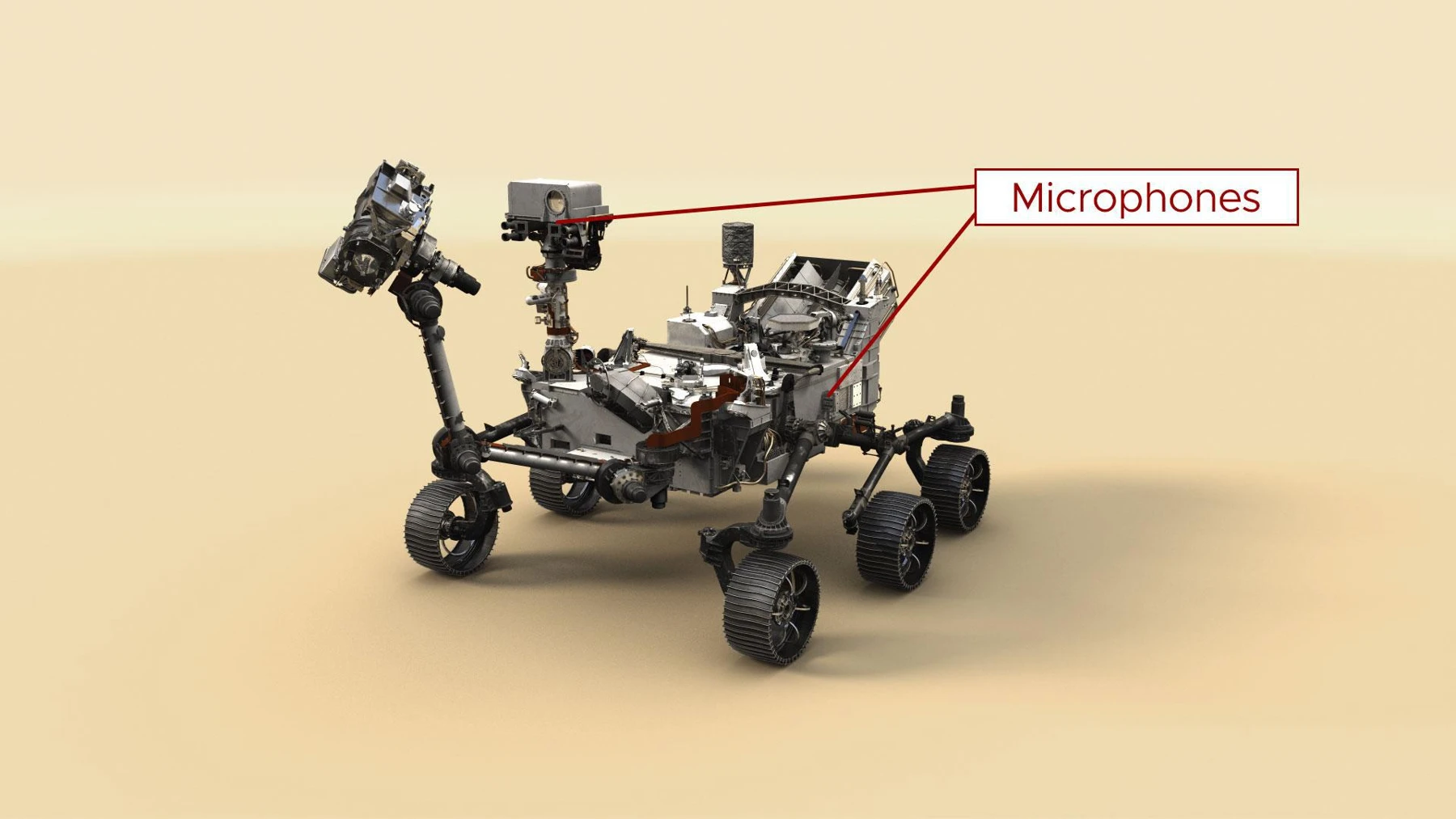
NASA’s Perseverance rover, which landed on Mars in February 2021, carries two microphones: one on its mast, part of the SuperCam instrument, and one on its body, meant to capture the sounds of landing (NASA JPL, 2022). They made the first microphone recordings on Mars. (Soviet Venera landers had carried microphones to Venus decades earlier.) “It’s a new sense of investigation we’ve never used before on Mars,” said Sylvestre Maurice, a SuperCam scientist (NASA JPL, 2022).
Slower sound, and two speeds
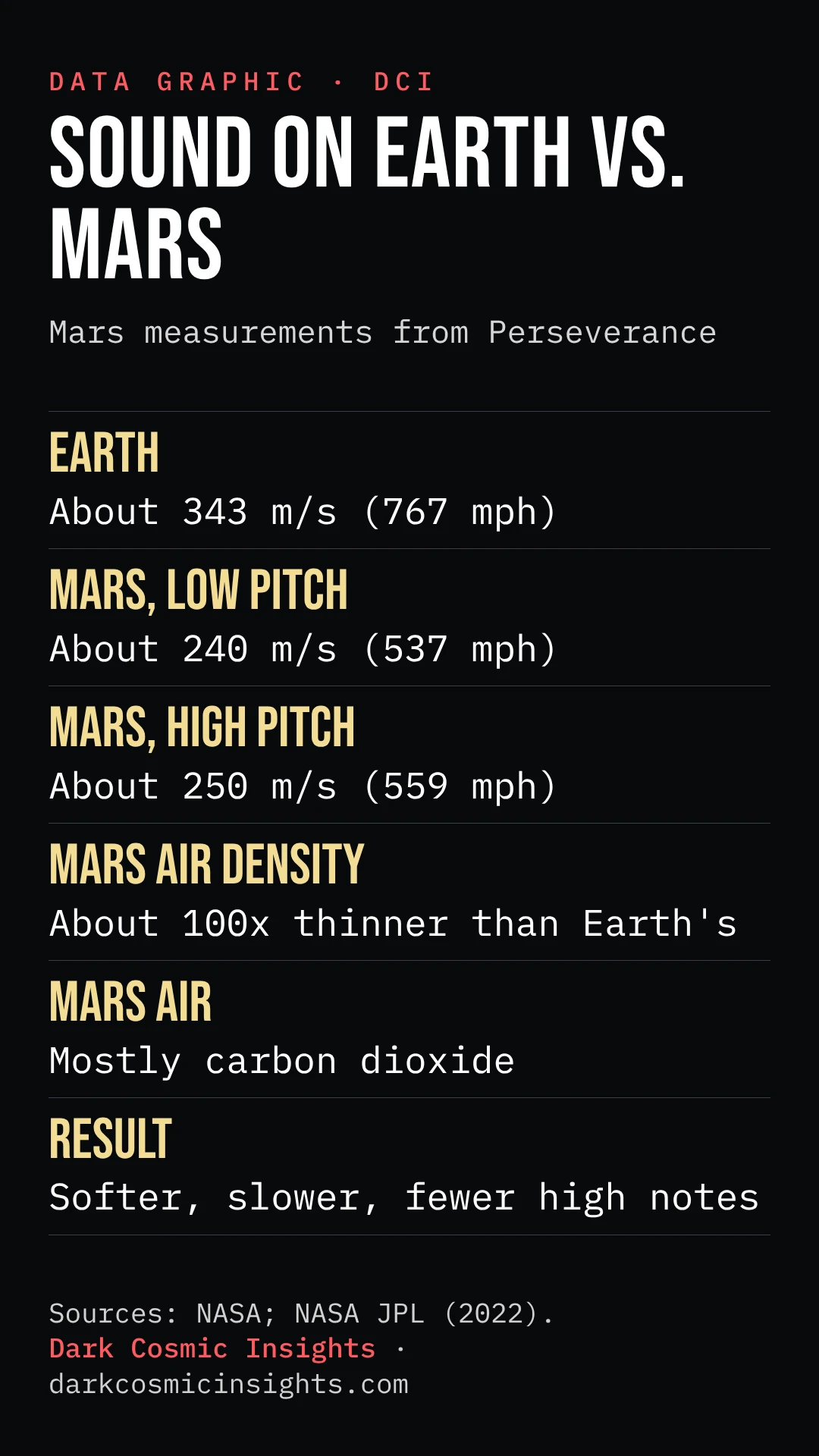
In 2022, the team reported that sound travels more slowly on Mars than on Earth. On Earth, sound typically travels at about 343 meters per second (767 mph). On Mars, low-pitched sounds travel at about 240 m/s (537 mph), while higher-pitched sounds move at about 250 m/s (559 mph). Scientists expected the thin, cold, carbon dioxide atmosphere to affect sound speed, but the effect “had never been observed until these recordings were made” (NASA JPL, 2022).
Quieter, and missing the high notes
Mars’s atmosphere is about 100 times less dense than Earth’s, so sounds are softer and you’d have to be much closer to hear them at the same volume. Its carbon dioxide also absorbs many higher-pitched sounds, so mostly lower-pitched sounds carry over long distances (NASA).
What it has heard
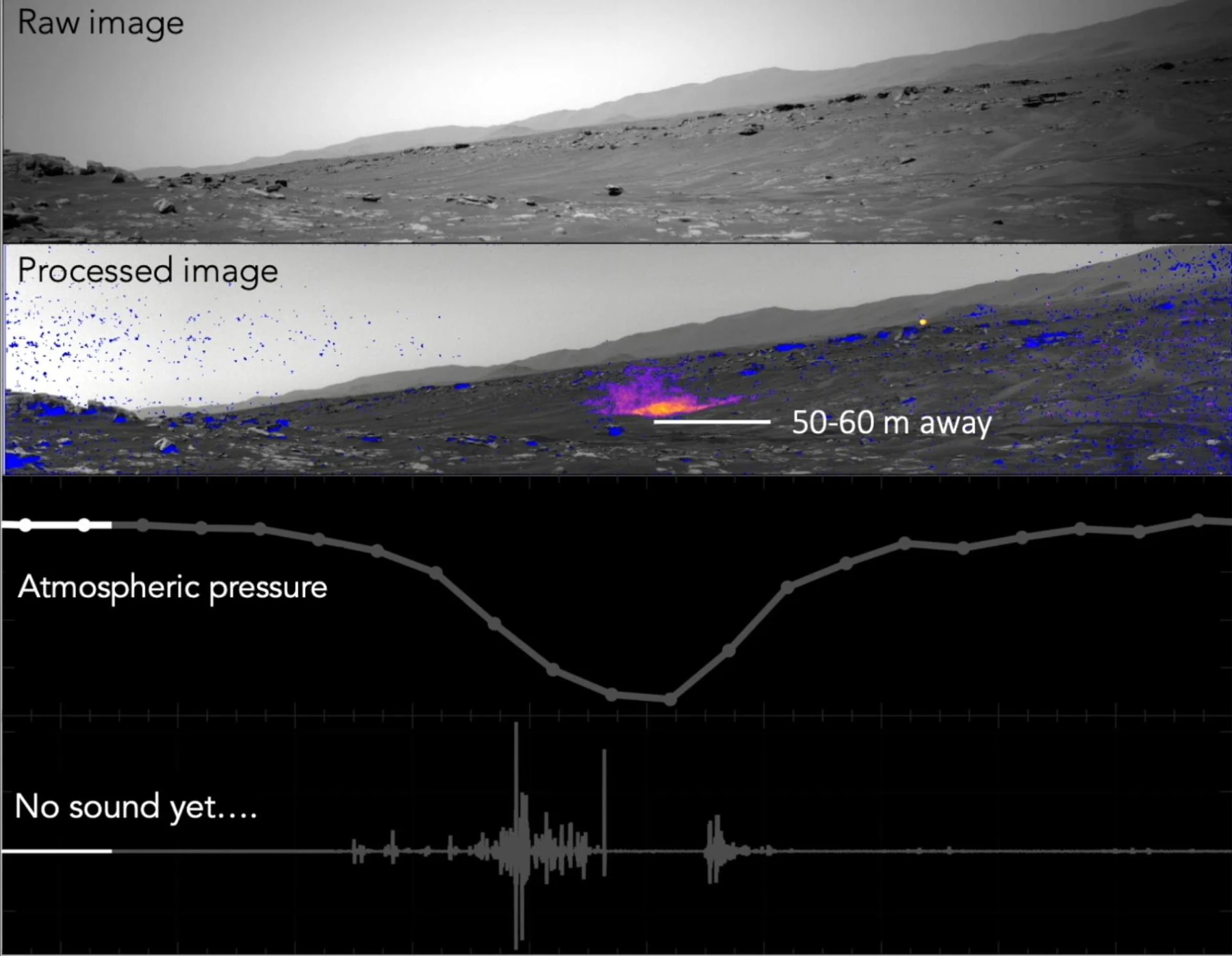
The microphones have recorded Martian wind, the snap of the rover’s laser zapping rocks and the whir of the Ingenuity helicopter in flight (NASA). On September 27, 2021, a dust devil passed right over the rover, and SuperCam’s microphone made the first recording of one (NASA, PIA25657).
Does a Black Hole Really Make Sound?
Pressure waves in hot gas
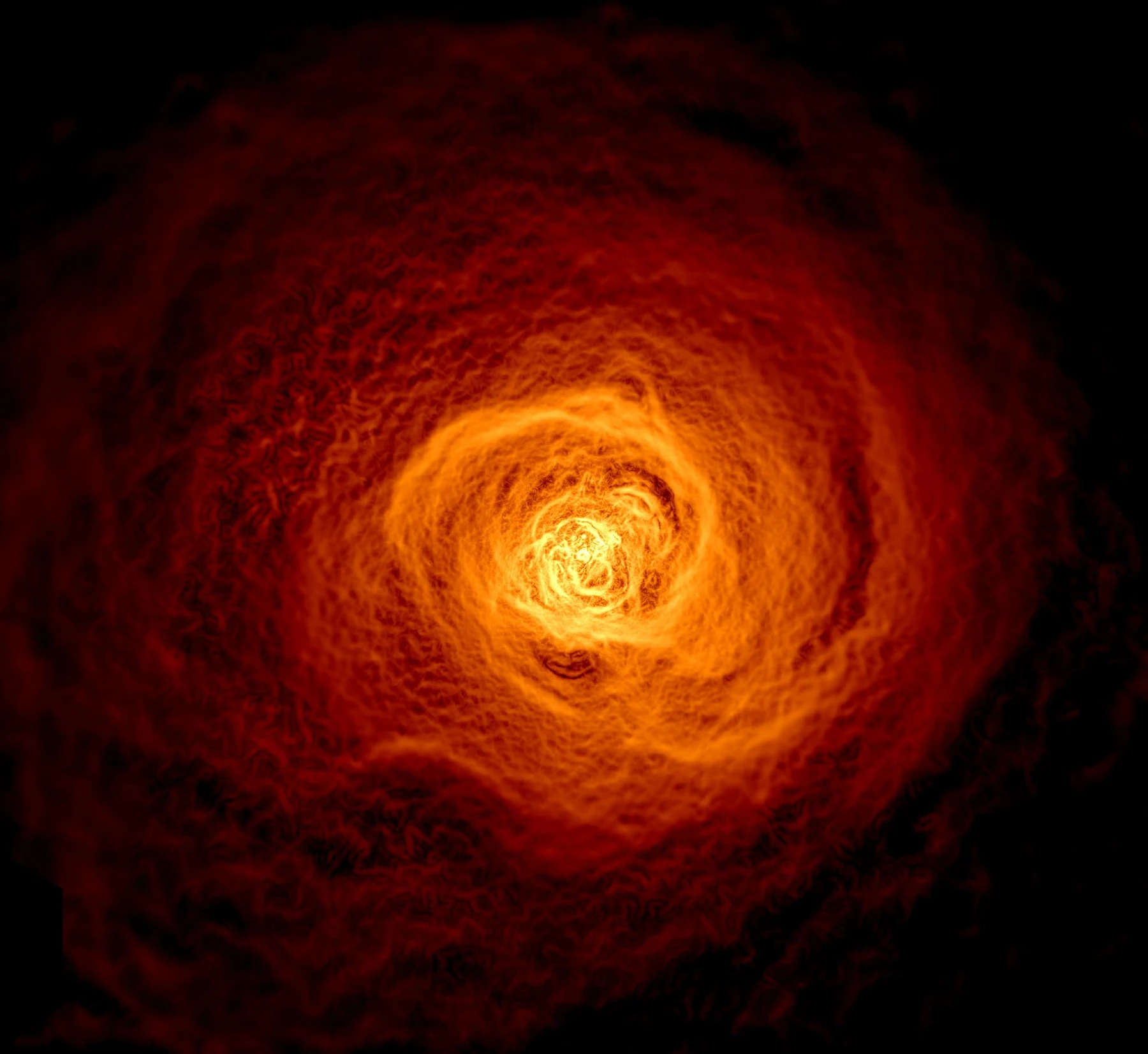
In a sense, yes. A galaxy cluster is different from the space between planets: it has “copious amounts of gas” enveloping its hundreds or thousands of galaxies, and that gas can carry sound waves (NASA Chandra). Since 2003, the black hole at the center of the Perseus cluster has been linked to sound, because astronomers found that pressure waves it sends out cause ripples in the cluster’s hot gas, seen in X-ray data from NASA’s Chandra X-ray Observatory.
The lowest note
Those ripples correspond to a note far below anything humans can hear. NASA’s High Energy Astrophysics team notes the waves appear about once every 9.6 million years, equivalent to a frequency of about 3.3 × 10⁻¹⁵ hertz (NASA HEASARC).
How we got to hear it
In 2022, NASA’s Chandra team extracted those real sound waves from the data and raised their pitch by 57 and 58 octaves, making them “144 quadrillion and 288 quadrillion times higher than their original frequency” (NASA Chandra). The result, released on May 4, 2022, became one of NASA’s most popular sonifications (NASA).
Could you ever hear it directly?
No, for two reasons. As Kimberly Arcand, a visualization scientist at the Center for Astrophysics | Harvard & Smithsonian, put it, we’re “way too far,” with no medium in between, and human ears “could never pick up a sound that low” (NASA, 2025). We explain black holes in What Is a Black Hole?
Does the Sun Make Sound?
A star that rings
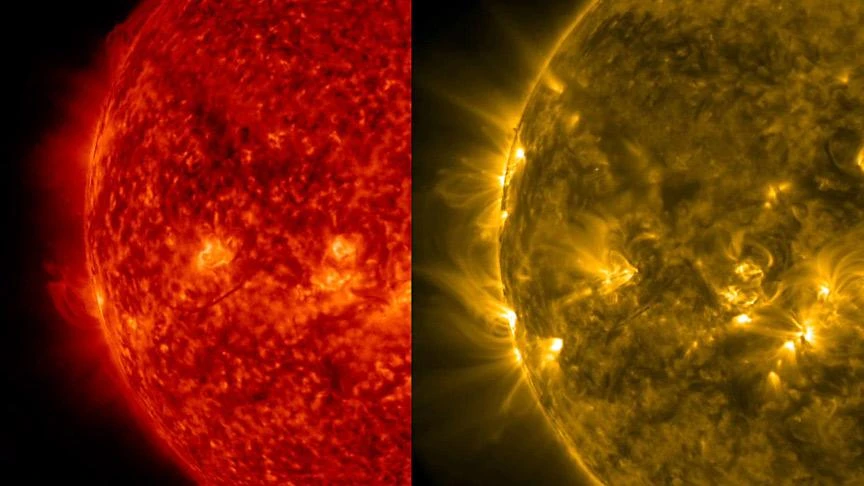
Yes. NASA’s Marshall Space Flight Center explains that the oscillations seen on the Sun’s surface are “due to sound waves generated and trapped inside the sun.” The waves are produced by pressure changes in the turbulent, churning gas inside the Sun, and they set it vibrating in millions of different patterns (NASA Marshall).
Seismology for a star
Studying those waves is called helioseismology. Just as earthquake waves reveal Earth’s interior, solar physicists use sound waves “reverberating through” the Sun to probe its inside, and the Sun is “continuously ‘ringing’” because of the motions within it (ESA/NASA SOHO). The source of these oscillations was explained by theory in 1970 and confirmed by observations in 1975 (NASA Marshall).
Sped up 42,000 times
You can’t hear the Sun from Earth, because no air connects us. But scientists can turn its vibrations into audio. One NASA example used 40 days of data from the SOHO spacecraft’s Michelson Doppler Imager and “speeded it up a factor 42,000” to bring the Sun’s sound into the range of human hearing (NASA). We explore the Sun in How Hot Is the Sun? and How Old Is the Sun?
What Are the “Sounds of Interstellar Space”?
Voyager 1’s plasma waves
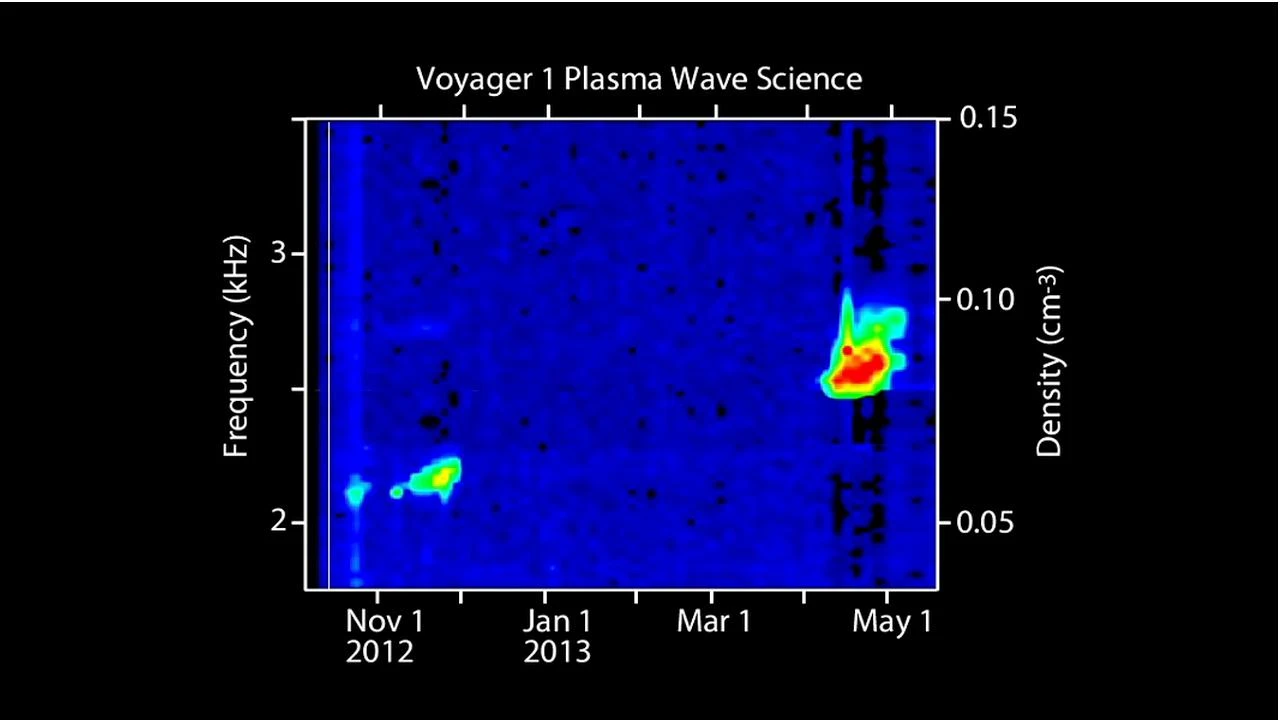
In 2013, NASA played “the sounds of interstellar space” recorded by Voyager 1. But as NASA explained, “strictly speaking, the plasma wave instrument does not detect sound.” It senses waves of electrons in the thin, electrically charged gas, called plasma, that Voyager travels through (NASA, 2013).
Why they can be played as audio
Those plasma waves happen at frequencies within the range human ears can hear, so the signals picked up by the instrument’s antennas “can be simply amplified and played through a speaker” (NASA, PIA17045). Voyager 1 recorded them from October to November 2012 and April to May 2013, and their rising tones showed the plasma around it was getting denser, evidence that it had entered interstellar space.
Not something you could hear there
Even though the frequencies fall in the human range, NASA notes that “no human ear could hear these plasma waves.” They’re oscillations of electrons in a charged gas, not pressure waves in air. We follow Voyager 1’s journey in What Is a Light-Year?

What Is a Sonification?
Data you can hear
Many “space sounds” are sonifications: real data translated into sound. Arcand describes taking observed data, “such as the position, the brightness, the energy” of X-rays, and “mapping that information to sound” using pitch, volume or instrument type (NASA, 2025).
Different recipes
Each sonification has its own method. In one NASA project, the region around the black hole in galaxy M87 was scanned like a radar sweep, with light farther from the center played at a higher pitch and brighter light played louder (NASA, 2021). In the Perseus sonification, by contrast, the sound comes from actual pressure waves in the gas.
Why scientists do it
NASA’s Universe of Learning team created these sonifications partly as accessible learning resources, and they can reveal patterns in a new way. A NASA summary of the black hole sonifications quotes listener Christine Malec: “When I heard my first sonification I had goosebumps” (NASA).
Myth vs. Fact: Sound in Space
| Myth | Fact | Status |
|---|---|---|
| “You can hear explosions in space.” | Not in the near-vacuum between planets; the gas there is far too thin to carry sound you could hear. | Not supported |
| “NASA recorded a black hole with a microphone.” | It turned real pressure waves in X-ray data into audio. | Measured |
| “Space is completely silent everywhere.” | Sound travels in planetary air, inside stars and through cluster gas. | Measured |
| “Voyager 1 recorded the sound of space.” | It recorded plasma waves, which can be played as audio. | Measured |
| “Mars sounds just like Earth.” | Mars is quieter, slower and loses high notes. | Measured |
| “Sonifications are made-up sounds.” | They’re real data mapped to sound, with stated methods. | Defined |
How Can You Hear Space for Yourself?
Listen to Mars
NASA’s Perseverance pages host real audio from Mars, including wind, the rover’s laser and the Ingenuity helicopter. Listen with headphones: the quietness itself is part of what makes Mars sound different.
Listen to the Perseus cluster
NASA’s Chandra X-ray Center hosts the Perseus sonification and many others at its “A Universe of Sound” site. Knowing that the waves are real, and pitched up by 57 and 58 octaves, makes it even stranger to hear.
Listen to the Sun and Voyager
NASA has also published the Sun’s sped-up vibrations from SOHO and Voyager 1’s plasma waves from interstellar space. Each one is a different kind of signal, so check how it was made before you share it.
Sound in Space: By the Numbers
| Measure | Value | Source |
|---|---|---|
| Speed of sound on Earth (typical) | about 343 m/s | NASA JPL, 2022 |
| Speed on Mars, low pitch | about 240 m/s | NASA JPL, 2022 |
| Speed on Mars, high pitch | about 250 m/s | NASA JPL, 2022 |
| Mars air vs. Earth’s | about 100x less dense | NASA |
| Perseus pitch-up for listeners | 57 and 58 octaves | NASA Chandra |
| Perseus wave period | about 9.6 million years | NASA HEASARC |
| SOHO Sun audio speed-up | 42,000x | NASA |
| Voyager 1 plasma tones inside heliosphere | around 300 Hz | NASA, 2013 |
Sources checked November 2026.
Sound in Space FAQ
Can sound travel through space?
Not as ordinary audible sound. Sound needs a material such as air, water or rock to travel through, and a true vacuum can’t carry it. The very thin gas and plasma between planets can still support waves, but nothing you could hear. Where there is enough material, like Mars’s atmosphere or the gas in galaxy clusters, sound waves do travel.
Why is space silent?
Most of space is close to a vacuum. A true vacuum can’t carry sound at all. Real space holds very thin gas and plasma that can support waves, but far too thin to carry sound to your ears.
What did NASA’s black hole sound come from?
From real pressure waves in the hot gas of the Perseus galaxy cluster, caused by its central black hole and seen in Chandra X-ray data. NASA raised their pitch by 57 and 58 octaves so humans could hear them.
How low is the Perseus black hole’s sound?
About 3.3 × 10⁻¹⁵ hertz, roughly one wave every 9.6 million years, far too low for any human ear.
Has anyone recorded sound on another planet?
Yes. NASA’s Perseverance rover has recorded sound on Mars with two microphones, including wind, its own laser, the Ingenuity helicopter and a dust devil passing overhead.
How fast is sound on Mars?
About 240 meters per second for low-pitched sounds and about 250 meters per second for higher-pitched sounds, slower than the roughly 343 meters per second typical on Earth.
Does the Sun make sound?
Yes. Sound waves are generated and trapped inside the Sun by its churning gas, making it vibrate in millions of patterns. Scientists study them with helioseismology and have sped them up into audio.
What are the Voyager “sounds of interstellar space”?
They’re plasma waves, vibrations of electrons in the thin gas between the stars, detected by Voyager 1’s plasma wave instrument. They’re in the audio frequency range, so they can be played through a speaker, but they aren’t sound waves.
Your next step: put on headphones and listen to a real recording from Mars, then to the Perseus sonification. One is sound you could hear standing there. The other is a real wave you never could.
Sources and Further Reading
- NASA (August 20, 2025), Small Steps, Giant Leaps Episode 160: Turning Space Data Into Sound.
- NASA Science, Sounds of Mars.
- NASA JPL (April 1, 2022), What Sounds Captured by NASA’s Perseverance Rover Reveal About Mars.
- NASA Chandra X-ray Center, A Universe of Sound: Perseus Cluster Sonification.
- NASA Science (2022), Data Sonifications: Black Holes.
- NASA HEASARC (April 3, 2023), The Song of a Supermassive Black Hole.
- NASA (September 16, 2021), Jingle, Pluck, and Hum: Sounds from Space.
- NASA Marshall Space Flight Center, Helioseismology; NASA, Sounds of the Sun; ESA/NASA SOHO, SOHO Reveals Rapidly Rotating Solar Core.
- NASA (November 1, 2013), The Sounds of Interstellar Space; NASA Photojournal, Voyager Captures Sounds of Interstellar Space (PIA17045).
- NASA images: Perseus cluster, PIA24931, PIA17045, PIA25657, PIA20214.
Explore Next
- The objects behind the deepest note: What Is a Black Hole?
- The star that rings: How Hot Is the Sun?
- More about Mars’s thin air: How Cold Is Mars?
- Where Voyager 1 is now: What Is a Light-Year?
- How space images and sounds are made: Are Space Photos Real?
- What “plasma” and “vacuum” mean: Space Glossary
- How a claim earns its label: How We Know
How This Explainer Was Checked
Every number and quote in this article was checked in November 2026 against the source linked beside it: NASA’s Sounds of Mars page and JPL’s 2022 Perseverance acoustics release, NASA’s Chandra sonification pages and HEASARC’s Perseus entry, NASA’s 2025 sonification podcast, NASA Marshall’s helioseismology page, NASA’s Sounds of the Sun and the ESA/NASA SOHO site, and NASA’s 2013 Voyager releases. What sound is, is labelled Defined; Mars sound speeds, the Perseus waves, the Sun’s oscillations and Voyager’s plasma waves Measured; the Perseus wave frequency Calculated. Images are labelled: real spacecraft and telescope data as OBSERVATION, explanatory graphics as ILLUSTRATION or DATA VISUALIZATION, our charts as DATA GRAPHIC. Nothing AI-generated is presented as a real image.
Final Thought: A Quiet Universe Full of Waves
Space is silent to our ears where it’s nearly empty, and that’s most of it. But the universe isn’t empty everywhere. Mars has a thin, cold voice. The Sun rings like a bell. A black hole hums a note millions of years long in the gas around it. We can’t hear any of them from here, but with microphones, telescopes and a little translation, we can still listen.