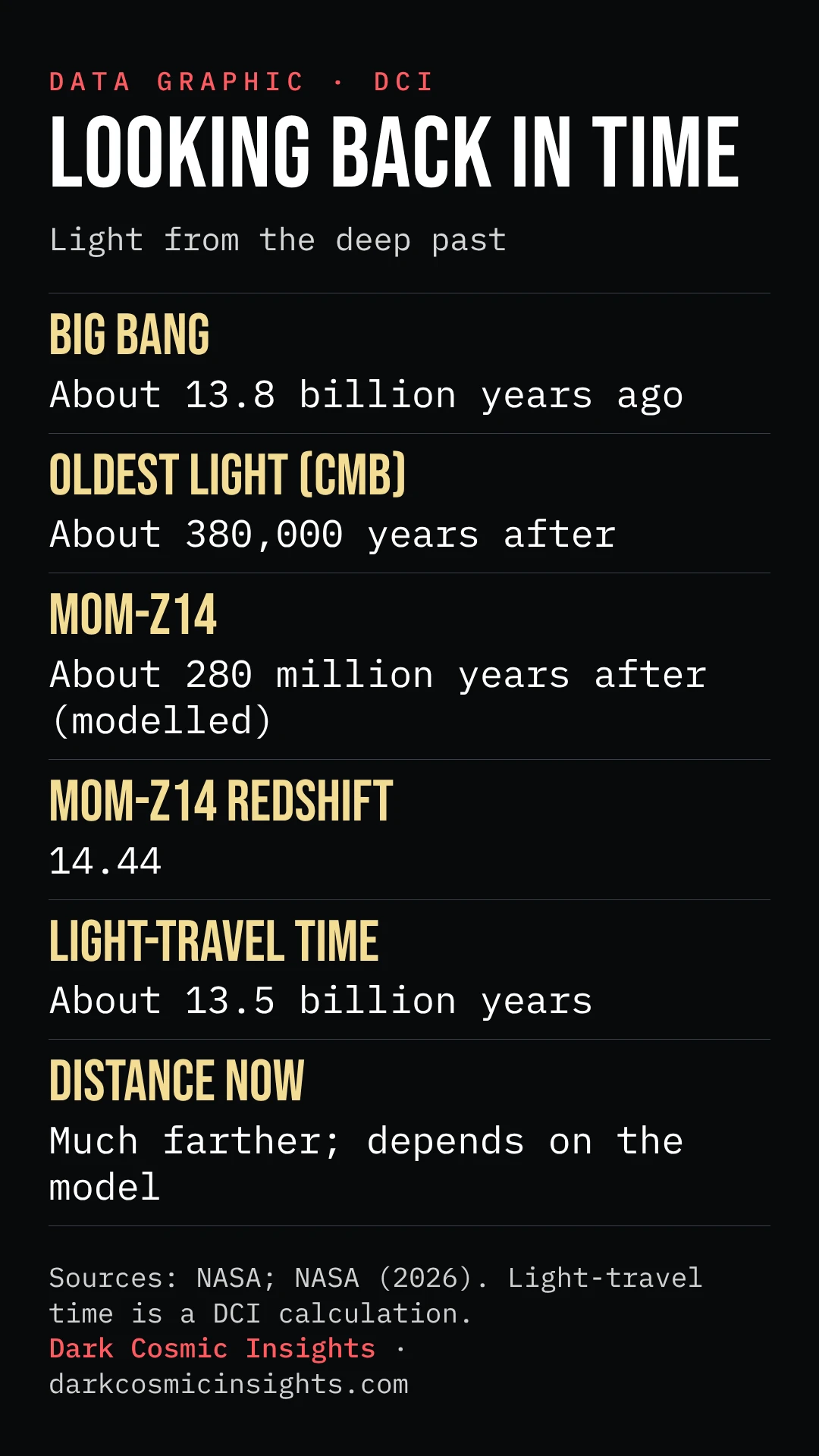
In January 2026, NASA announced that the James Webb Space Telescope had confirmed a galaxy called MoM-z14, seen as it was only about 280 million years after the big bang (NASA, 2026). Its light has been traveling for roughly 13.5 billion years (DCI calculation).
But that galaxy is not 13.5 billion light-years away now. While its light crossed space, space itself kept expanding. The galaxy today is much farther away than that, and the whole visible universe is far bigger than its age would suggest.
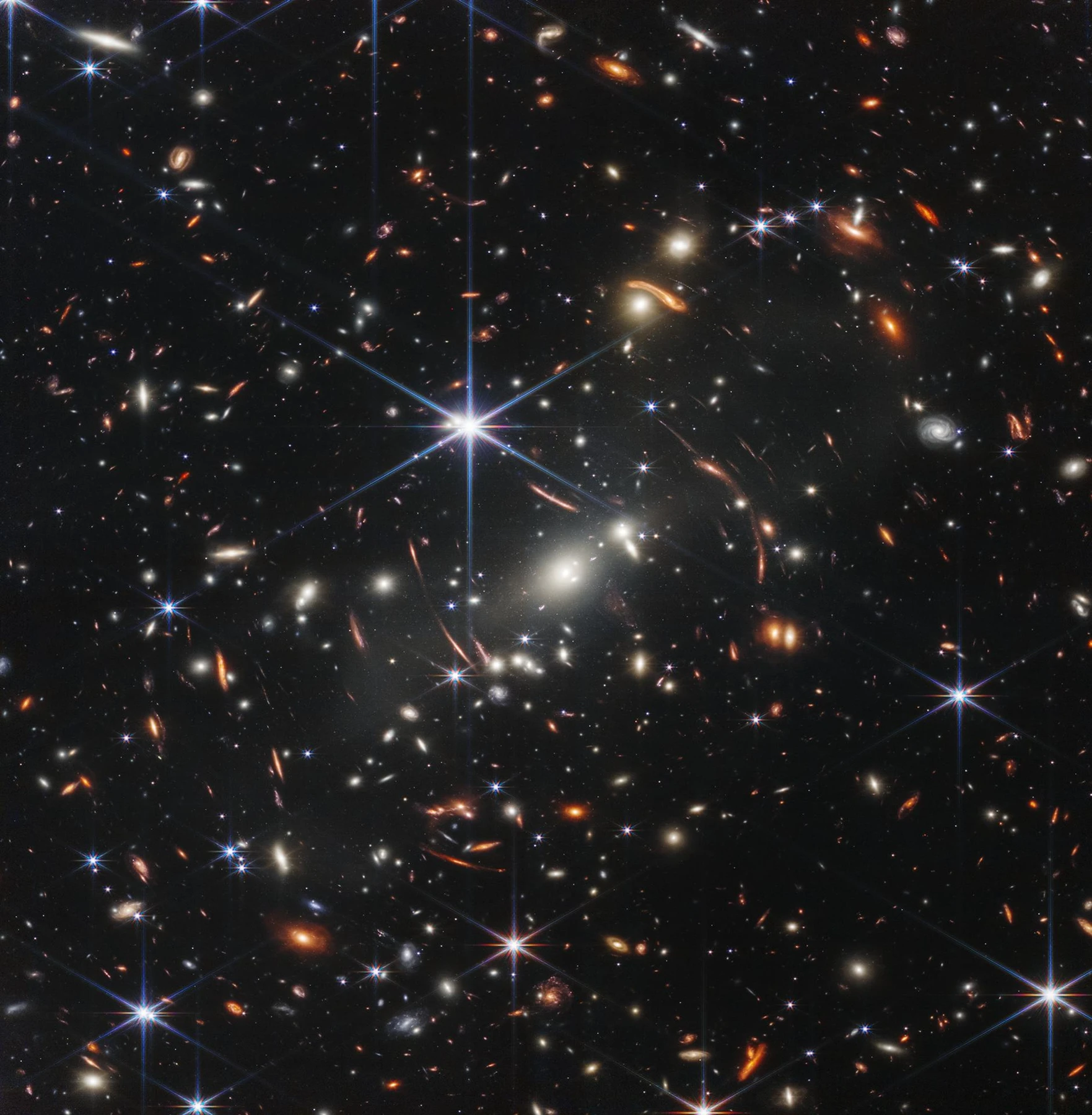
Observed, measured, modelled, open. The redshifts of distant galaxies are measured from their light; the times they correspond to, such as “280 million years after the big bang,” are modelled with a cosmological model. The size of the observable universe is modelled, calculated from measurements using the standard model of cosmic expansion. The size of the entire universe, and whether it’s infinite, is open.
Quick Answer: How Big Is the Universe?
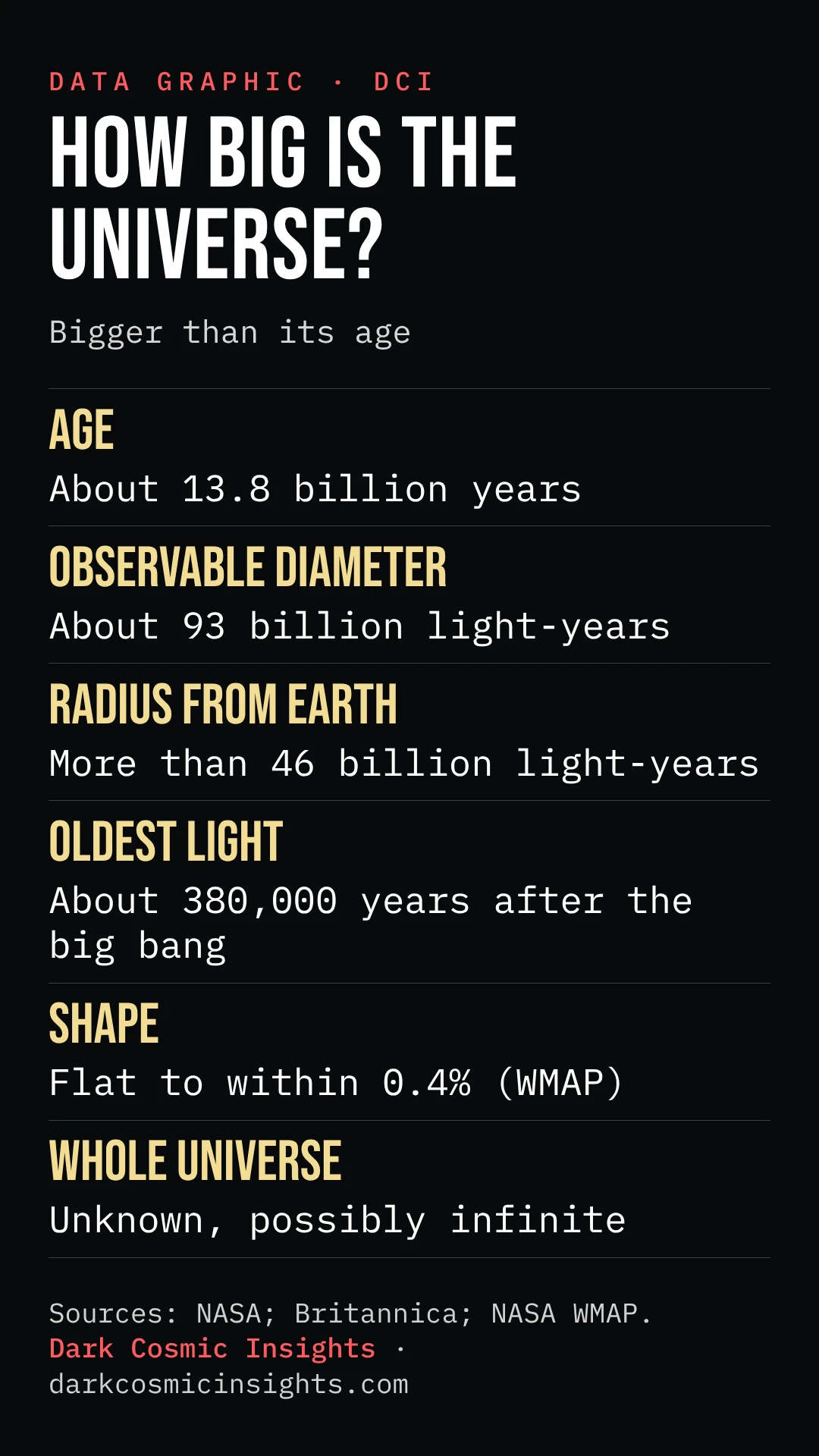
The part we can see, the observable universe, is about 93 billion light-years across, or “more than 46 billion light-years in any direction from Earth,” Britannica says (Britannica). That’s larger than the universe’s age of about 13.8 billion years (NASA) would suggest, because space has expanded while light traveled. The whole universe could be far bigger. Britannica notes it “is possibly infinite and without spatial edges,” and NASA’s WMAP mission measured space to be flat within 0.4 percent (NASA, WMAP), consistent with a universe that goes on and on. Nobody knows its full size.
What this article can and cannot establish. It can explain how big the observable universe is, why it’s bigger than 13.8 billion light-years, and what we know about the scale of galaxies and clusters. It can’t give the size of the entire universe, because we can only see the part whose light has had time to reach us.
Table of Contents
The DCI Evidence Map: The Size of the Universe
| Question | What we know | Status | Key source |
|---|---|---|---|
| How old is the universe? | About 13.8 billion years | Modelled | NASA |
| How big is the observable universe? | About 93 billion light-years across | Modelled | Britannica |
| Why is it bigger than 13.8 billion light-years? | Space has been expanding since the big bang | Measured | Britannica |
| Is space flat? | Flat to within 0.4%, WMAP found | Measured | NASA, WMAP |
| Is the whole universe infinite? | Possibly; unknown | Open | Britannica |
| What’s the oldest light we see? | The cosmic microwave background; its epoch, about 380,000 years after the big bang, is modelled | Observed | NASA |
| What’s a very distant confirmed galaxy? | MoM-z14: redshift 14.44 measured; seen about 280 million years after the big bang (modelled) | Modelled | NASA, 2026 |
| Is expansion speeding up? | Yes | Measured | NASA |
Status key: Observed = seen directly. Measured = a number with a stated uncertainty or a direct measurement. Modelled = inferred from measurements through a physical model, dependent on assumptions. Calculated = worked out from measured values rather than measured directly. Open = unresolved; the evidence is incomplete or points different ways. Not supported = the evidence goes against the claim, or there is none for it.
Cite this framework: “DCI Evidence Map: The Size of the Universe,” Dark Cosmic Insights, November 2026, darkcosmicinsights.com/how-big-is-the-universe/.
How Big Is the Observable Universe?
About 93 billion light-years across
Britannica states that “the observable universe is approximately 93 billion light-years in diameter,” which means it’s “more than 46 billion light-years in any direction from Earth” (Britannica). That’s about 880 billion trillion km across (DCI calculation, using 9.46 trillion km per light-year).
What “observable” means
The observable universe is the region from which light has had time to reach us since the big bang. It’s a sphere centered on us, not because we’re special, but because light travels at a finite speed in every direction. An observer in a distant galaxy would have their own observable universe, centered on them.
Its “edge” isn’t a wall
The edge of the observable universe isn’t a boundary in space. It’s a limit set by time and the speed of light. Beyond it, there’s almost certainly more universe; its light just hasn’t reached us yet.
Why Is the Universe Bigger Than Its Age?
13.8 billion years, 93 billion light-years
If the universe is about 13.8 billion years old and nothing travels faster than light, how can we see 46 billion light-years in each direction? The answer is that space itself has been expanding. Britannica explains that “according to Hubble’s law, space has been expanding since the big bang” (Britannica).
Stretching while the light travels
Imagine light leaving a galaxy 13 billion years ago. As it travels toward us, the space it’s crossing keeps stretching. By the time the light arrives, the galaxy that sent it has been carried much farther away. That’s why the distance to the source today is far larger than the light’s travel time.
Light-travel time vs. distance now
That’s why astronomers are careful with distances to faraway galaxies. MoM-z14’s light has traveled for about 13.5 billion years, but the galaxy’s distance now is much greater (DCI explanation from NASA’s figures). For very distant objects, “how long the light traveled” and “how far away it is now” are different numbers. We explain the light-year itself in What Is a Light-Year?
The expansion is speeding up
NASA says “cosmic expansion is speeding up,” and that cosmologists suggest “it’s likely the universe will continue to expand forever” (NASA). Scientists think a mysterious dark energy is driving the acceleration.
How Far Back Can We See?
The cosmic microwave background
The oldest light we can see is the cosmic microwave background, a faint glow released about 380,000 years after the big bang, when the universe became transparent to light (NASA). Before then, light couldn’t travel freely, so no telescope can see further back using light. We explain how that glow dates the universe in How Old Is the Universe?
The most distant galaxies
Galaxies are visible from a little later. In January 2026, NASA announced that Webb’s NIRSpec instrument had confirmed MoM-z14 at a redshift of 14.44, seen just 280 million years after the big bang (NASA, 2026).
Redshift as a measuring stick
Redshift is how much a galaxy’s light has been stretched toward longer, redder wavelengths by cosmic expansion. A redshift of 14.44 means the light’s wavelengths are about 15.4 times longer than when they left (DCI calculation: 1 + redshift). Converting redshift to a distance, or to a time such as “280 million years after the big bang,” requires a model of the universe, which is why those figures are labelled Modelled.
How Big Are the Things in the Universe?
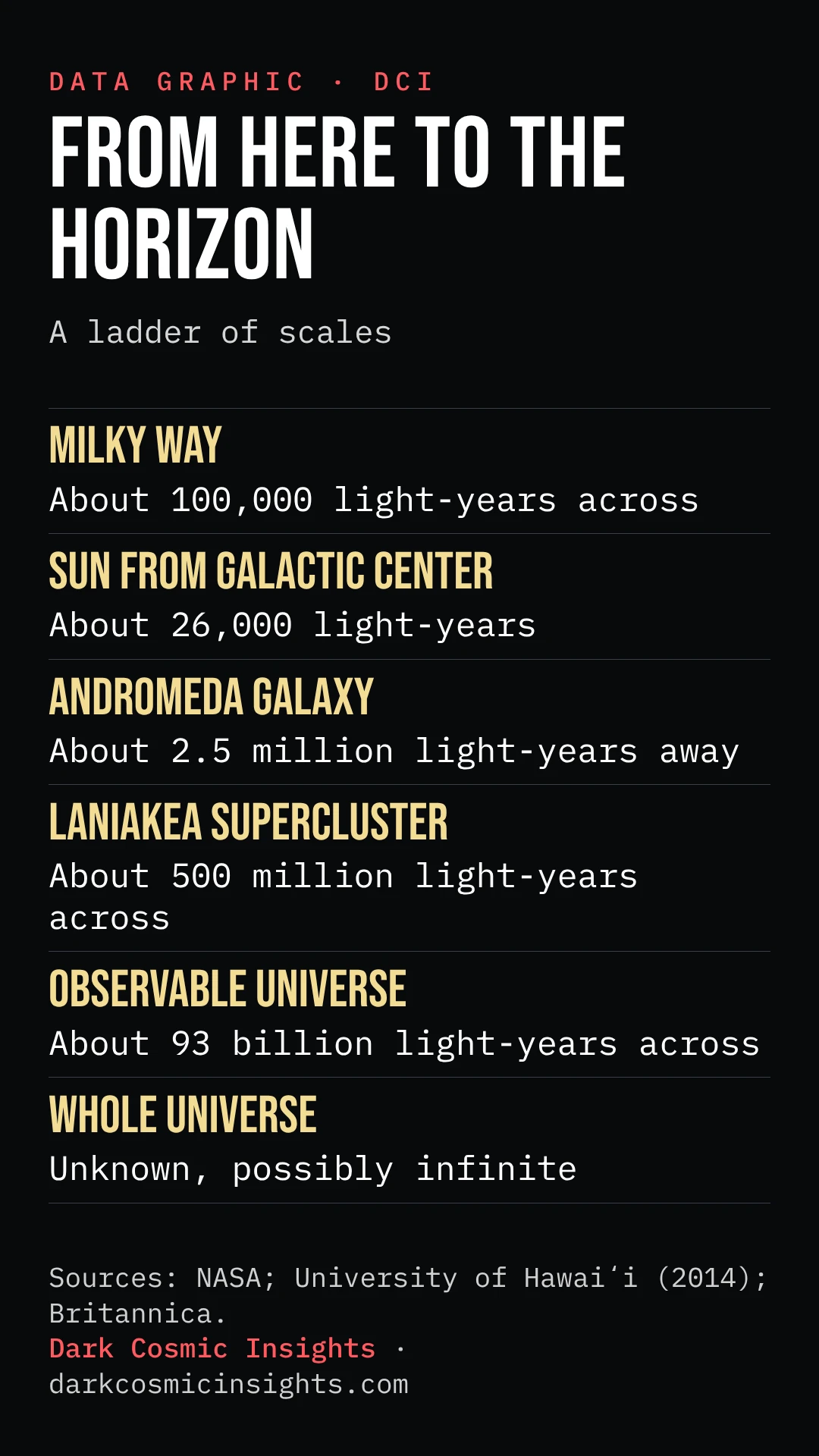
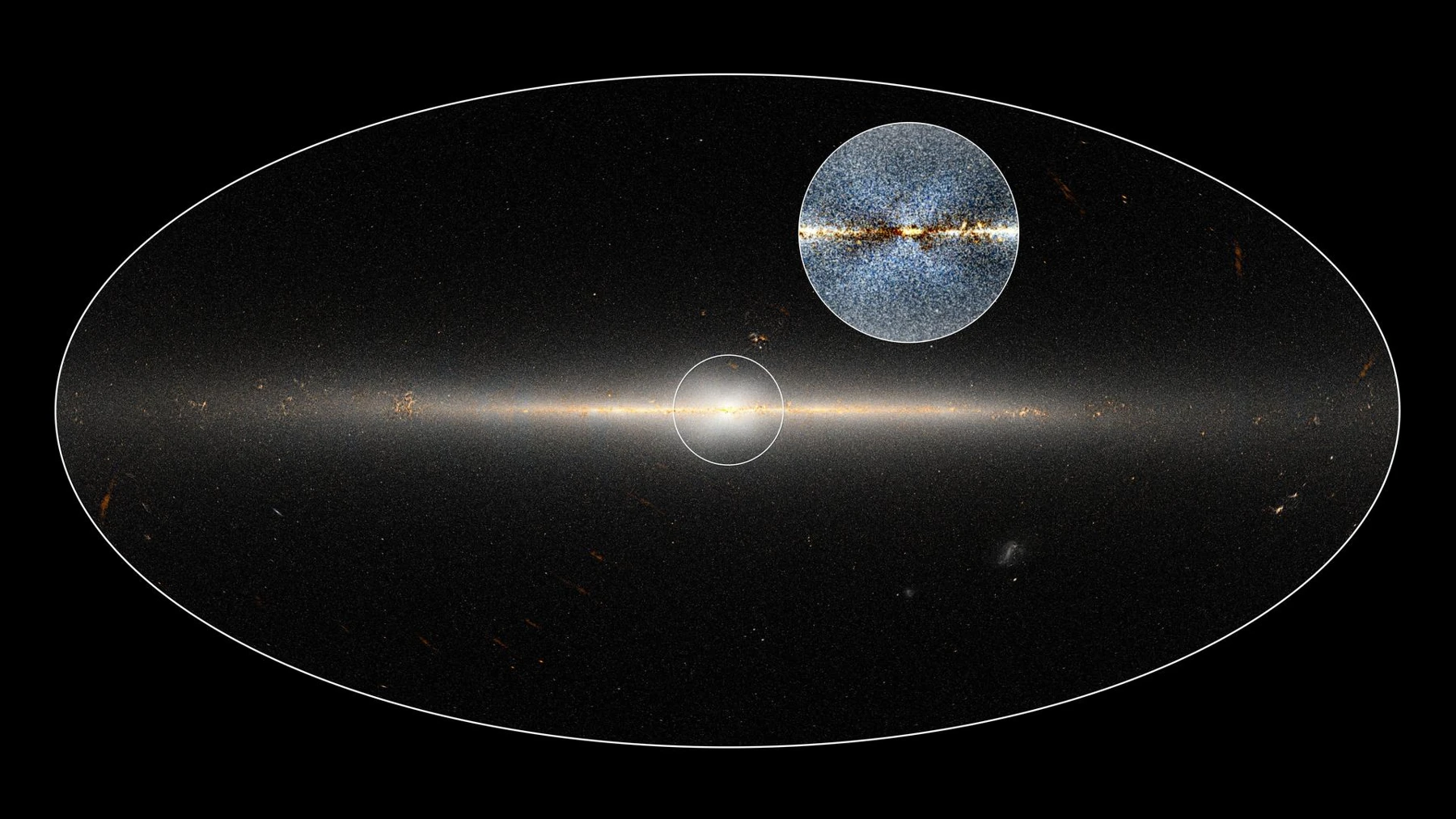
Our galaxy: 100,000 light-years
The Milky Way is about 100,000 light-years across, NASA says, and the Sun lies about 8 kiloparsecs, roughly 26,000 light-years, from its center (NASA; DCI conversion).
Our nearest big neighbor: 2.5 million light-years
The Andromeda Galaxy, the nearest large spiral, is about 2.5 million light-years away (NASA).
Our supercluster: 500 million light-years
On larger scales, galaxies gather into groups, clusters and superclusters. In 2014, astronomers mapped our home supercluster, Laniakea, at about 500 million light-years in diameter, containing about 100,000 galaxies (University of Hawaiʻi, 2014). Within it lies the Great Attractor, which we explore in What Is the Great Attractor?
The observable universe: 93 billion light-years
Laniakea is less than 1 percent of the observable universe’s width (DCI calculation: 0.5 billion out of 93 billion light-years).
How Many Galaxies Are There?
An estimate, not a count
No one has counted every galaxy. A widely cited estimate based on Hubble deep-field observations put the number at about two trillion in the observable universe (STScI, 2021). Estimates like that depend on extrapolating from deep images, and they’re still debated.
New Horizons looked for leftover light
In 2021, NASA’s New Horizons spacecraft measured how dark space really is from the outer solar system. STScI’s report later added that those observations “do not place a constraint on the total number of galaxies” (STScI, 2021). So the total remains an open estimate.
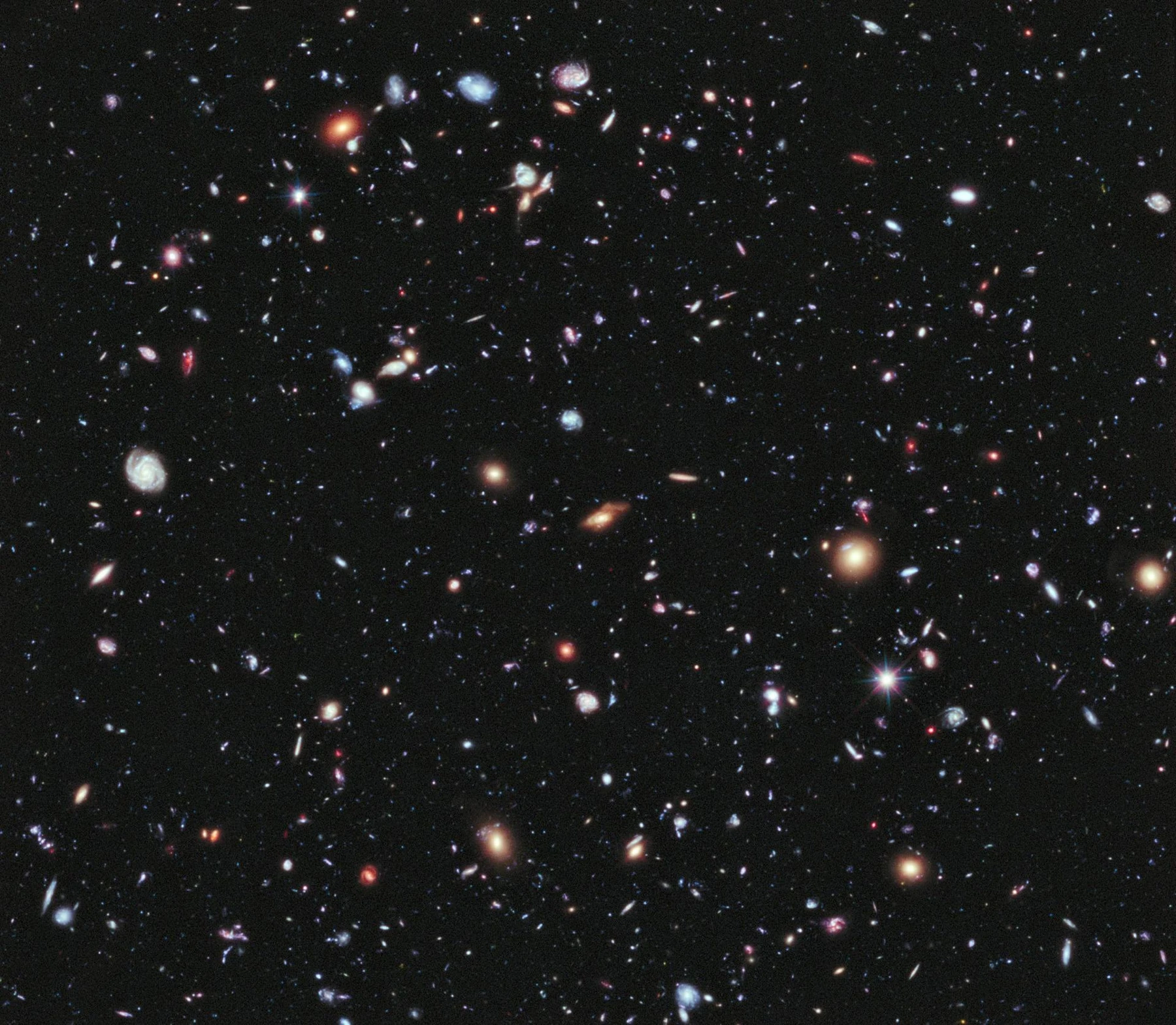
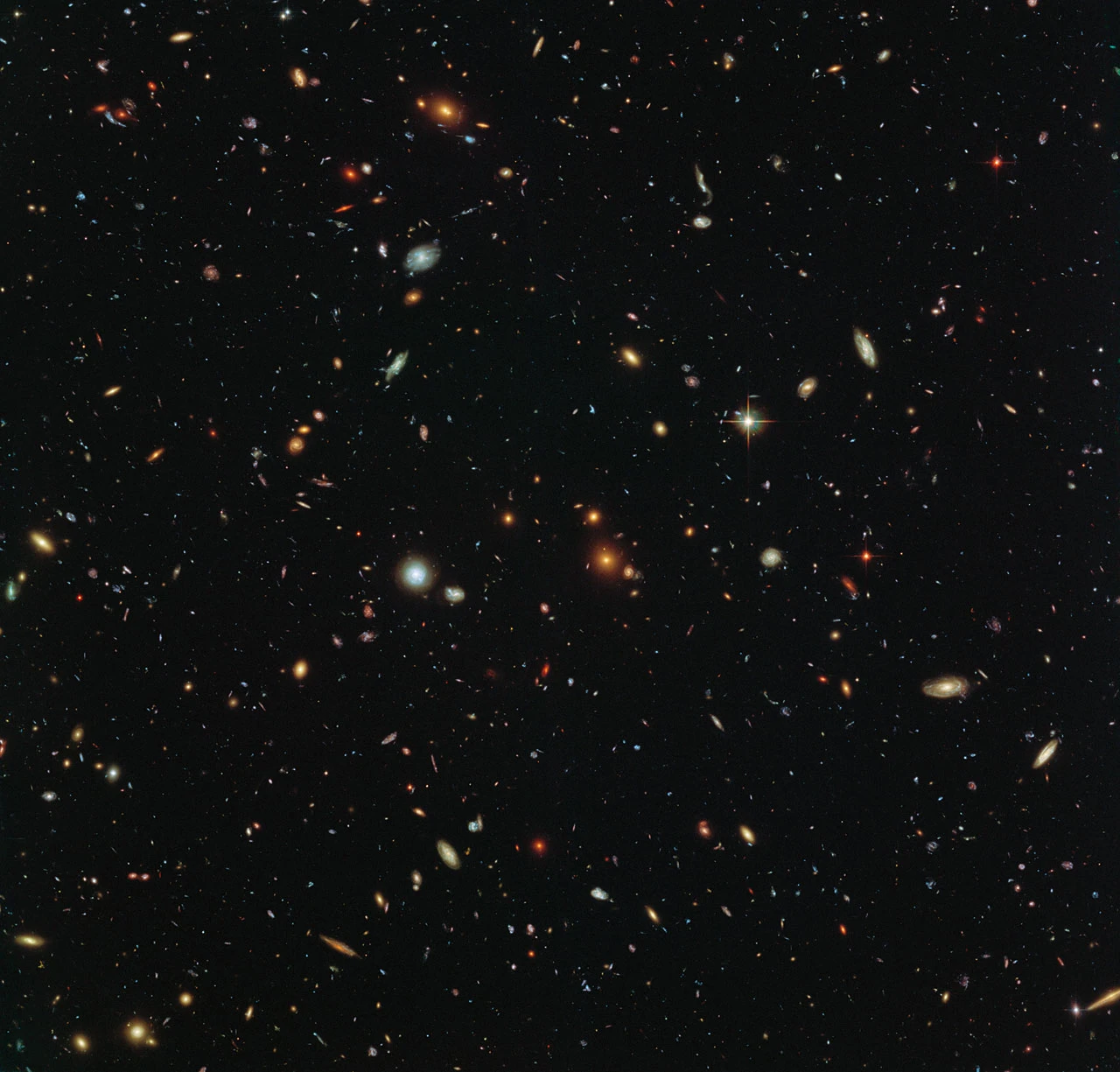
Deep fields show the crowd
Hubble and Webb deep fields show what that crowd looks like. Almost every point of light in them is a galaxy, not a star. We explain the different shapes in Types of Galaxies
Is the Universe Infinite?
Nobody knows
We can’t see beyond the observable universe, so we can’t measure the whole thing. Britannica describes the universe as “possibly infinite and without spatial edges” (Britannica). We label this Open.
Flat space is a clue
One clue is the universe’s shape. NASA’s WMAP mission “nailed down the curvature of space to within 0.4% of ‘flat’ Euclidean” geometry (NASA, WMAP). If space were curved like the surface of a ball, it could close back on itself and be finite. Flat or very nearly flat measurements are consistent with an infinite universe, but they don’t establish its total size.
Finite but very large is still possible
A nearly flat universe doesn’t prove it’s infinite. It could be finite but so enormous that its curvature is too small to detect, or it could have a shape that wraps around. Those options can’t yet be ruled out (Planck Collaboration 2016).
Does the Universe Have a Center or an Edge?
No center we can find
In the standard picture, the big bang wasn’t an explosion from a point into empty space. NASA describes a brief burst of extremely fast expansion, called inflation, whose energy then went into matter and light, the moment NASA calls the big bang (NASA). Space has been expanding everywhere at once ever since. Galaxies are moving apart from each other in every direction, so every observer sees the same pattern, and no place is the center.
No edge we can reach
As far as we can tell, there’s no outer wall. The “edge” of the observable universe is just the limit of how far light has had time to travel. If the universe is infinite, it has no edge at all.
Will we ever see more?
Our view grows slowly as more light arrives, but the expansion is speeding up (NASA), so the most distant regions are receding ever faster. How much more we’ll eventually see depends on that expansion.
Myth vs. Fact: The Size of the Universe
| Myth | Fact | Status |
|---|---|---|
| “The universe is 13.8 billion light-years across.” | The observable universe is about 93 billion light-years across. | Modelled |
| “Nothing can be farther than 13.8 billion light-years.” | Expansion carries galaxies farther than their light-travel time. | Measured |
| “The universe has a known edge.” | The observable universe has a horizon, not a wall. | Modelled |
| “Scientists know the universe is infinite.” | It’s possible but unproven. | Open |
| “We’ve counted the galaxies.” | Totals are estimates from deep images. | Open |
| “The universe’s expansion is slowing down.” | It’s speeding up, NASA says. | Measured |
How Can You Explore the Universe’s Size?
Look at a deep field
Pull up Webb’s first deep field or Hubble’s eXtreme Deep Field on NASA’s site and zoom in. Each smudge is a galaxy, many of them seen as they were billions of years ago.
Find the Andromeda Galaxy
On a dark autumn night in the Northern Hemisphere, look for a faint, fuzzy patch in the constellation Andromeda. You’re seeing light that left that galaxy about 2.5 million years ago (NASA).
Walk the scale ladder
Start with the Moon, 1.3 light-seconds away (How Far Is the Moon?), step to the nearest star beyond the Sun, 4.24 light-years (What’s the Closest Star to Earth?), then the Milky Way and Laniakea. Each step is thousands to millions of times bigger than the last.
The Universe’s Size by the Numbers
| Measure | Value | Source |
|---|---|---|
| Age of the universe | about 13.8 billion years | NASA |
| Observable universe diameter | about 93 billion light-years | Britannica |
| Radius from Earth | more than 46 billion light-years | Britannica |
| Oldest light (CMB) | about 380,000 years after the big bang | NASA |
| MoM-z14 | redshift 14.44, 280 million years after the big bang | NASA, 2026 |
| Curvature of space | flat to within 0.4% | NASA, WMAP |
| Milky Way width | about 100,000 light-years | NASA |
| Andromeda Galaxy | about 2.5 million light-years away | NASA |
| Laniakea Supercluster | about 500 million light-years across, ~100,000 galaxies | University of Hawaiʻi |
| Galaxies (Hubble-based estimate) | about two trillion | STScI, 2021 |
Sources checked November 2026.
Universe Size FAQ
How big is the universe?
The observable universe is about 93 billion light-years across. The whole universe is at least that big and may be much bigger, possibly infinite. Nobody knows its total size.
How can the universe be 93 billion light-years across if it’s only 13.8 billion years old?
Because space has been expanding. While light from distant galaxies traveled toward us, the space it crossed stretched, carrying those galaxies much farther away than the light’s travel time suggests.
Is the universe infinite?
Possibly. Measurements show space is flat to within 0.4 percent, which fits an infinite universe, but a finite universe that’s extremely large hasn’t been ruled out. It’s an open question.
What is the observable universe?
It’s the region from which light has had time to reach us since the big bang. It’s a sphere about 46 billion light-years in radius, centered on the observer.
What’s at the edge of the universe?
There’s no wall. The edge of the observable universe is a horizon set by how far light has traveled. Beyond it, there’s almost certainly more universe we can’t yet see.
How many galaxies are in the universe?
No one knows exactly. A widely cited estimate based on Hubble data put it at about two trillion in the observable universe, but that’s an extrapolation and still debated.
What is the farthest galaxy ever seen?
Among the most distant confirmed is MoM-z14, announced by NASA in January 2026. Webb sees it as it was about 280 million years after the big bang, at a redshift of 14.44.
Is the universe still expanding?
Yes, and the expansion is speeding up, NASA says. Cosmologists think it will likely keep expanding forever, driven by what’s called dark energy.
Your next step: open Webb’s first deep field and pick any small smudge. That single speck is a galaxy, and somewhere beyond the edge of that image, the universe keeps going.
Sources and Further Reading
- Britannica, Observable universe.
- NASA Science, Universe Overview.
- NASA Science, WMAP Overview.
- NASA (January 28, 2026), NASA Webb Pushes Boundaries of Observable Universe Closer to Big Bang.
- NASA Imagine the Universe, The Milky Way Galaxy.
- NASA Science, Messier 31 (The Andromeda Galaxy).
- University of Hawaiʻi at Mānoa (September 3, 2014), Laniakea: Our home supercluster.
- STScI (January 12, 2021, with correction), New Horizons Spacecraft Answers Question: How Dark Is Space?
- Planck Collaboration (2016), Planck 2015 results. XVIII. Background geometry and topology of the Universe, Astronomy & Astrophysics 594, A18.
- NASA Science, Voyager 1’s Pale Blue Dot.
- NASA images: Webb first deep field, Hubble eXtreme Deep Field, Hubble Frontier Fields parallel, PIA00452, PIA20699.
Explore Next
- Olbers’ paradox, explained: Why Is Space Black?
- The unit behind it all: What Is a Light-Year?
- Our nearest stellar neighbors: What’s the Closest Star to Earth?
- How we date the cosmos: How Old Is the Universe?
- The pull on our galaxy: What Is the Great Attractor?
- The shapes galaxies take: Types of Galaxies
- The invisible majority: What Is Dark Matter?
- What redshift and observable universe mean: Space Glossary
How This Explainer Was Checked
Every number and quote in this article was checked in November 2026 against the source linked beside it: Britannica’s observable-universe entry, NASA’s Universe overview, NASA’s WMAP overview, NASA’s January 2026 MoM-z14 release, NASA’s Milky Way and Andromeda pages, the University of Hawaiʻi’s 2014 Laniakea release and STScI’s 2021 New Horizons release with its correction. The observable universe’s size is labelled Modelled; expansion, flatness and redshifts Measured; the CMB Observed radiation with a Modelled epoch; times inferred from redshifts Modelled; the size of the whole universe and the galaxy count Open. Light-travel time, the stretch factor, kilometer and percentage conversions and the Sun’s distance in light-years are DCI calculations. Images are labelled: real telescope and spacecraft images as OBSERVATION, our charts as DATA GRAPHIC. Nothing AI-generated is presented as a real image.
Final Thought: The Part We Can See
Everything astronomers have ever observed sits inside a sphere about 93 billion light-years across, and that sphere is only the part whose light has reached us so far. Beyond it, the universe may go on for unimaginably far, perhaps forever. The most honest answer to “how big is the universe?” is: bigger than we can see, and maybe without end.
About the Author
Author: King | Founder of Dark Cosmic Insights